Mayonnaise and Parmesan Chicken
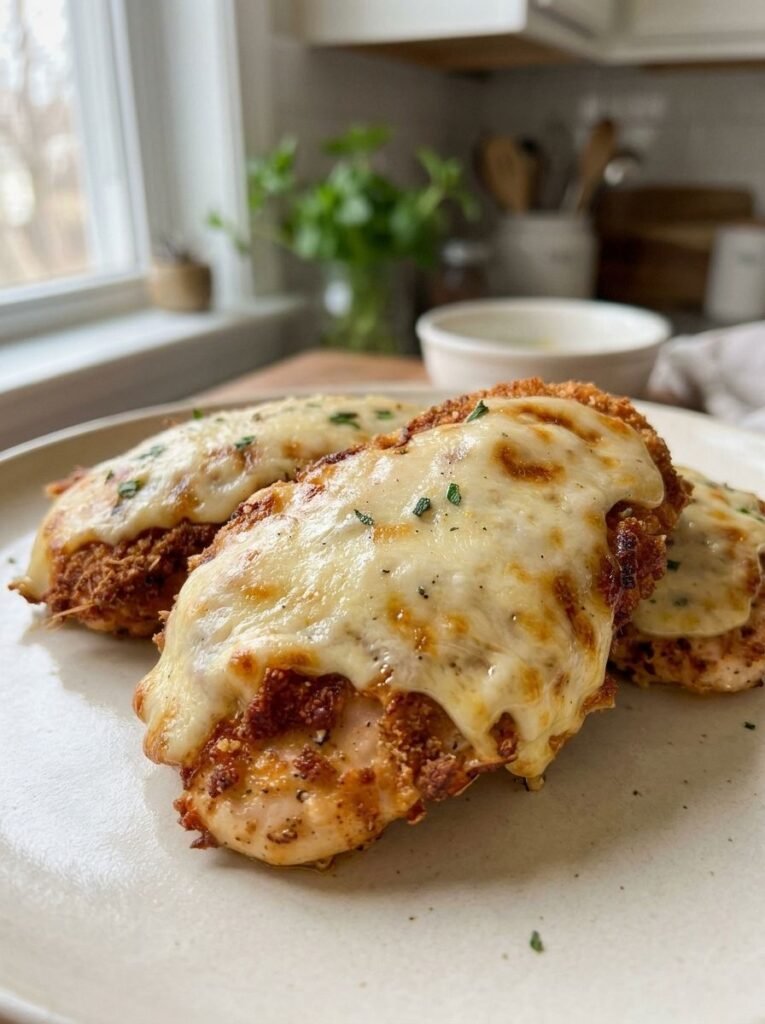
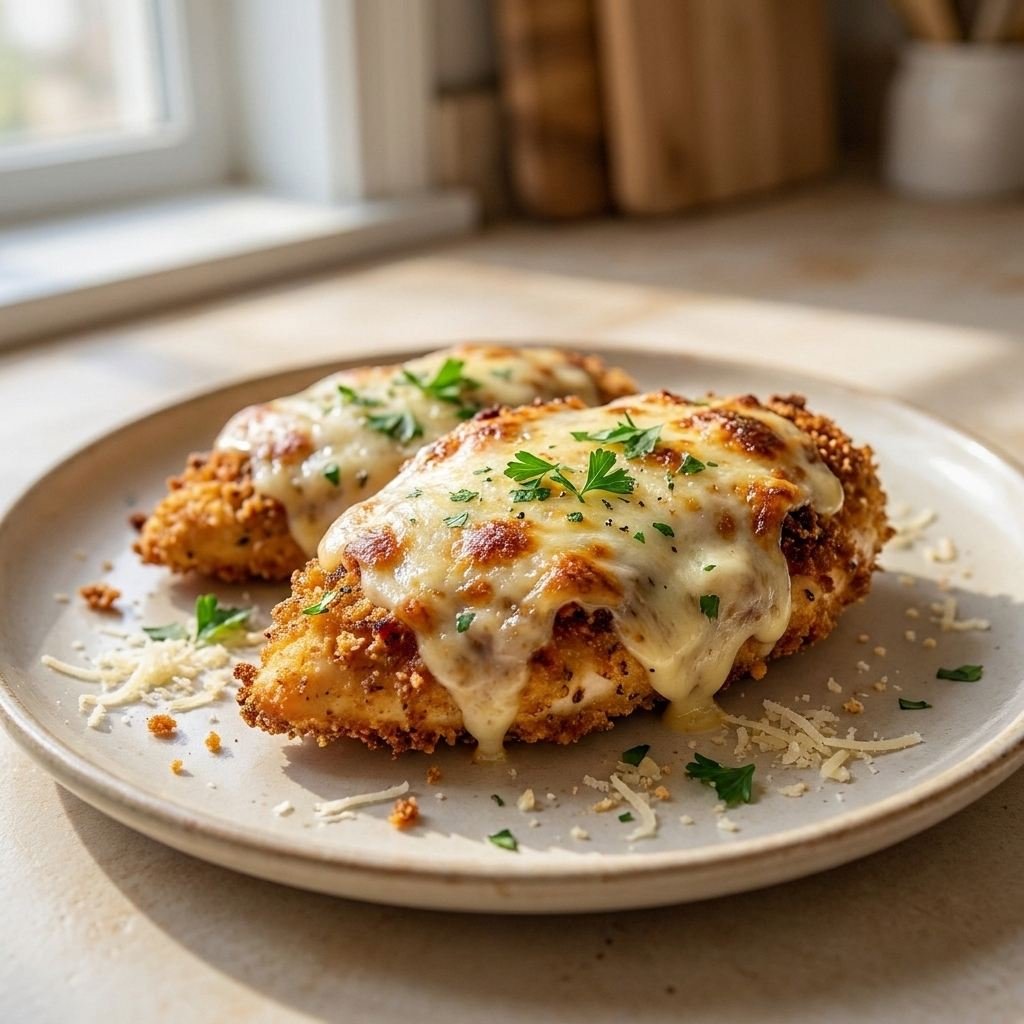
Chicken breasts under a mayonnaise and Parmesan crust that bakes golden. Four servings, under forty minutes.
Pat the chicken completely dry
Which the notes call the key step, and they are right.
Chicken breast holds surface moisture, and that water sits between the meat and the coating. It turns to steam in the oven and lifts the crust away, leaving it soggy underneath rather than set and browned.
Paper towels, both sides, thoroughly. It takes thirty seconds and it decides the result.
165F, which the source states correctly
Twenty five to thirty minutes at 400F.
Poultry should reach an internal temperature of 165F at the thickest part, and the source gives that figure alongside the visual cue of a deeply golden coating. Both matter, since a browned crust does not guarantee a cooked centre.
Pounding to even thickness is what lets the whole breast reach temperature at once. An unpounded breast is done at the thin end and undercooked at the thick.
The coating is the cooking method
Half a cup of mayonnaise spread thickly over each breast.
Mayonnaise is oil and egg emulsified, and here it acts as a barrier that holds moisture in the chicken while the outside browns. Baked bare, a chicken breast at 400F for half an hour dries out.
Spread it generously and cover the entire surface, which the method specifies. Bare patches dry and the crust separates around them.
Freshly grated Parmesan
Three quarters of a cup.
Pre-grated Parmesan carries anti-caking agents that stop it melting smoothly, and in a coating this thin that shows up as a grainy, powdery crust.
Grated fresh, it melts into the mayonnaise and browns properly. A microplane or the fine side of a box grater.
Broil for the last two to three minutes
On high, watching closely.
The bake gets the chicken to temperature; the broiler is what takes the crust from golden to deeply browned. Parmesan browns beautifully under direct heat.
Two to three minutes and no more. It goes from browned to burnt quickly, and the source is right to say keep a close eye.
Skip it if the coating is already dark at the end of the bake.
Rest five minutes
Before serving.
Resting lets the juices redistribute rather than running out when you cut. Chicken breast is lean and it loses a noticeable amount of liquid if sliced immediately.
The crust also firms as it cools slightly, which makes it cut cleanly.
Greek yogurt as a substitute
Which the notes offer, full-fat plain in place of the mayonnaise.
It gives a similar creamy tangy coating with less fat and more protein. It browns slightly less well, since there is less oil, so the broiler stage matters more.
Full-fat rather than non-fat, which is thin and would run off.
Uncovered throughout
Which the method specifies.
Covering traps steam and the coating never sets or browns. This is a dry-heat dish from start to finish.
Six to eight ounce breasts
Which the ingredient list specifies and which affects the timing.
At the smaller end, 25 minutes is likely enough. At eight ounces, expect the full 30 or slightly more even after pounding.
The thermometer settles it either way. Chicken breasts vary enough that a fixed time is always a guide.
548mg of sodium per serving
Which is moderate.
Parmesan is the main contributor and there is no added salt in the recipe, which is sensible given three quarters of a cup of it. Taste before adding any.
Serving cold
The notes say it slices well cold on a salad the next day, which is true. The crust firms in the fridge and holds together better cold than warm.
Reheating
Three days refrigerated. A 325F oven for about 10 minutes revives the crust; a microwave makes it soft.
A four-ingredient weeknight chicken with a creamy cheesy crust baked straight onto the meat.
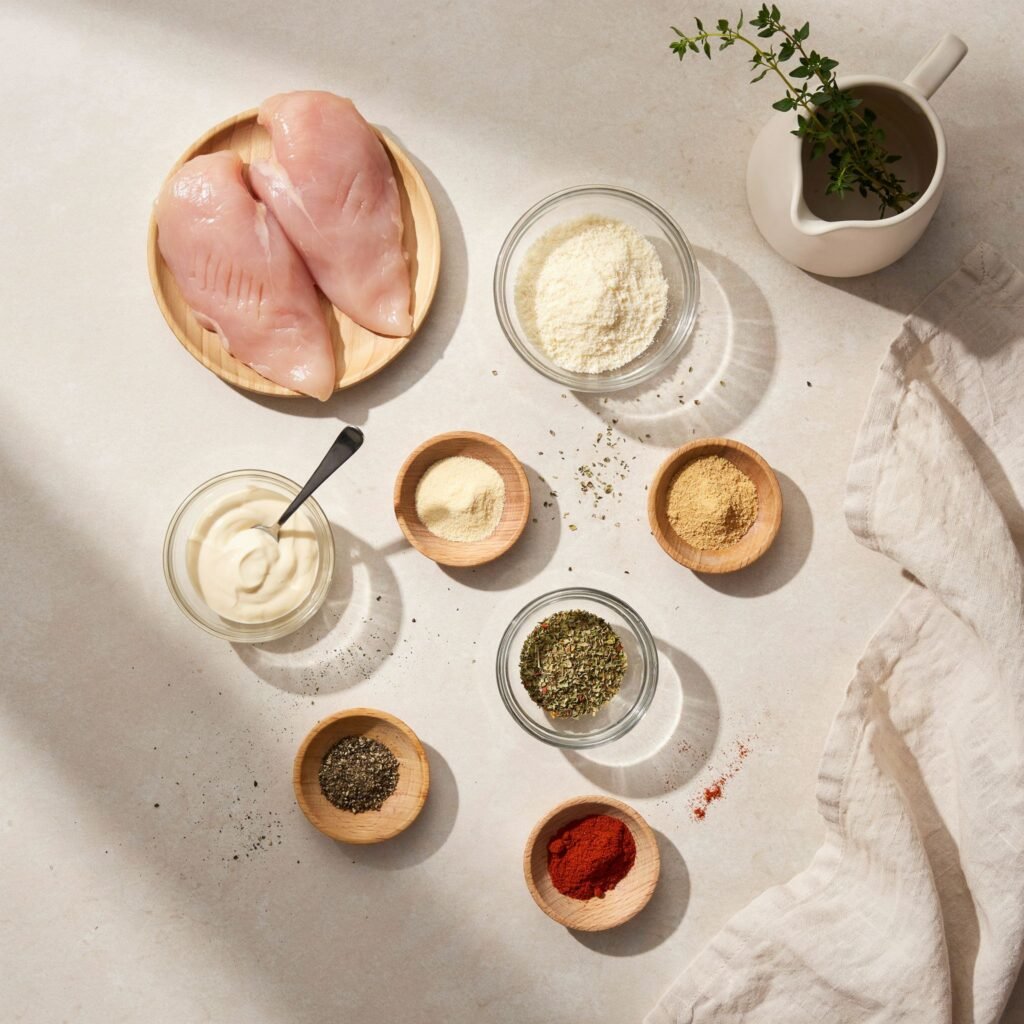
- 4 boneless skinless chicken breasts about 6 to 8 oz each pounded to even thickness
- 1/2 cup mayonnaise
- 3/4 cup Parmesan cheese freshly grated
- 1 tsp garlic powder
- 1/2 tsp onion powder
- 1 tsp Italian seasoning
- 1/2 tsp black pepper
- 1/2 tsp paprika.
- 1 Preheat the oven to 400F and spray a 9x13-inch baking dish with nonstick cooking spray.
- 2
Pat all four chicken breasts completely dry with paper towels, which is what lets the crust set rather than steam, and place them in the prepared dish.- 3
In a small bowl stir together the mayonnaise, freshly grated Parmesan, garlic powder, onion powder, Italian seasoning, black pepper and paprika until fully combined into a thick paste.- 4
Spread the mixture generously and evenly over the top of each chicken breast, covering the entire surface with a thick layer and leaving no bare patches.- 5
Bake uncovered 25 to 30 minutes, until the coating is deeply golden brown and a thermometer in the thickest part reads 165F.- 6
For extra browning, switch the broiler to high for the last 2 to 3 minutes, watching closely so it does not burn.- 7
Remove from the oven and rest 5 minutes before serving..NotePat the chicken completely dry before coating, which the source calls the key step: surface water turns to steam and lifts the crust away, leaving it soggy. The source correctly states 165F at the thickest part; pounding to even thickness is what lets the whole breast reach it at once. The mayonnaise acts as a barrier holding moisture in while the outside browns, so spread it generously over the entire surface, since bare patches dry out. Use freshly grated Parmesan, as pre-grated carries anti-caking agents that give a grainy crust. Broil 2 to 3 minutes at the end and watch closely, as it burns quickly. Rest 5 minutes before serving. Full-fat Greek yogurt substitutes for the mayonnaise but browns less well, making the broiler stage more important. Bake uncovered throughout.
Creamy, Golden, Cheesy - 2