Homemade Ratatouille
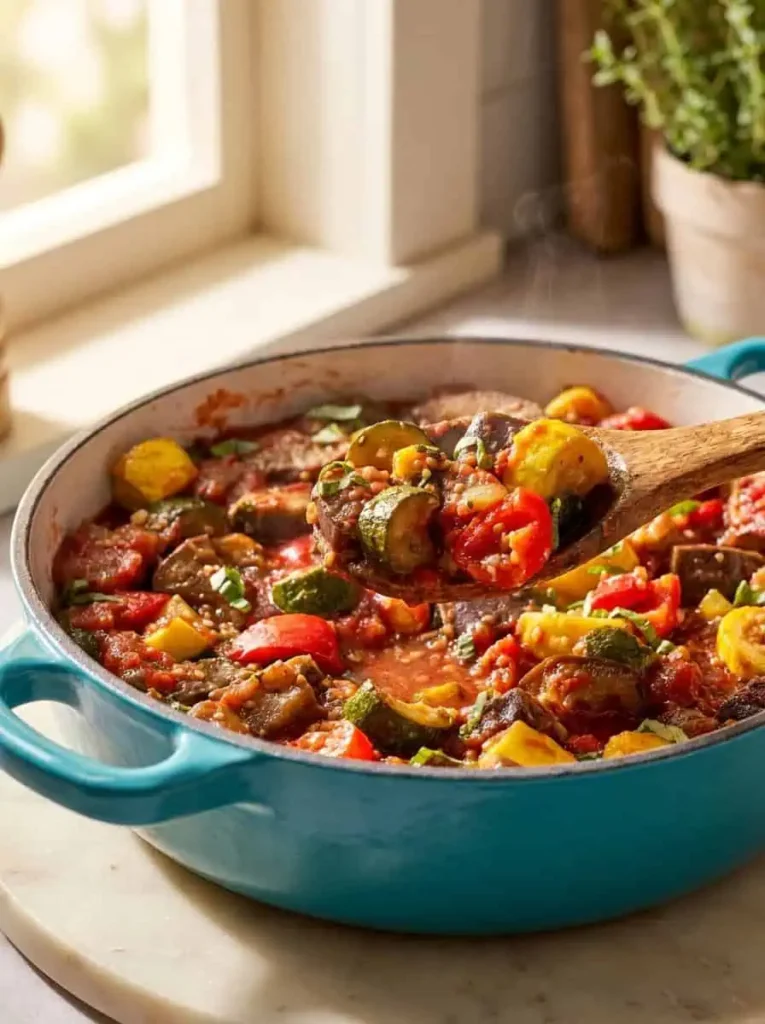
Ratatouille is a dish I cook when the vegetables at the market look better than anything else and I don't want to get in their way. Eggplant, zucchini, bell pepper, tomatoes, garlic, and fresh herbs, cooked in stages so each one keeps its identity before they all come together at the end. It takes about an hour and a quarter from start to finish, and most of that time is just standing at the stove with a wooden spoon, which I find genuinely relaxing.
This isn't the thinly sliced, layered-in-a-dish version from the movie. This is the original Provencal style, chunky and rustic, where each vegetable is sauteed separately and then simmered together in a tomato base until the textures meld but don't collapse into mush. The separate cooking is the whole difference between ratatouille that tastes layered and interesting and ratatouille that tastes like stewed vegetables.
Salting the eggplant still matters
A lot of modern recipes skip this step and call it old-fashioned, but I still do it and I can taste the difference. Toss the cubed eggplant with a teaspoon of kosher salt in a colander and let it sit for at least thirty minutes. The salt draws out moisture and some of the bitterness, and when you squeeze the cubes dry and pat them with paper towels, they fry golden and clean instead of steaming in their own water and turning grey.
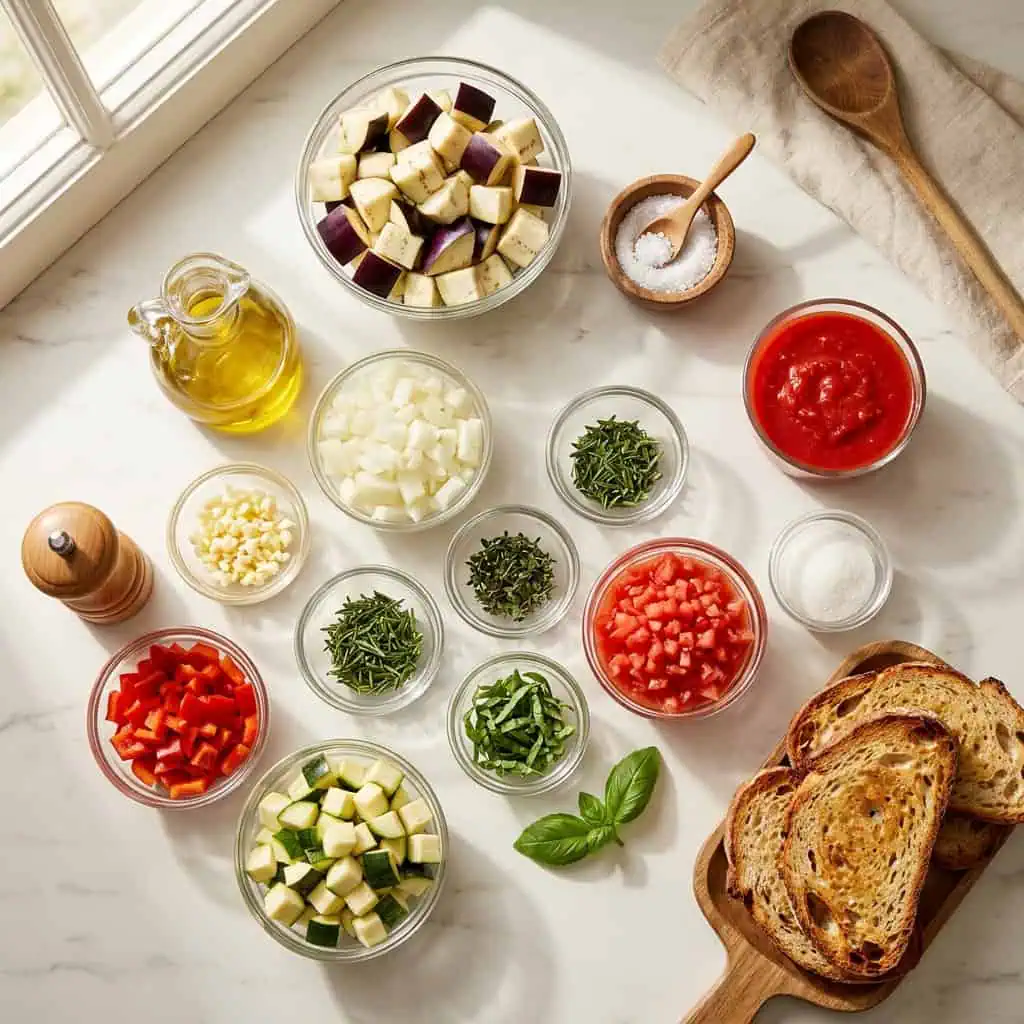
The thirty minutes isn't wasted time. Use it to prep everything else: chop the onion, dice the bell pepper and zucchini, mince the garlic (eight cloves, divided across the stages), pick and chop the herbs, and dice the fresh tomato. By the time the eggplant is ready, so is everything else, and the cooking goes fast from there.
Why you cook everything separately
Each vegetable goes into the pot in its own round, in its own tablespoon of olive oil, with its own share of garlic, salt, and pepper. Onion and bell pepper first, then zucchini with rosemary, then eggplant with thyme. Each batch gets transferred to a bowl before the next one goes in.
This sounds tedious and it isn't. Each round takes six to eight minutes, and you're using the same pot so there's nothing extra to wash. The reason it matters is that zucchini and eggplant cook at completely different rates. If you throw them in together, the zucchini is mush before the eggplant is done, and the onion dissolves into nothing. Cooking them separately means the zucchini stays slightly firm, the eggplant turns golden and silky, and the onion and pepper keep their shape. When they come back together in the tomato sauce, each one is already where it needs to be.
The garlic gets divided too, two cloves per round plus the rest with the tomatoes. This way you get garlic flavor woven through every layer instead of one big hit at the beginning that fades by the end.
The tomato base that ties it all together
Once all the vegetables are out, the last tablespoon of oil goes in with the chopped fresh tomato, a teaspoon of sugar, the remaining garlic, and salt and pepper. Cook this down for six to eight minutes until the tomato starts to break apart and caramelize at the edges. The sugar isn't for sweetness, it balances the tomato's acidity, especially if your beefsteak tomato isn't perfectly ripe.
Then in goes a cup of canned crushed tomatoes, sliced fresh basil, and all the reserved vegetables. Bring it to a simmer, drop the heat to medium-low, and let everything cook together for eight to ten minutes. You're not trying to break the vegetables down further. You're letting the tomato sauce coat everything and the flavors merge so the dish tastes like one thing instead of a collection of parts.
How I came to love a vegetable stew
Growing up, I ate a lot of vegetable-forward cooking because that was what was available and affordable, but it was never called anything special. It was just dinner. Ratatouille was the first time I saw the same idea, vegetables cooked carefully with olive oil and herbs, given a name and treated with respect. That mattered to me. It said the food I grew up around was worth paying attention to, and it changed how I thought about simple ingredients.
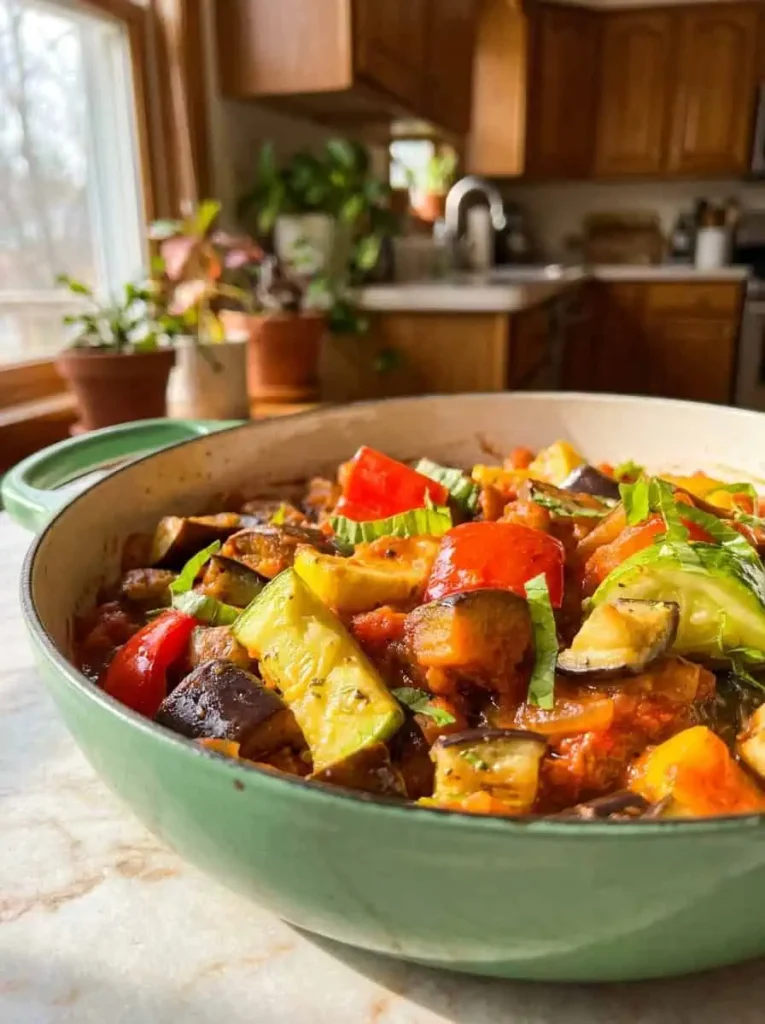
I make this at least twice a month in summer when tomatoes and zucchini are everywhere and cheap. It's a main course with crusty bread, and it's a side dish next to grilled lamb or chicken. Cold leftovers the next day are almost better than the hot version, spooned over toast or stirred into pasta. The flavors keep deepening overnight.
Serving and keeping
Top with more fresh basil and serve with thick slices of crusty sourdough to soak up the tomato juices at the bottom of the bowl. Leftovers keep in the fridge for four or five days and actually improve, so this is a recipe that rewards making a full batch even if you're cooking for two. Reheat gently on the stove rather than the microwave to keep the vegetable textures intact. Serves four to six.
Other ways to use it
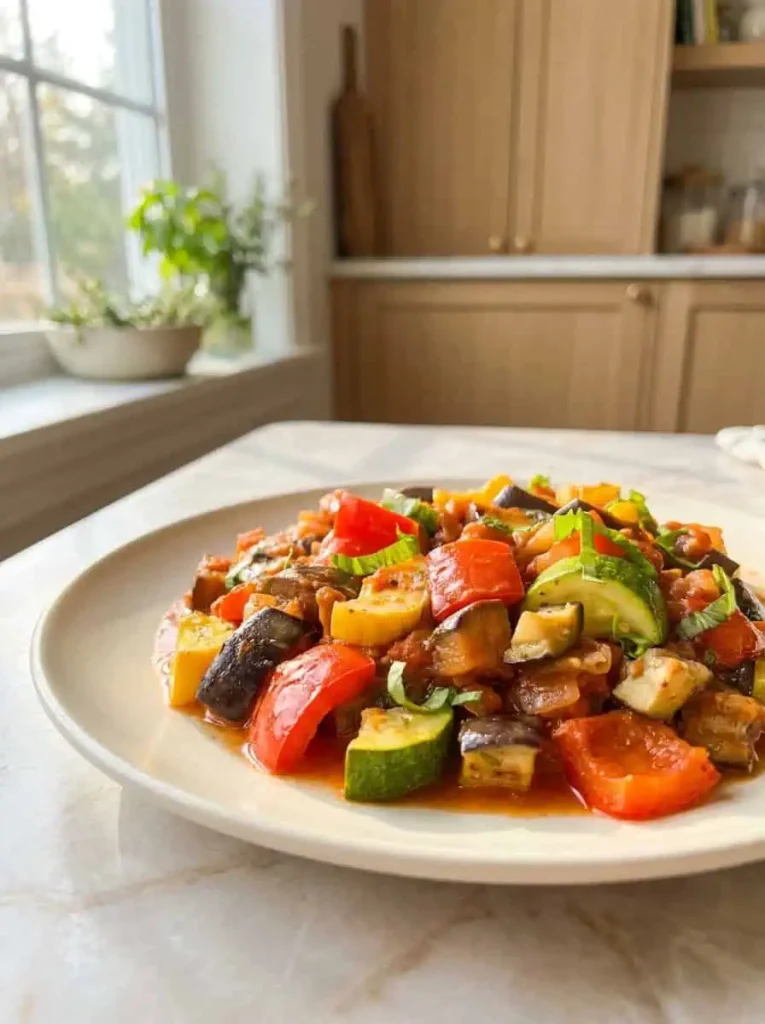
Ratatouille works as a sauce under poached or fried eggs for breakfast, stirred through cooked pasta with a handful of parmesan, or spooned into a baking dish with cheese melted on top as a gratin. It's also excellent cold as a bruschetta topping on toasted bread rubbed with garlic. Once you have a batch in the fridge, it shows up in meals all week.
A classic ratatouille with eggplant, zucchini, bell pepper, and tomatoes, each sauteed separately and simmered together in a garlic and herb tomato sauce.
- 2 medium eggplants (about 1 lb total)
- cut into 1/2-inch cubes
- Kosher salt
- 1/4 cup extra-virgin olive oil (divided)
- 1 large yellow onion
- chopped
- 8 cloves garlic (finely chopped)
- divided Freshly ground black pepper
- 1 bell pepper
- seeds and ribs removed
- chopped
- 2 small zucchini (about 11 oz total)
- cut into 1/2-inch cubes
- 1 teaspoon chopped fresh rosemary
- 1 tablespoon fresh thyme leaves
- 1 beefsteak tomato (finely chopped)
- 1 teaspoon granulated sugar
- 1 cup canned crushed tomatoes
- 10 fresh basil leaves
- thinly sliced (plus more for serving)
- Crusty sourdough bread (for serving)
- 1 Toss the cubed eggplant with 1 teaspoon salt in a colander set over a bowl. Let sit at least 30 minutes, then squeeze off excess moisture and pat dry with paper towels.
- 2
In a large pot over medium heat, heat 1 tablespoon olive oil. Add the onion and 2 chopped garlic cloves, season with 1/4 teaspoon salt and 1/4 teaspoon pepper, and cook until the onion is translucent, 5 to 6 minutes. Add the bell pepper and cook until softened, about 6 minutes. Transfer to a large bowl.- 3
In the same pot, heat 1 tablespoon oil. Add the zucchini, rosemary, and 2 chopped garlic cloves. Season with 1/4 teaspoon salt and pepper. Cook, stirring often, until the zucchini softens and turns golden, about 8 minutes. Transfer to the bowl.- 4
In the same pot, heat 1 tablespoon oil. Add the eggplant, thyme, and 2 chopped garlic cloves. Cook, stirring often, until the eggplant turns golden and translucent, about 8 minutes. Transfer to the bowl.- 5
In the same pot, heat the remaining 1 tablespoon oil. Add the chopped fresh tomato, sugar, remaining garlic, 1/4 teaspoon salt, and 1/4 teaspoon pepper. Cook, stirring often, until the tomato breaks down and caramelizes, 6 to 8 minutes.- 6
Add the crushed tomatoes, sliced basil, and all reserved cooked vegetables. Bring to a simmer, reduce heat to medium-low, and simmer, stirring occasionally, until the vegetable textures begin to meld together, 8 to 10 minutes.- 7
Top with more fresh basil and serve with crusty sourdough bread..NoteThe source lists the yield as 4 to 6 servings (averaged to 5 in the servings field). Salt the eggplant for the full 30 minutes if you can; it makes a real difference in texture. Leftovers improve overnight and keep for up to 5 days refrigerated. Nutrition per serving: 304 calories (source-provided; no further breakdown was given).
ratatouille, homemade ratatouille, ratatouille recipe, easy ratatouille - 2