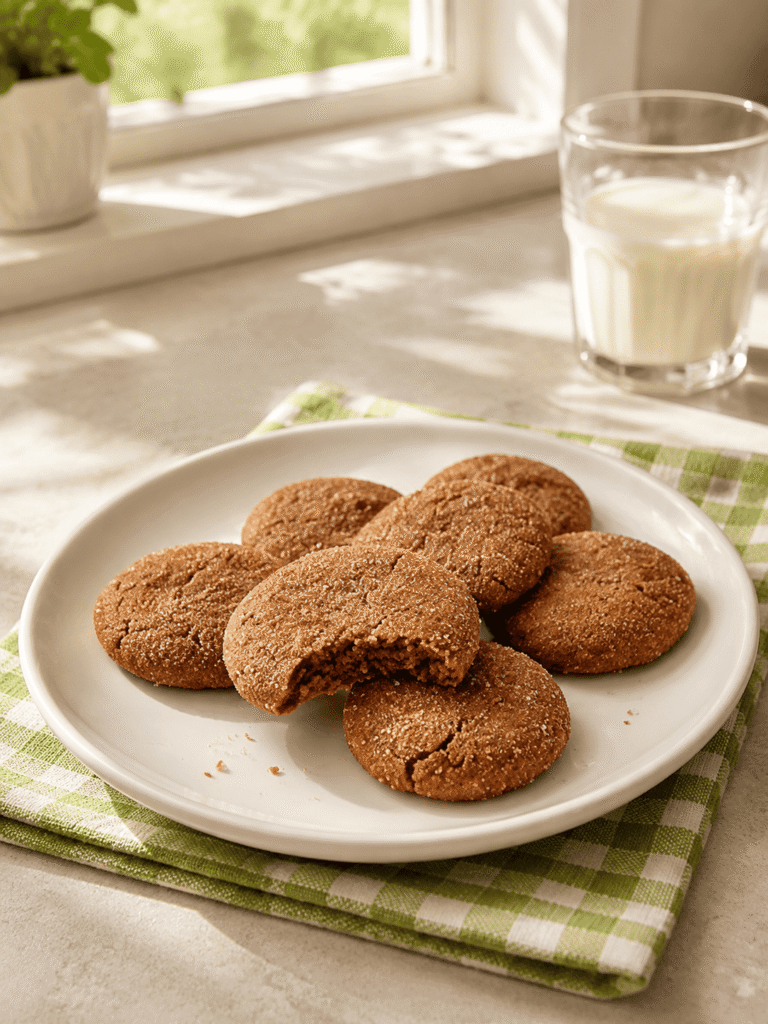
Grandma's gingersnap cookies are a hundred-and-twenty-five-year-old recipe that produces sixty small, crackle-topped cookies with a crisp exterior and a slightly chewy center. Dark molasses, ground ginger, cinnamon, and baking soda make up the flavor and texture of the cookie; the baking soda reacts with the molasses acid and produces the characteristic cracked surface. Rolling the balls in cinnamon sugar before baking gives each cookie a thin, crisp coating that caramelizes in the oven.
The double sifting in the recipe is a technique from older baking traditions and is worth following. Sifting the flour and spices together twice aerates the mixture and ensures the ginger and cinnamon are evenly distributed through the dough rather than clumping. Old-fashioned gingersnaps with the wrong spice distribution have bites that taste like plain flour next to bites that are intensely gingery. Twice-sifted dry ingredients prevent that.
The dough
Beat three-quarters of a cup of butter until creamy, then gradually beat in one cup of sugar until the mixture is light. Add one egg and a quarter cup of dark molasses and beat until fluffy. The dark molasses is the flavor ingredient that makes a gingersnap taste like itself rather than like a ginger sugar cookie; it has a deep, slightly bitter, caramel note that the tablespoon of ginger amplifies rather than replaces. Light molasses or blackstrap molasses both work in a pinch but dark molasses is the standard.
Sift a third of the flour mixture into the butter mixture and stir to combine, then sift in the remaining two-thirds. This addition in stages helps the dry ingredients incorporate without overworking the dough, which would develop gluten and make the cookies tough. Stir until a soft dough forms.
Rolling and the cinnamon sugar
Pinch off small pieces of dough and roll between your palms into one-inch balls. Roll each ball in cinnamon sugar to coat. Place on ungreased baking sheets two inches apart. The cinnamon sugar is specified separately from the cookie's own cinnamon, which is already in the dough. The coating adds a second hit of cinnamon sweetness on the exterior and the granulated sugar caramelizes during baking into the crisp shell.
The editor's note mentions that the Allrecipes magazine version uses two tablespoons of cinnamon mixed with two teaspoons of sugar for the rolling, which is a much more cinnamon-forward coating than a standard cinnamon sugar ratio. Worth trying if you want the cinnamon to be prominent on the outside of the cookie.
The bake and the cracked top
350 degrees, ten minutes, switching racks halfway through for even browning. The cookies are done when the tops are rounded and slightly cracked. The cracking is caused by the baking soda reacting with the molasses and the carbon dioxide bubbles pushing through the surface of the cookie as it sets. A cookie that hasn't cracked on top hasn't fully risen and may need another minute. A cookie that's deeply cracked and flattened is overbaked and will be brittle rather than slightly chewy.
Cool on a wire rack until completely cooled before storing. Warm gingersnaps are fragile; cooled gingersnaps firm up and store well. The recipe specifies an airtight container, which keeps them crisp rather than allowing humidity to soften the exterior.
A cookie from 1899
What's interesting about a recipe this old is what hasn't changed: the proportions of molasses to ginger to baking soda are essentially the same as they were over a century ago because they're correct. Gingersnaps as a category don't need improvement; they need the right execution. Double-sifted spices, dark molasses, and the patience to roll sixty one-inch balls are the execution. Makes 60 small cookies at approximately 58 calories each.
Texture notes
The ten-minute bake produces a cookie with a slightly soft center when it comes out of the oven that firms up as it cools. If you want a crispier cookie through and through, add two to three minutes to the bake time and watch for a deeper crack pattern on top. If you want a chewier center, pull at nine minutes when the tops are just beginning to crack. All three versions are good; the timing preference is personal.
Classic gingersnap cookies with dark molasses, twice-sifted ginger and cinnamon, rolled in cinnamon sugar. Makes 60 small cookies. A family recipe from 1899.
Ingredients
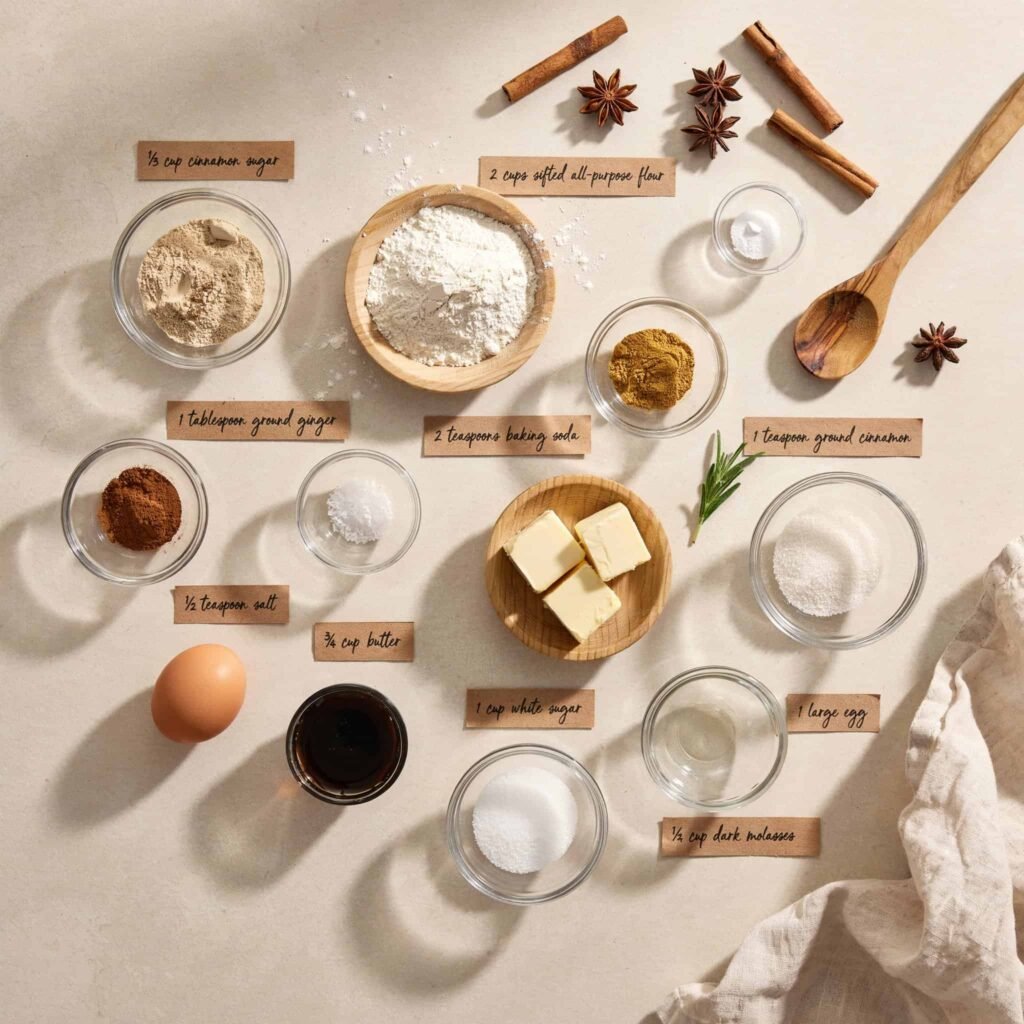
1/3cup cinnamon sugar (for rolling)
2cups all-purpose flour (sifted twice with the spices)
1tablespoon ground ginger
2teaspoons baking soda
1teaspoon ground cinnamon
1/2teaspoon salt
3/4cup unsalted butter or shortening (at room temperature)
1cup granulated sugar
1large egg
1/4cup dark molasses
Instructions
1
Preheat the oven to 350 degrees Fahrenheit. Place the cinnamon sugar in a shallow bowl and set aside.
2
Sift together the flour, ginger, baking soda, cinnamon, and salt into a large bowl. Sift a second time. Stir to combine.
3
Beat the butter in a large bowl until creamy. Gradually beat in the sugar. Add the egg and molasses and beat until light and fluffy.
4
Sift one-third of the flour mixture into the butter mixture and stir to combine. Sift in the remaining two-thirds and stir until a soft dough forms.
5
Roll small pieces of dough into 1-inch balls. Roll each ball in the cinnamon sugar to coat. Place on ungreased baking sheets 2 inches apart.
6
Bake for about 10 minutes, switching racks halfway through, until the tops are rounded and slightly cracked. Cool on a wire rack. Store in an airtight container..
Nutrition Facts
Servings 60
Amount Per Serving
Calories3462kcal
% Daily Value *
Cholesterol552mg184%
Sodium4782mg200%
Potassium1742mg50%
Total Carbohydrate518g173%
Dietary Fiber14g57%
Sugars313g
Protein35g70%
Vitamin C 1 mg
Calcium 417 mg
Iron 19 mg
* Percent Daily Values are based on a 2,000 calorie diet. Your daily value may be higher or lower depending on your calorie needs.
Note
Nutrition provided as batch total for 60 cookies. The cracked top is the doneness indicator, not the clock. Store in an airtight container.
Keywords:
gingersnap cookies, grandma gingersnap recipe, old fashioned gingersnaps, molasses cookies