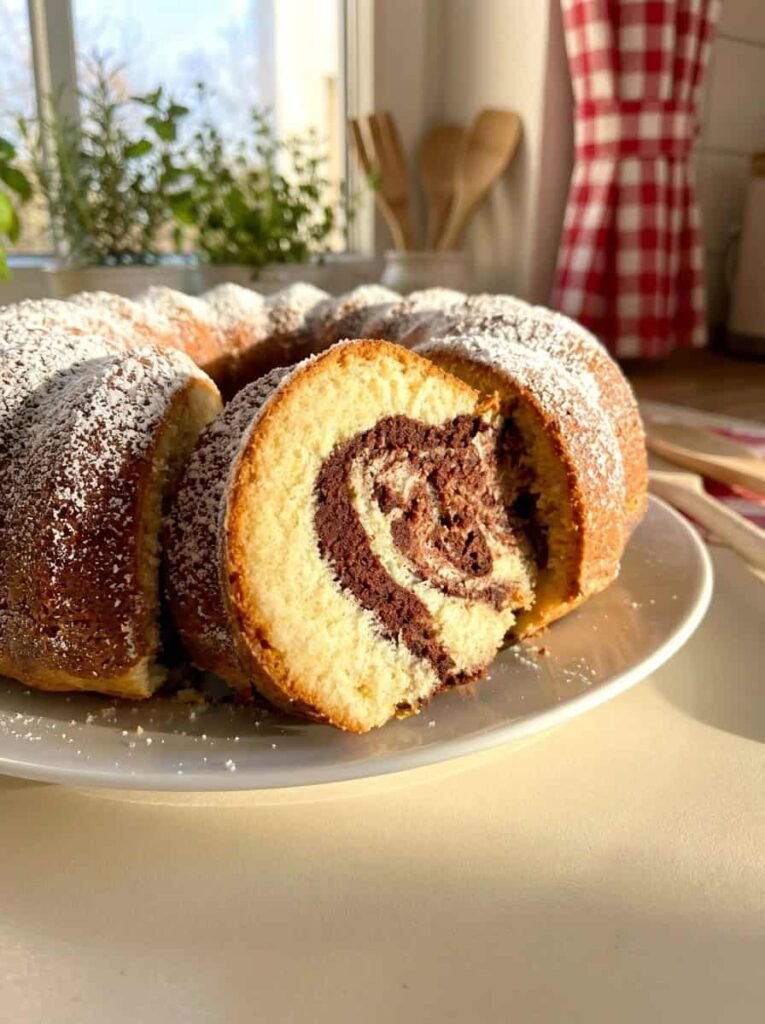
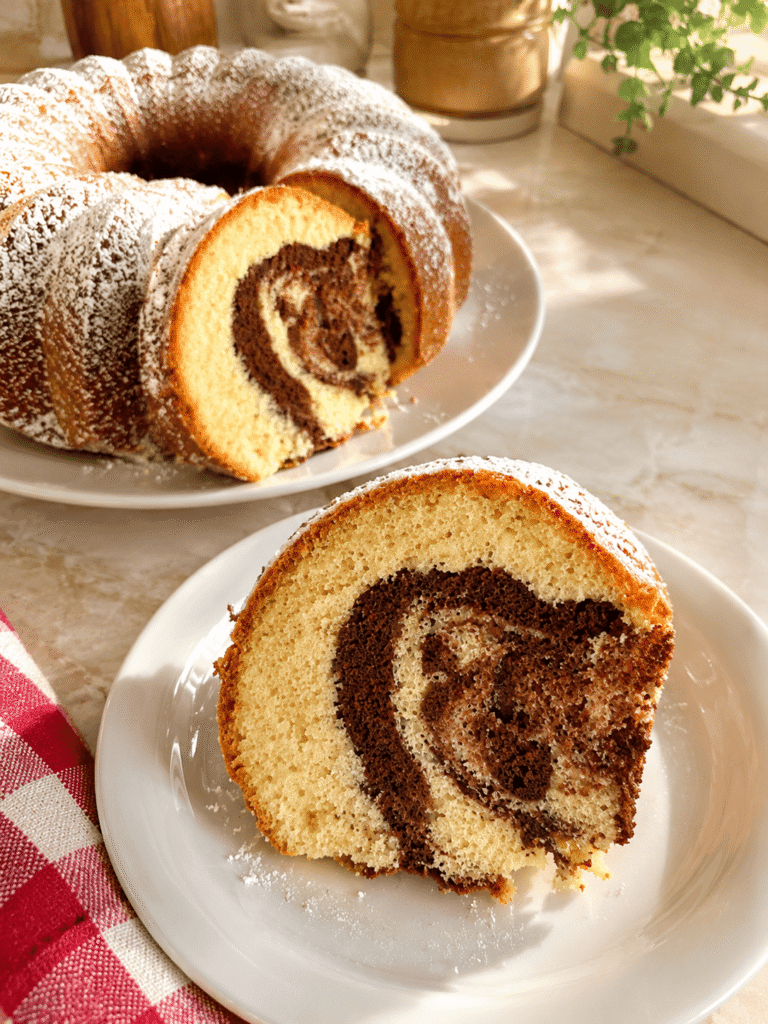
Marmorkuchen is the German marble cake that has been the centerpiece of Kaffee und Kuchen, the afternoon coffee-and-cake tradition, for generations. A richly buttery vanilla Bundt cake swirled with a chocolate layer, dusted with powdered sugar, and best eaten the day after baking when the flavors have had time to settle and the texture has improved. It's a cake that rewards patience.
The technique is less complex than the result suggests. One base batter, two-thirds vanilla, one-third chocolate, layered in a Bundt or Gugelhupf pan and swirled with a fork before baking. The specific swirling method, a fork pushed into the batter and pulled upward while twisting, is what creates the distinct marble pattern rather than a muddled mix of the two batters.
The batter
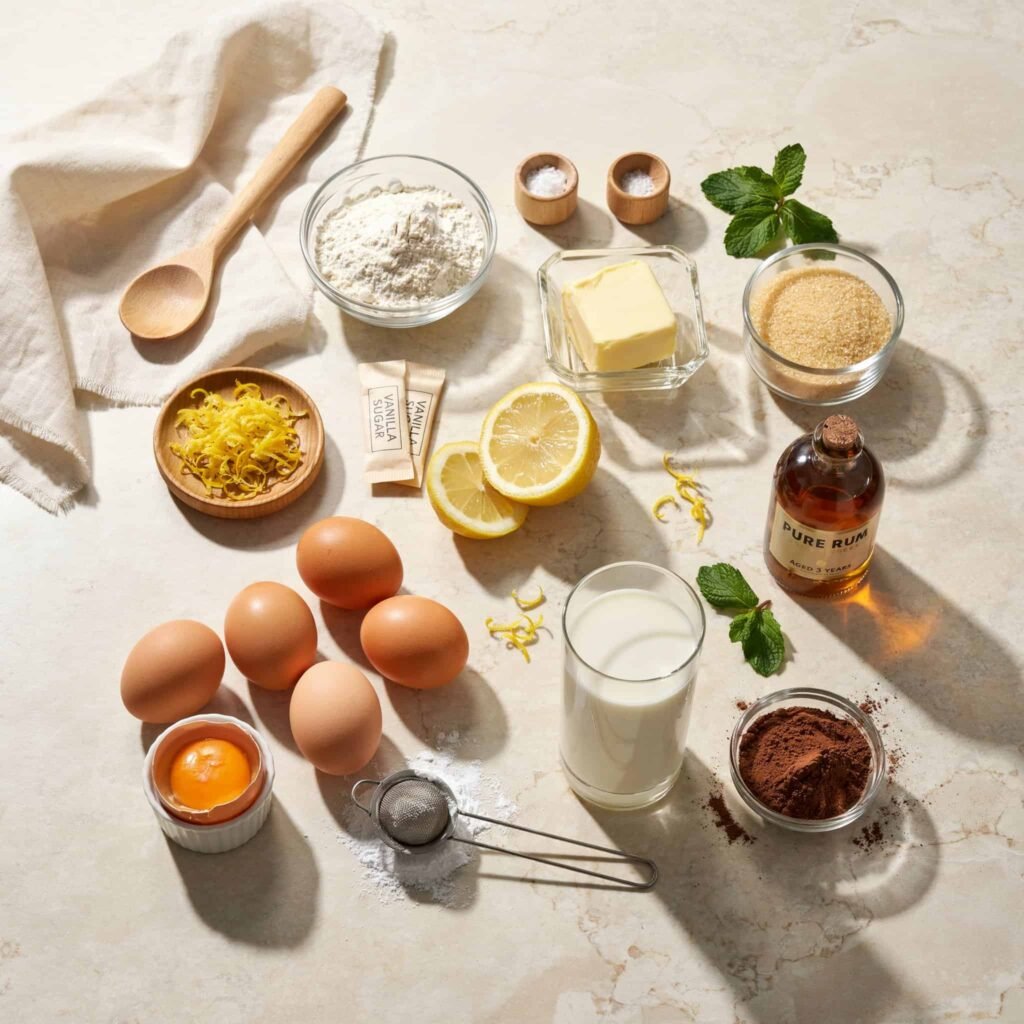
Cream one cup of room-temperature butter with one and three-quarters cups of caster sugar, two packets of vanilla sugar or two teaspoons of vanilla extract, and a teaspoon of fresh lemon zest until light and fluffy. Caster sugar dissolves more quickly into butter than granulated sugar and produces a finer crumb; if you only have granulated sugar, pulse it briefly in a blender or food processor to refine it. The rum, a tablespoon if using, goes in now.
Add four room-temperature eggs one at a time, mixing between each addition until fully incorporated. Room temperature eggs and butter cream together without curdling; cold eggs added to beaten butter can cause the mixture to separate and produce an uneven crumb.
The flour-milk alternation is the technique that keeps the batter smooth. Combine the dry ingredients, three and a quarter cups of flour, three teaspoons of baking powder, and half a teaspoon of salt. Add a third of the flour mixture, mix just until incorporated, then add a third of the milk. Repeat twice more until both are fully incorporated. The alternating additions prevent the batter from becoming too dry or too wet at any point, which would require extra mixing to bring it back together. Extra mixing develops gluten and makes the cake heavy. Stop mixing as soon as each addition disappears.
Buttermilk is the better choice over whole milk if you have it. The acid in buttermilk tenderizes the gluten and produces a noticeably more moist and delicate crumb. The flavor difference is subtle but the texture difference is real.
The chocolate layer and the marbling
Scoop two-thirds of the batter into the prepared Bundt pan and spread it into the base. To the remaining third in the bowl, add a quarter cup of unsweetened cocoa powder and an extra tablespoon of milk to compensate for the dry cocoa. Stir until fully incorporated. Scoop the chocolate batter on top of the vanilla layer.
Push a fork straight down into the batter and pull upward while twisting as you lift. Repeat this motion all the way around the pan. This creates the spiral marble pattern. Two important points: go all the way to the bottom of the pan with each fork insertion so the chocolate and vanilla intermingle through the full depth, not just the top half. And don't over-swirl. Too many passes blends the two batters into a uniform brown rather than leaving distinct ribbons. Five to eight complete circuits around the pan is usually enough.
Baking and cooling
Middle rack, 350 degrees Fahrenheit, forty to fifty minutes. The toothpick test applies: a few moist crumbs are fine, raw batter means more time, no crumbs means it may be heading toward overdone. Marble cake has enough fat that it stays moist when properly baked, but overbaking dries it considerably. Pull on the early side and let the residual heat in the pan finish the job.
Cool in the pan for ten minutes, then invert onto a wire rack and cool completely. Dust with powdered sugar just before serving. A chocolate glaze is optional and less traditional; the powdered sugar is the German version.
The next-day rule
The source recipe specifies that this cake is best eaten the next day, and it's correct. Freshly baked Marmorkuchen is good but slightly crumbly and the two layers taste somewhat separate. Wrapped and rested overnight, the moisture redistributes through the crumb, the vanilla and chocolate flavors integrate, and the texture firms into something that slices cleanly and holds together. This is a characteristic of many German cakes and one reason Kaffee und Kuchen is often prepared the day before it's served. Serves 16. Nutrition per serving: 312 calories, 44g carbohydrates, 5g protein, 14g fat.
Freezing
Marmorkuchen freezes well for up to three months. Skip any chocolate glaze if you're planning to freeze. Let it cool completely, wrap in two to three layers of plastic wrap, then a layer of aluminum foil. Freeze whole or in individual slices. Thaw at room temperature for two to three hours before serving, then dust with fresh powdered sugar.
Traditional German Marmorkuchen: a buttery vanilla Bundt cake swirled with a cocoa layer, dusted with powdered sugar. Bake 45 minutes, rest overnight. Serves 16.
Ingredients
3 1/4cups all-purpose flour
3teaspoons baking powder
1/2teaspoon salt
1cup unsalted butter (at room temperature)
1 3/4cups caster sugar or granulated sugar pulsed fine
2 packets vanilla sugar or 2teaspoons vanilla extract
1teaspoon fresh lemon zest
1tablespoon rum (optional)
4large eggs (at room temperature)
1 1/2cups whole milk or buttermilk
1tablespoon plus extra for chocolate layer
1/4cup unsweetened cocoa powder
Powdered sugar for dusting
Instructions
1
Preheat the oven to 350 degrees Fahrenheit. Butter a 10 to 12-cup Bundt or Gugelhupf pan generously and coat with flour, shaking out the excess.
2
Combine the flour, baking powder, and salt in a bowl and set aside.
3
Cream the butter, caster sugar, vanilla sugar (or extract), and lemon zest in a large bowl until light and fluffy. Add the rum if using. Add the eggs one at a time, mixing between each addition until fully incorporated.
4
Add one-third of the flour mixture and mix until just incorporated. Add one-third of the milk and mix. Repeat with the remaining flour and milk in two more additions. Do not overmix.
5
Scoop two-thirds of the batter into the prepared pan and spread evenly. To the remaining batter in the bowl, add the cocoa powder and extra tablespoon of milk. Stir until fully combined. Scoop the chocolate batter on top of the vanilla layer.
6
Push a fork straight down into the batter and pull upward while twisting. Repeat all the way around the pan 5 to 8 times to create the marble pattern. Do not over-swirl.
7
Bake on the middle rack for 40 to 50 minutes until a toothpick inserted in the center comes out with a few moist crumbs. Cool in the pan for 10 minutes, then invert onto a wire rack and cool completely. Dust with powdered sugar before serving..
Nutrition Facts
Servings 16
Amount Per Serving
Calories312kcal
% Daily Value *
Total Fat14g22%
Saturated Fat8g40%
Cholesterol74mg25%
Sodium190mg8%
Potassium177mg6%
Total Carbohydrate44g15%
Dietary Fiber1g4%
Sugars23g
Protein5g10%
Vitamin A 451 IU
Vitamin C 0.2 mg
Calcium 76 mg
Iron 2 mg
* Percent Daily Values are based on a 2,000 calorie diet. Your daily value may be higher or lower depending on your calorie needs.
Keywords:
German marble cake, Marmorkuchen, marble Bundt cake, German chocolate marble cake