Russian Eggplant Caviar with Cracked Coriander
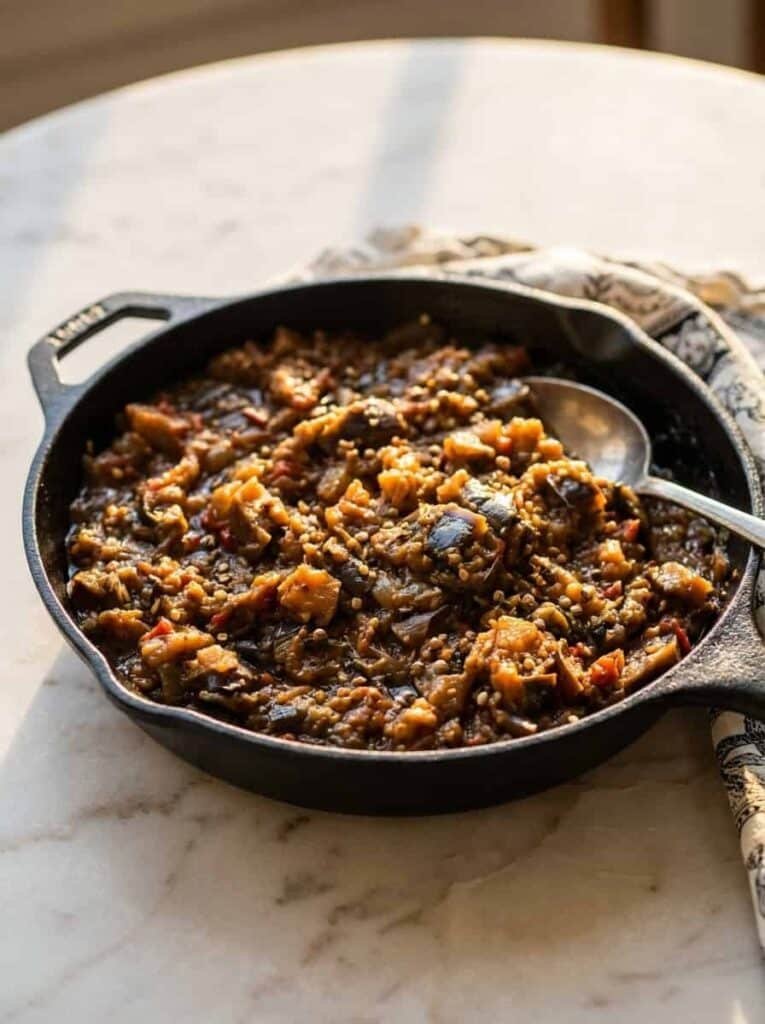
It is not caviar and there is no fish anywhere near it. The name comes from the texture, a dark glossy spread that gets scooped onto bread, and from a long Eastern European habit of calling any rich vegetable paste caviar.
What it actually is: four eggplants cooked down with onion, red pepper and cracked coriander seeds for an hour and a half until almost all the liquid has gone and the whole thing turns spreadable.
Fifteen minutes of work. The other ninety minutes are the pot doing its job while you do something else.
Crack the coriander seeds yourself
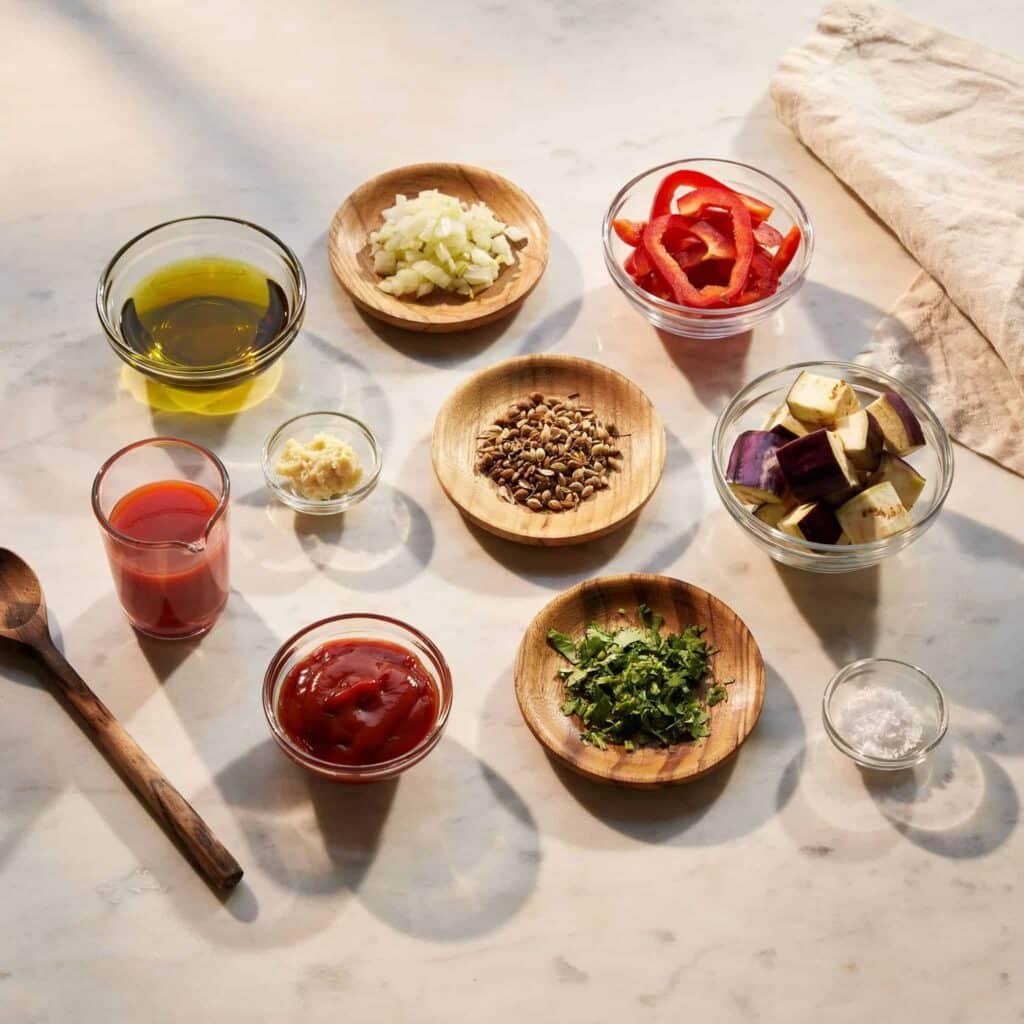
Whole seeds cracked in a mortar and pestle, not ground coriander from a jar. These are different ingredients and swapping them changes the dish.
Cracking releases the oils right before they hit the pan, and leaving the pieces coarse means you get occasional bursts of citrusy warmth rather than an even background note. Pre-ground coriander has been sitting in a jar losing its volatile oils for months.
A tablespoon of seeds looks like a lot. It is correct.
Cook the onion and pepper slowly
Fifteen minutes over low heat, until translucent but with no colour on them at all.
This is a sweetness step. Onion cooked slowly without browning goes sweet and soft. Onion cooked fast goes brown and takes on a roasted flavour, which is fine in other dishes and wrong in this one. There is nothing else here bringing sweetness, so the onion has to.
Garlic and the cracked coriander go in after, for about a minute, just until the kitchen smells like it. Garlic added at the start would burn over fifteen minutes.
Cut the eggplant evenly
Roughly one inch cubes, and the important word is roughly rather than the measurement. What matters is that they are all about the same size as each other.
Mixed sizes mean the small pieces collapse to mush while the big ones stay spongy, and you will be stuck cooking the whole pot longer to catch up the stragglers. Even sizing means everything arrives together.
The long cook
Eggplant, tomato juice and ketchup into the pot. Stir, lid on, low heat, an hour and a half.
Check it every twenty minutes and stir. Eggplant releases liquid early and then reabsorbs it, and toward the end there is very little left in the pot, which is exactly when it will catch and burn on the bottom if you are not paying attention.
You are done when there is almost no liquid and the eggplant has given up its structure entirely. If it still feels spongy at the ninety minute mark, keep going another twenty or thirty minutes. Spongy eggplant is undercooked eggplant and no amount of stirring fixes it.
Season at the end
Salt goes in when the mixture has properly reduced, not at the start.
The volume drops by more than half over ninety minutes. Salt to taste early and you will have oversalted by the end. Then the chopped cilantro, stirred through off the heat so it stays fresh and green.
How to eat it
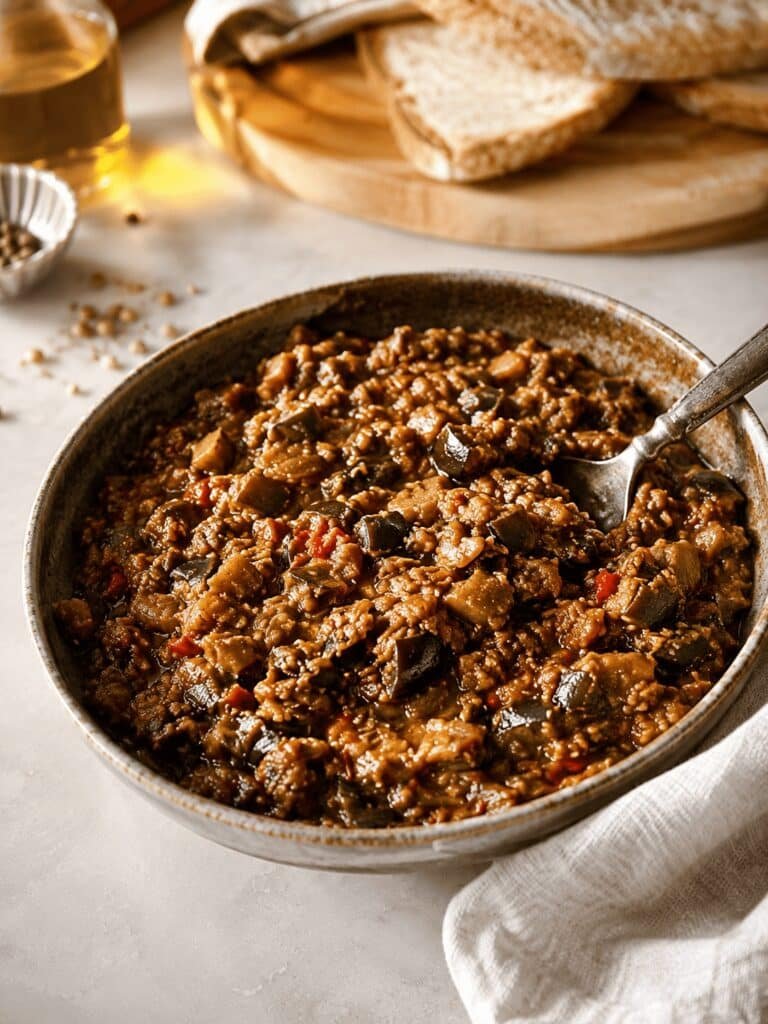
Warm or cold, both work and they taste like slightly different things. Warm it is softer and the coriander comes forward. Cold it firms up and the tomato gets sharper.
Bread or crackers, and that is really it. A cast iron pot is worth using if you have one because the heavy base is more forgiving over a long low cook.
Making it ahead
This keeps several days refrigerated and it is one of those things that genuinely improves on day two. Bring it back to room temperature before serving if you made it cold, or warm it gently in a pan.
On the ketchup
Two tablespoons of ketchup alongside the tomato juice looks like a shortcut and it is doing something specific. Ketchup carries vinegar and sugar as well as tomato, so it adds acidity and a touch of sweetness in one move.
A slow cooked eggplant spread with red pepper, garlic, tomato and cracked coriander seeds, served warm or cold.
- 2 tablespoons extra virgin olive oil
- 1 large onion chopped
- 1 large red pepper sliced
- 4 cloves garlic minced
- 1 tablespoon coriander seeds cracked
- 4 medium eggplants cubed
- 1/2 cup 125ml / tomato juice
- 2 tablespoons ketchup
- 1/4 cup 10g / cilantro chopped
- salt to taste.
- 1 Heat the olive oil in a large cast iron pot. Add the onion and red pepper and cook over low heat 15 minutes, until translucent but not coloured.
- 2
Crack the coriander seeds using a mortar and pestle. Add the garlic and cracked coriander to the pot and stir about 1 minute until fragrant.- 3
Add the cubed eggplant tomato juice and ketchup. Stir, cover with a lid and cook on low for 1 1/2 hours, until very little liquid remains and the eggplant is spreadable. Check and stir every 20 minutes to prevent it catching on the bottom.- 4
Once the mixture has reduced considerably, salt to taste and stir through the chopped cilantro off the heat.- 5
Serve warm or cold with bread or crackers..NoteNutrition per serving from source: 111 calories, 19g carbohydrates, 3g protein, 4g fat, 1g saturated fat, 62mg sodium, 654mg potassium, 8g fiber, 11g sugar. Source notes these values are automatically calculated and approximate. Cut the eggplant to roughly even 1 inch cubes so the pieces cook at the same rate. If the eggplant is still spongy after 90 minutes, cook another 20 to 30 minutes. Salt at the end, after the mixture has reduced.
Savory, Make Ahead, Warm Spiced - 2