Easy Cinnamon Rolls (One Rise)
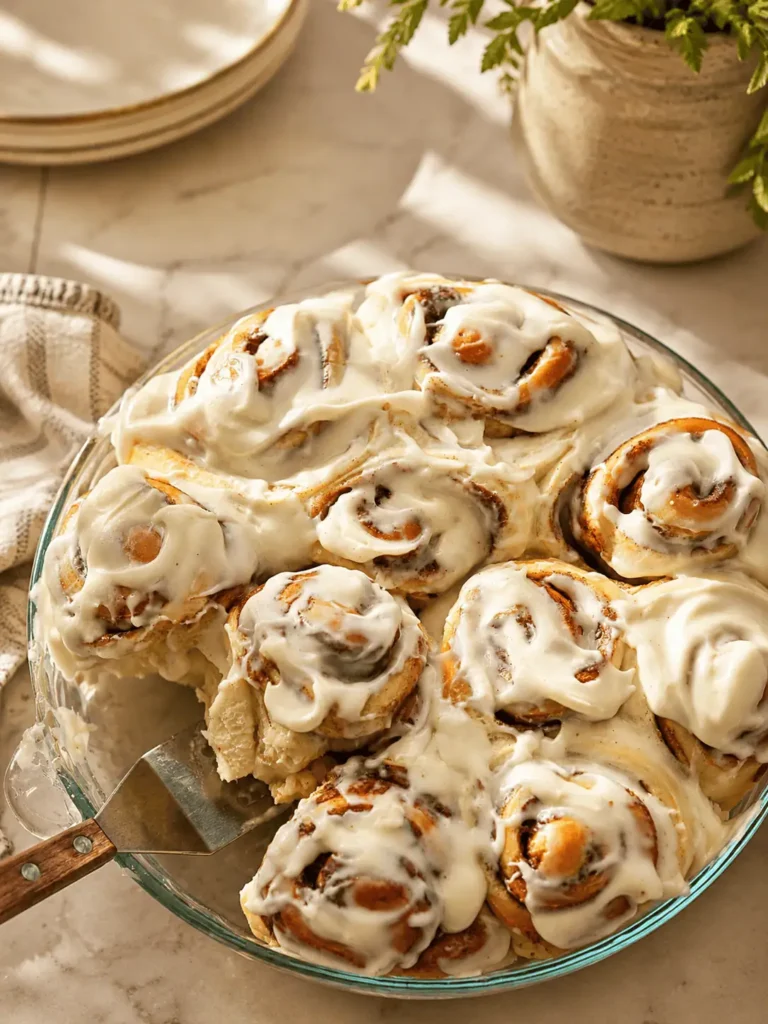
These cinnamon rolls are designed for anyone who has been intimidated by yeast baking. The recipe requires only one rise rather than the standard two, the dough comes together without any special technique, and the whole process takes about two hours from start to eating. The result is a soft, pillowy roll with a brown sugar and cinnamon filling and a tangy cream cheese icing spread over the top while everything is still warm.
The single-rise approach works because the dough is enriched with butter, egg, and milk, which slows gluten development enough that one rise produces rolls with good texture. They're not the same as a two-rise Cinnabon-style roll, which is tighter and chewier, but they're genuinely good and accessible to anyone baking with yeast for the first time.
The dough
Whisk together two and three-quarters cups of flour, a quarter cup of sugar, and half a teaspoon of salt in a large bowl. In a separate heatproof bowl, melt three tablespoons of butter into three-quarters of a cup of whole milk, either in the microwave or on the stovetop, until the mixture is warm to the touch at around 110 degrees Fahrenheit. This temperature matters: too cold and the yeast won't activate, too hot and it dies. A kitchen thermometer removes the guesswork, but warm-to-the-touch without being hot is a reasonable approximation if you don't have one.
Whisk in the two and a quarter teaspoons of instant yeast until dissolved. Pour this into the flour mixture, add one room-temperature egg, and stir with a sturdy spatula or in a stand mixer with the paddle attachment until a soft dough forms. Turn out onto a lightly floured surface and knead for three to five minutes until smooth. The dough will be soft but shouldn't stick aggressively. Add flour a tablespoon at a time if it's sticking excessively.
Place in a lightly greased bowl, cover, and let rest for ten minutes. This rest is shorter than a full first rise; it's just enough time for the gluten to relax so rolling the dough is easier and to get the filling ready.
The filling and the roll
Three tablespoons of very soft butter spread over the rolled dough. Very soft, not melted: melted butter will slide off and pool rather than staying on the surface. The butter should spread at room temperature with almost no resistance.
Mix a third of a cup of packed brown sugar with a tablespoon of cinnamon and sprinkle it evenly over the butter, all the way to the edges. Roll the dough into a log starting from the long side, keeping the roll tight. A looser roll gives you thinner, less defined spirals. Tight, even pressure as you roll gives you distinct layers that stay visible after baking.
Cut into ten to twelve equal rolls. A sharp knife is the tool; a serrated knife tends to compress the dough on the way through. Some bakers use unflavored dental floss, sliding it under the log and crossing it over the top to cut cleanly without squashing. Either works. Arrange in a lightly greased nine or ten-inch round cake pan or square baking pan with the rolls touching each other slightly.
The single rise and the bake
Cover the pan and let the rolls rise in a warm environment for sixty to ninety minutes until doubled. A turned-off oven with the light on works reliably. The rolls are ready when they've doubled and look noticeably puffy, filling the pan and touching each other.
Preheat the oven to 375 degrees and bake for twenty-four to twenty-seven minutes until lightly browned. If the tops are coloring faster than you'd like, tent loosely with foil. An internal temperature of 195 to 200 degrees confirms they're done without relying on color alone.
The cream cheese icing
Four ounces of softened full-fat cream cheese, two tablespoons of softened butter, two-thirds of a cup of powdered sugar, and a teaspoon of vanilla, beaten together until smooth. Spread over the warm rolls immediately after they come out of the oven. The warmth helps the icing melt slightly into the spirals rather than sitting entirely on top.
For a simpler glaze instead of cream cheese icing: whisk a cup of powdered sugar with half a teaspoon of vanilla and two to three tablespoons of milk or strong brewed coffee until smooth. The coffee version is surprisingly good against the cinnamon and brown sugar.
Why single-rise cinnamon rolls are worth making
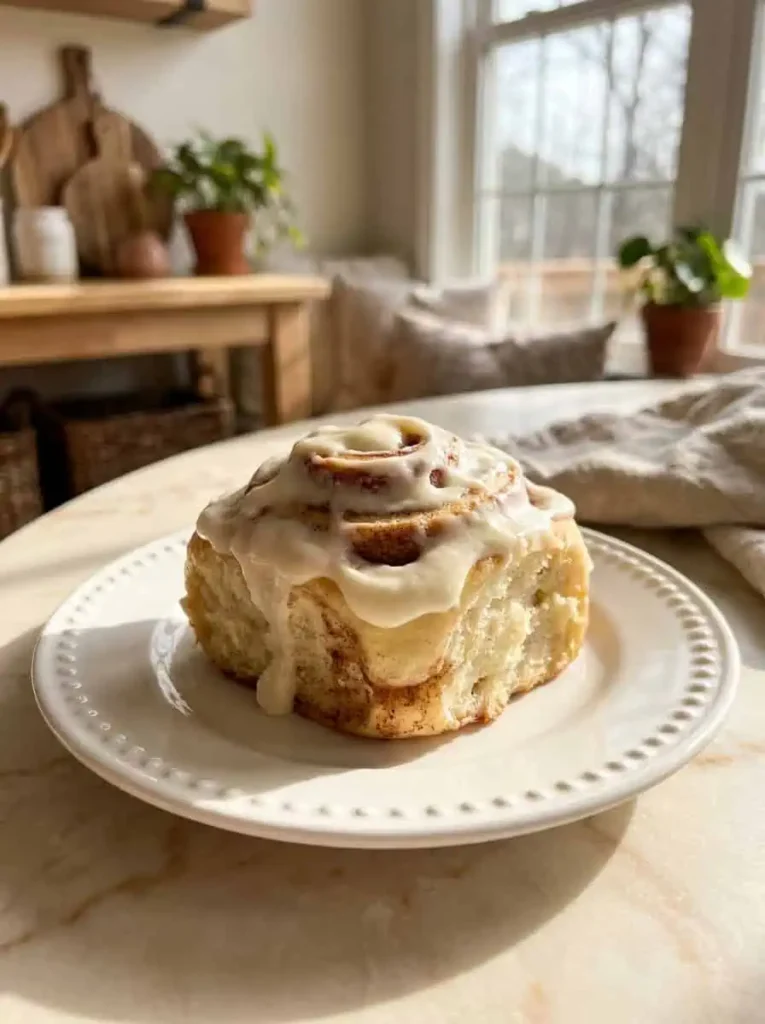
I've made cinnamon rolls in various forms and contexts, and the barrier for most home bakers is usually the time and the two-rise process. A single-rise recipe with a shorter timeline removes the main obstacle and still delivers something genuinely satisfying. The rolls are soft, the filling has the right amount of butter and spice, and the cream cheese icing is better than any glaze alternative. They're best fresh from the oven while the icing is still slightly warm, but they hold well for a day at room temperature and up to five days refrigerated. Makes ten to twelve rolls.
Make-ahead options
The dough can be made the night before through the cutting and arranging step. Cover the pan with plastic wrap and refrigerate overnight. The next morning, remove from the fridge, let rise in a warm spot for about an hour until doubled, then bake as directed. This is the version worth making when you want warm cinnamon rolls on a weekend morning without starting the dough at seven in the morning. The cold dough rises a little slower than room-temperature dough, so give it the full hour and check for doubling before preheating.
Soft cinnamon rolls from scratch with a single rise. Buttery enriched dough, brown sugar and cinnamon filling, cream cheese icing. Two hours, makes 10 to 12.
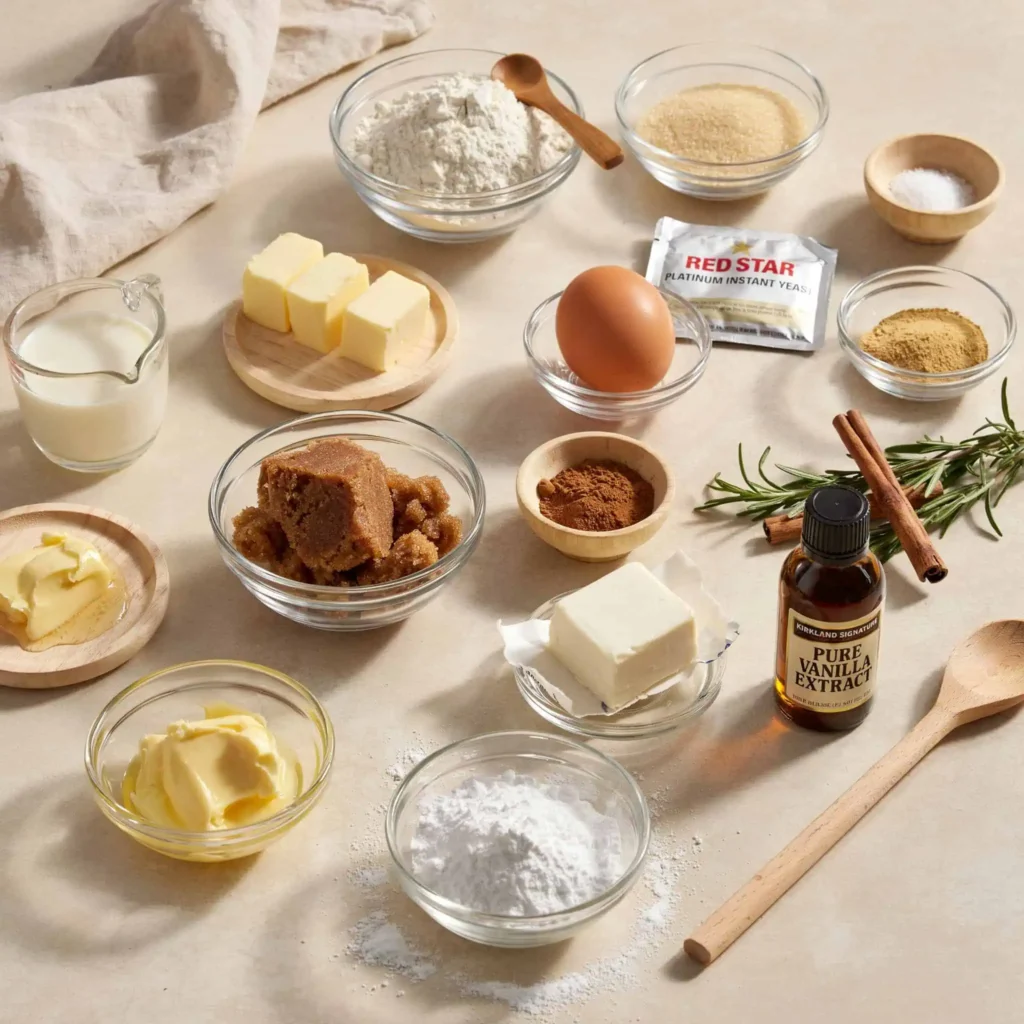
- 2 3/4 cups all-purpose flour (344g)
- plus more as needed
- 1/4 cup granulated sugar (50g)
- 1/2 teaspoon salt
- 3/4 cup whole milk (180ml)
- 3 tablespoons unsalted butter (43g)
- 2 1/4 teaspoons instant yeast (1 standard packet)
- 1 large egg (at room temperature)
- 3 tablespoons unsalted butter 43g very softened (for filling)
- 1/3 cup packed light or dark brown sugar (67g)
- 1 tablespoon ground cinnamon (for filling)
- 4 oz full-fat block cream cheese 113g (softened for icing)
- 2 tablespoons unsalted butter 28g (softened for icing)
- 2/3 cup powdered sugar (80g)
- 1 teaspoon vanilla extract (for icing)
- 1 Whisk together the flour, sugar, and salt in a large bowl.
- 2
Melt the butter into the milk in a heatproof bowl until the mixture is warm to the touch (about 110 degrees F). Whisk in the yeast until dissolved. Pour into the flour mixture, add the egg, and stir until a soft dough forms.- 3
Turn the dough onto a lightly floured surface and knead for 3 to 5 minutes until smooth. Place in a lightly greased bowl, cover, and rest for 10 minutes.- 4
Roll the dough into a 14x8 inch rectangle. Spread the softened butter over the surface. Mix together the brown sugar and cinnamon, then sprinkle evenly over the butter.- 5
Roll the dough into a tight log from the long side. Cut into 10 to 12 even rolls and arrange in a greased 9 or 10-inch round cake pan or square pan.- 6
Cover and let rise in a warm spot for 60 to 90 minutes until doubled in size.- 7
Preheat the oven to 375 degrees Fahrenheit. Bake for 24 to 27 minutes until lightly browned (internal temperature 195 to 200 degrees F). Tent with foil if the tops brown too fast.- 8
Beat the cream cheese, butter, powdered sugar, and vanilla until smooth. Spread over the warm rolls immediately and serve..NotePrep Time includes the 10-minute dough rest plus 60-90 minute rise (100 minutes total midpoint). Make-ahead: assemble through cutting, refrigerate overnight, rise 1 hour next morning, then bake. Servings set to 11 as midpoint of 10-12. No nutrition data was provided for this recipe.
easy cinnamon rolls, homemade cinnamon rolls, cinnamon roll recipe, single rise cinnamon rolls - 2