Dijon Salmon with Crispy Smashed Potatoes
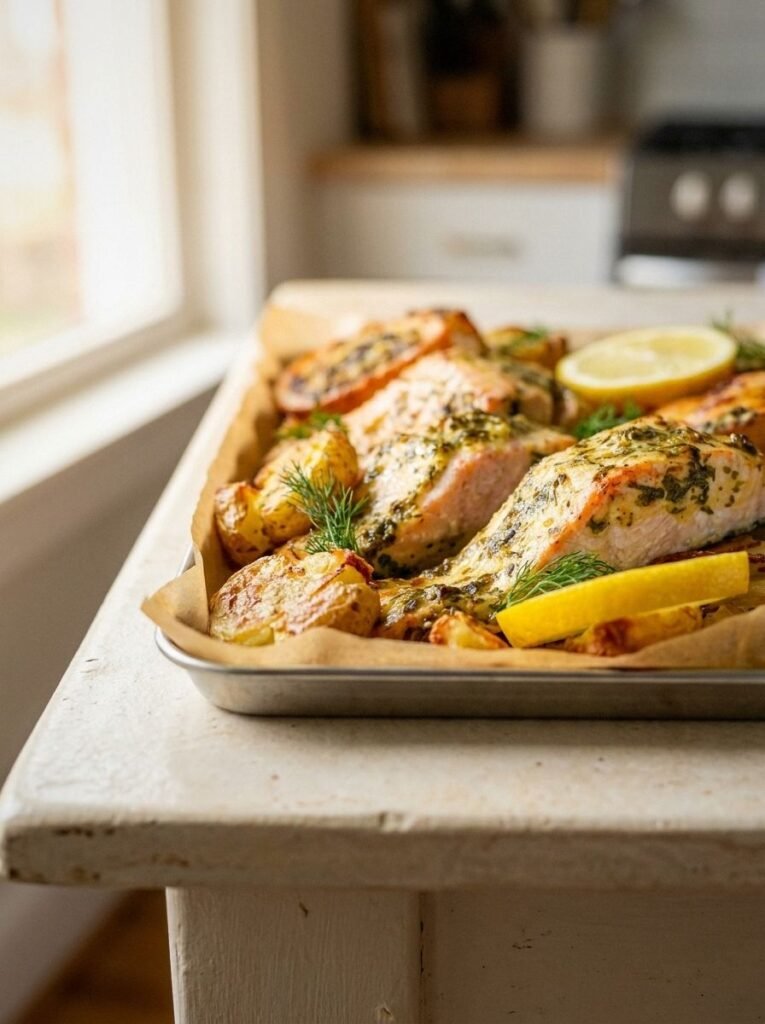
Lemon-Dijon salmon roasts while salted smashed baby potatoes crisp below, then both are served with a creamy dill, caper, yogurt, and mayonnaise sauce.
Dijon salmon with crispy smashed potatoes is a full dinner built around one useful piece of timing. The potatoes get a 30-minute head start on the lower oven rack. Then lemon-Dijon salmon goes onto the upper rack for the final 15 minutes. While both trays cook, you can stir together a dill and caper sauce and open a bag of salad greens. It is not a 20-minute recipe, but only 15 minutes are true prep. The rest is boiling and roasting, which makes this workable on a night when you are home but not interested in standing over a skillet.
Two oven racks keep the textures separate
Smashed potatoes need fierce bottom heat and enough time for their rough surfaces to dry and brown. Salmon needs a shorter, gentler visit. Using separate trays lets each ingredient keep its own juices and makes the timing predictable. Boiling the potatoes first ensures creamy centers, while five minutes in the colander releases steam before roasting. The salmon marinade combines oil, lemon, mustard, parsley, and garlic into a loose coating that protects the top. A cool yogurt-mayonnaise sauce supplies the creamy element without baking dairy onto the fish.
Salt, potato size, and sauce consistency
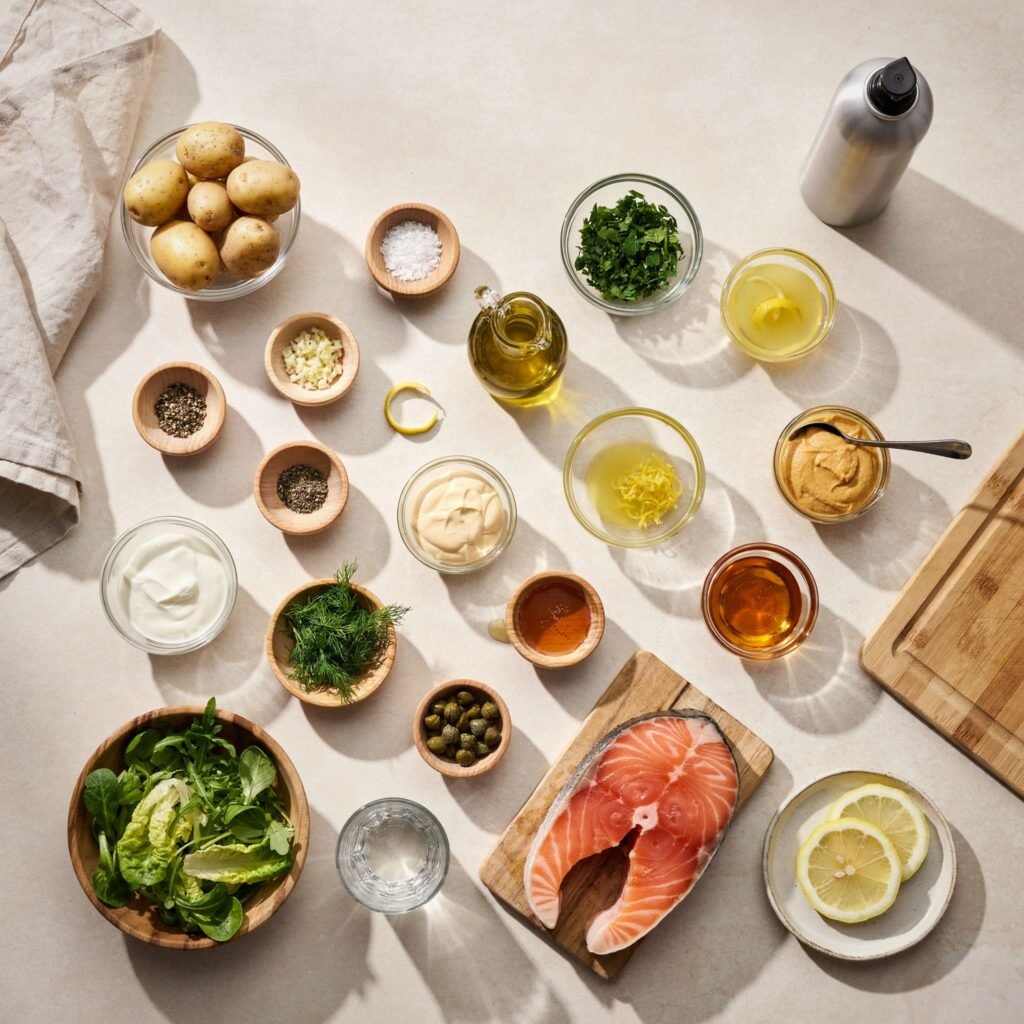
Choose baby potatoes of similar size so they soften together. The source uses two tablespoons of flaky salt across the potato water and tray, plus additional salt in the fish and sauce. That creates a high-sodium dish. If your Dijon, capers, or mayonnaise is salty, reduce the tray and sauce salt to suit your kitchen. For the sauce, Greek yogurt keeps the mayonnaise from feeling heavy. Add the optional water only after everything is mixed. Dill should be fresh here because its clean flavor is the main contrast to the roasted food.
Coordinate the trays without rushing the salmon
Start the potatoes in cold water so the centers cook evenly. Once a fork slides in easily, drain and leave them alone for five minutes. Arrange them with room between, then flatten until the skins split but the potatoes remain in one piece. Spray generously and put the tray low in the hot oven. At the 25-minute mark, prepare the salmon tray and whisk the marinade. Coat the fish just before it goes in. When the potatoes have cooked 30 minutes, slide the salmon onto the upper rack. Check it after 12 minutes if the fillets are thin. The center should flake and look opaque to your preferred doneness. Stir the sauce while the fish cooks, then taste before adding its full measure of salt. Plate the crisp potatoes immediately so their bottoms do not steam against the parchment.
Refrigerate salmon, potatoes, and sauce in separate containers for up to 3 days. Reheat the potatoes in a hot oven or air fryer and warm salmon gently. Keep the cold sauce out of the oven.
Serving dijon salmon with crispy smashed potatoes
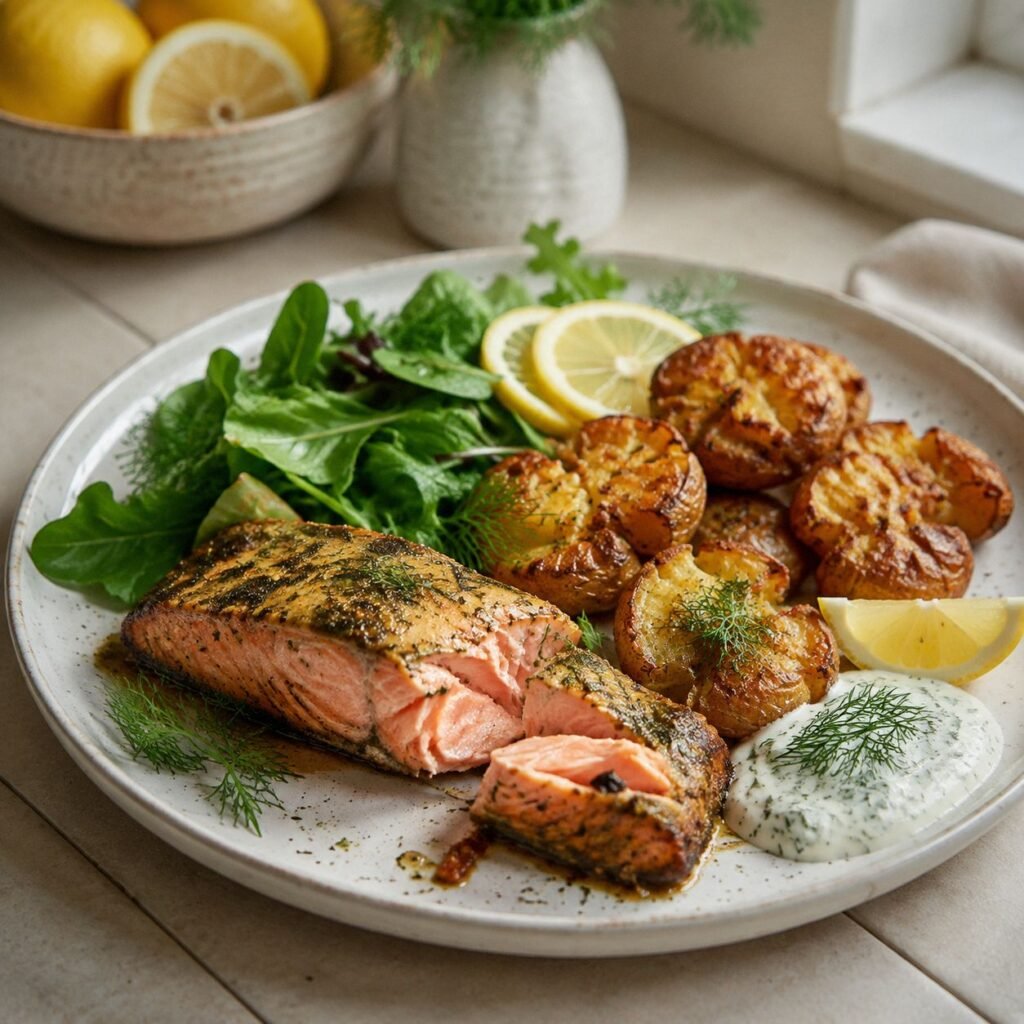
Spread the lemon dill sauce beside the salmon instead of underneath it. That keeps the fish attractive and prevents the potato bottoms from soaking. Add salad on the other side with a light vinaigrette, then let everyone take extra sauce. Lemon wedges are easier to squeeze than rounds. For a family platter, place potatoes around the edge and salmon in the center only when both are ready. Do not cover the platter while waiting because steam softens the potatoes. On a busy night, I put the salad bowl and sauce straight on the table and skip individual plating. Serve promptly, while the fish is warm and the sauce is still cold.
This Dijon salmon dinner coordinates crisp smashed potatoes, baked salmon, a green salad, and a creamy lemon dill sauce in one oven.
- 1 1/2 pounds Potatoes: baby potatoes scrubbed (700 g)
- 2 tablespoons flaky sea salt divided
- 2 tablespoons olive oil spray. Salmon: chopped flat-leaf parsley
- 1 lemon juice of
- 1 teaspoon minced garlic
- 1 teaspoon Dijon mustard
- 1/2 teaspoon flaky sea salt
- 1/4 teaspoon cracked black pepper
- 3 tablespoons olive oil (45 ml)
- 4 salmon fillets skin on or off. Sauce: 1/2 cup whole-egg mayonnaise (125 g)
- 1/2 cup Greek yogurt (125 g)
- 1 teaspoon Dijon mustard
- 3 tablespoons chopped fresh dill
- 1/2 lemon juice and zest of
- 1 teaspoon chopped capers
- 1 teaspoon flaky sea salt
- 1/2 teaspoon honey optional
- 1 tablespoon water optional. To serve: green leafy salad
- 1/2 lemon sliced.
- 1 Cover the potatoes with water by at least 3/4 inch in a large pot. Add 1 tablespoon salt. Bring to a boil and simmer 20 to 25 minutes until fork-tender.
- 2
Drain and let the potatoes steam dry in the colander for 5 minutes.- 3
Heat the oven to 425°F (220°C) or 400°F fan. Arrange potatoes on a parchment-lined tray and flatten gently.- 4
Season with the remaining tablespoon salt and spray generously with olive oil. Roast on the lower rack for 45 minutes.- 5
Whisk parsley lemon juice garlic Dijon salt pepper and olive oil. Put salmon skin-side down on a lined tray and coat with the marinade.- 6
After the potatoes have roasted for 30 minutes place the salmon on the upper rack. Bake about 15 minutes until cooked to your preference.- 7
Stir together mayonnaise yogurt Dijon dill lemon juice zest capers salt and optional honey. Thin with water if needed.- 8
Divide potatoes and salmon among plates. Serve with salad lemon slices and the sauce..NoteThe source also gives an air-fryer option: cook flattened potatoes at 400°F for 15 to 20 minutes and salmon at 350°F for 8 to 10 minutes. Source nutrition per serving: 714 calories, 49 g fat, 8 g saturated fat, 14 g polyunsaturated fat, 24 g monounsaturated fat, 120 mg cholesterol, 2385 mg sodium, 1504 mg potassium, 36 g carbohydrate, 3 g fiber, 10 g sugar, 37 g protein, 426 mg calcium, 4 mg iron.
Dijon salmon crispy potatoes, baked salmon dinner, smashed potatoes, lemon dill sauce - 2