Creamy Peanut Miso Ramen
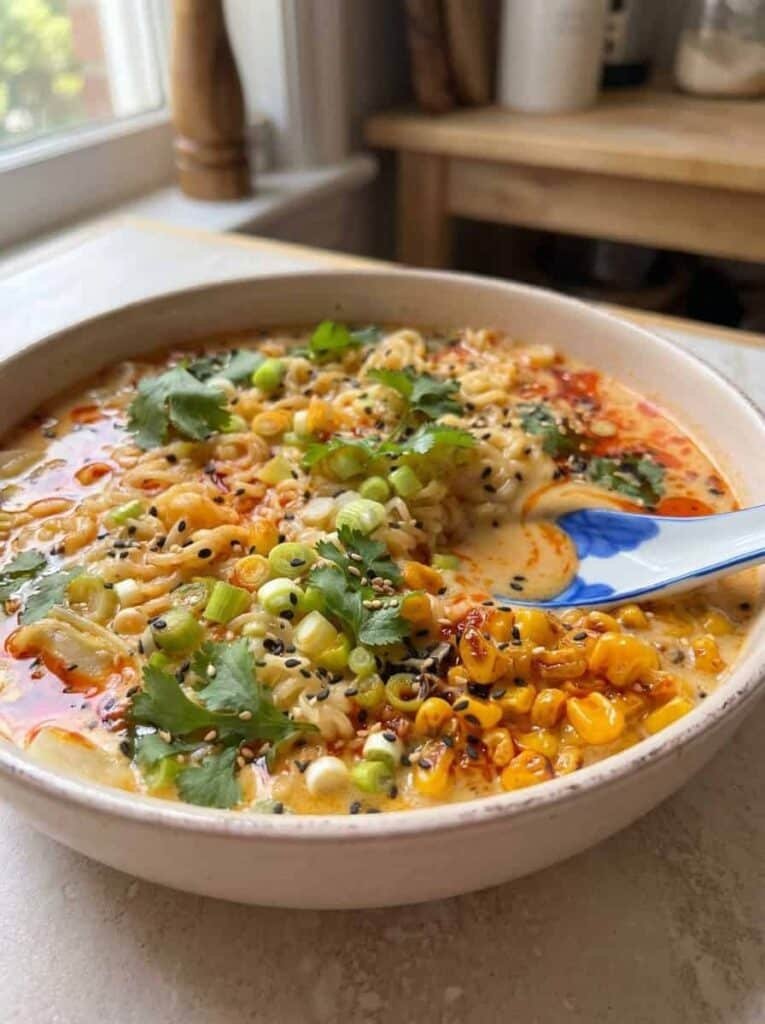
Peanut butter and miso, loosened with hot water into a paste, then built out with coconut milk and vegetable stock into a broth that tastes like it took far longer than it did.
Fifteen minutes and every ingredient is something that keeps in a cupboard. Whatever noodles you have work. Ramen, udon, or the cheap packets from the corner shop with the flavour sachet thrown away.
Loosen the paste before it goes anywhere near the pan
This is the one step that decides whether the broth comes out smooth or lumpy.
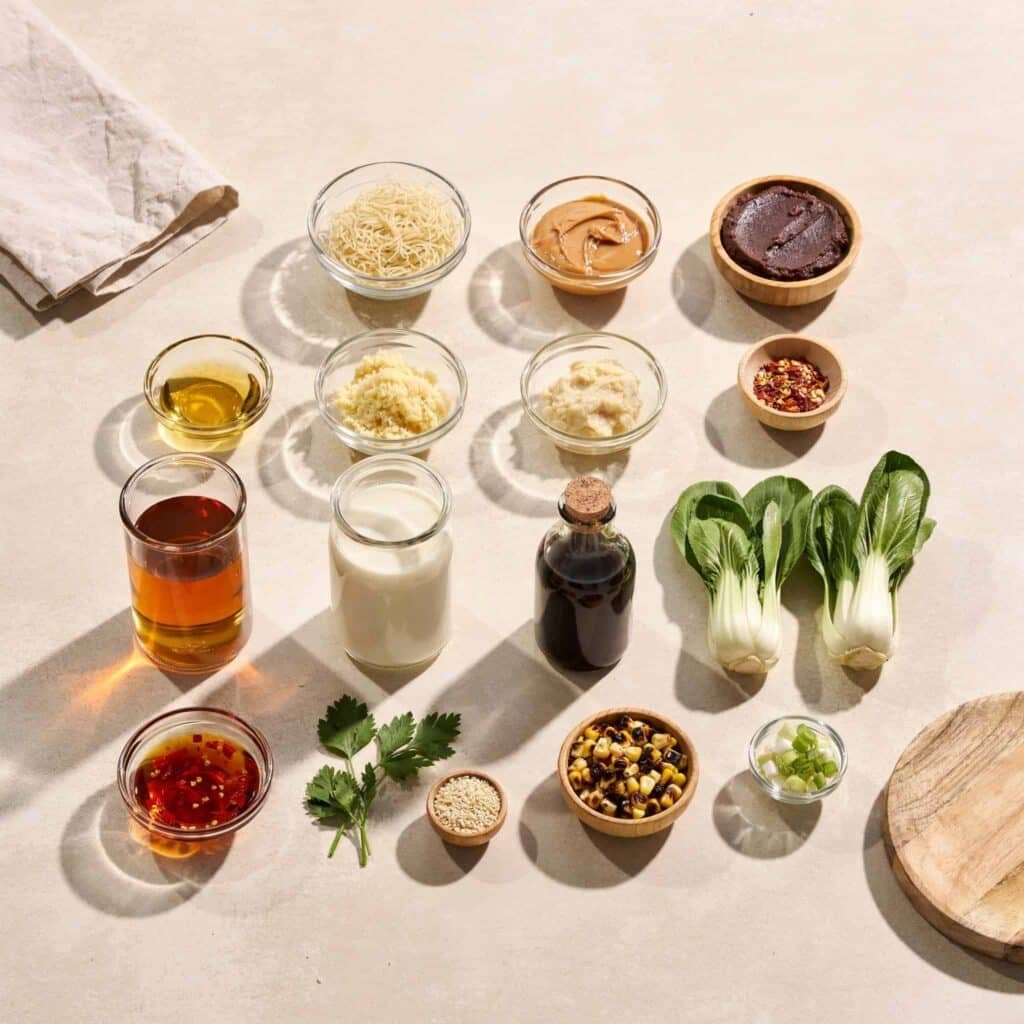
Mix the peanut butter and miso together in a small bowl first, then add a little hot water and work it until it is smooth and pourable. Only then does it go into the pan.
Drop a spoonful of stiff peanut butter straight into hot stock and it seizes into a lump that refuses to disperse. You will chase it around the pan with a spoon and it will still be there when you serve. Two minutes of loosening in a bowl solves it completely.
Fry the aromatics first
Garlic, ginger and a pinch of chilli flakes in a little sesame oil over gentle heat. Grated rather than chopped for both the garlic and the ginger, so they melt into the broth rather than sitting in it as pieces.
Keep the heat low. Sesame oil has a low smoke point and burnt sesame turns bitter fast. You want the aromatics softened and fragrant, not coloured.
Olive oil works if you have no sesame. You lose a layer of flavour and the dish still holds together.
Be generous with the liquid
Roughly 600ml of vegetable stock and 200ml of coconut milk for two bowls, and the instruction I would underline is to err on the side of more.
The noodles cook directly in the broth and they drink a surprising amount as they go. Start short and you end up with noodles sitting in a thick sauce rather than soup. This is meant to be soupy enough to drink from the bowl at the end.
The coconut milk is doing the richness. Peanut butter alone gives you a broth that is thick but slightly flat, and the coconut rounds it out into something creamy.
Season by tasting, not by measuring
There is no fixed amount of soy sauce here and that is deliberate.
Miso is already salty and stock brands vary enormously. Taste the broth once it comes together, then add soy a tablespoon at a time until it lands. An extra dash of sesame oil at this point is worth considering too.
Keep tasting as the noodles cook, because they absorb salt as well as liquid and the balance shifts.
Noodles and greens together
Both go into the broth at the same time, three to five minutes depending on your noodles.
Pak choi cooks fast. The stems want a couple of minutes and the leaves want under one, so if the heads are large, split them and give the stems a head start.
Finishing the bowl
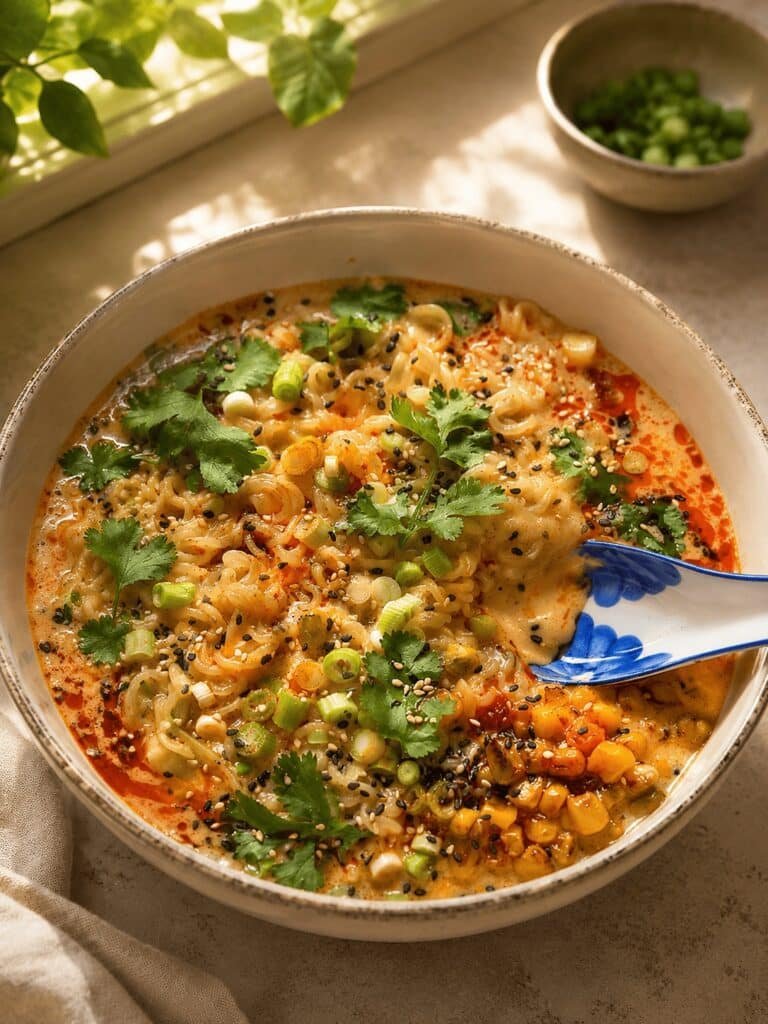
Into bowls, then a generous drizzle of chilli oil across the top. That drizzle is not optional in my view. It cuts through the peanut and coconut richness and gives the whole bowl somewhere to go.
Fresh coriander, charred sweetcorn, diced spring onion and sesame seeds on top. All optional, all worth doing. The sweetcorn especially, blackened in a dry pan for a couple of minutes, gives you sweetness and smoke against the savoury broth.
Nut butter swaps
Almond butter, cashew butter or tahini all work in place of peanut butter. Tahini gives the leanest result and needs slightly more coconut milk to compensate. Use smooth rather than crunchy, since the pieces in crunchy nut butter never soften into the broth.
Adding protein
Soft boiled eggs are the obvious addition, halved and laid on top at the end. Firm tofu cubed and fried until golden works well and keeps the bowl vegan.
A creamy vegan ramen built on peanut butter, miso and coconut milk, finished with chilli oil and fresh toppings.
- 2 portions ramen or udon noodles
- 1 to 2 tablespoons smooth peanut butter
- 1 tablespoon miso paste
- sesame oil
- 1 teaspoon grated ginger
- 1 teaspoon grated garlic
- chilli flakes to taste
- 600ml vegetable stock
- 200ml coconut milk
- soy sauce to taste
- pak choi
- chilli oil to serve
- fresh coriander to garnish
- charred sweetcorn to garnish
- diced spring onion to garnish
- sesame seeds to garnish.
- 1 Gently fry the grated garlic ginger and a sprinkle of chilli flakes in a little sesame oil over low heat until fragrant. Do not let them colour.
- 2
Meanwhile mix the peanut butter and miso paste together in a small bowl and loosen with a little hot water until smooth and pourable.- 3
Add the paste to the pan and mix with a little more hot water until loose, then add the coconut milk and vegetable stock. Use enough liquid to give a soupy broth with room to cook the noodles.- 4
Season to taste with soy sauce and an optional extra dash of sesame oil.- 5
Add the noodles and pak choi to the broth and cook 3 to 5 minutes, until the noodles are ready and the greens are tender.- 6
Serve in bowls with a generous drizzle of chilli oil and garnish with coriander charred sweetcorn spring onion and sesame seeds..NoteLoosen the peanut butter and miso with hot water into a smooth paste before adding it to the pan, or it will seize into lumps. Be generous with the stock since the noodles absorb a lot as they cook. Season with soy sauce by tasting rather than measuring, since miso and stock brands vary in saltiness. Keep the heat low when frying the aromatics; sesame oil burns easily.
Creamy, Warming, Quick - 2