Creamy Lemon Asparagus Gnocchi
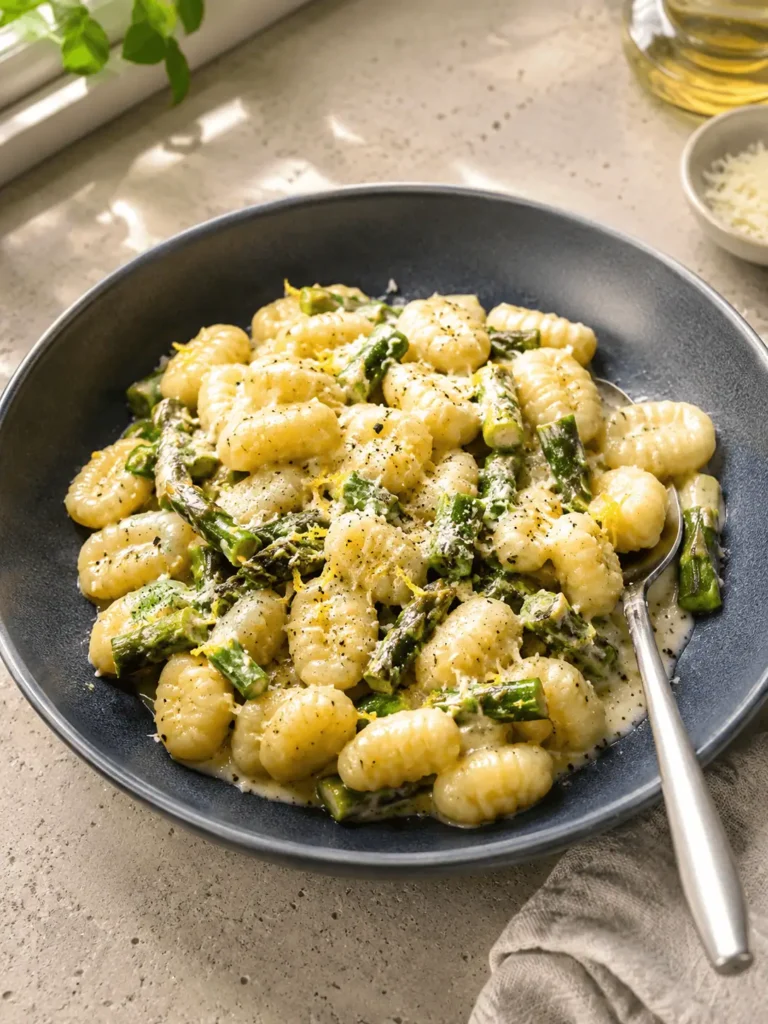
Creamy lemon asparagus gnocchi is a thirty-five-minute one-pan dinner with a technique that's worth understanding rather than just following. Shelf-stable potato gnocchi and asparagus are pan-fried together until the gnocchi turns golden and the asparagus stays bright and crisp, then removed while a lemon cream sauce comes together in the same pan. The sauce is thin until the moment you stir in the lemon juice, which reacts with the cream and thickens it almost immediately into something silky and cohesive. The lemon zest goes in twice, at the butter stage to release its oils into the fat, and at the end for a fresher top note.
This is inspired by pasta al limone, the Italian classic of pasta in a buttery lemon cream sauce, but with gnocchi instead of pasta and asparagus worked into the dish rather than served alongside. The gnocchi's density and slight chewiness suits this sauce in a way that thin pasta doesn't.
Frying the gnocchi and asparagus
Olive oil in a large nonstick skillet over medium heat until shimmering. Add the full package of shelf-stable gnocchi in an even layer, breaking apart any that are stuck together. Cover and cook undisturbed for five to seven minutes until the underside is golden brown. The undisturbed part is important: moving them before the crust forms means they steam rather than fry and you lose the color. When the bottoms are golden, add the asparagus cut into half-inch pieces and a pinch of salt. Cover and cook for another two to three minutes, stirring once halfway, until the asparagus is bright green and still has some bite. Transfer everything to a bowl and set aside.
Pan-frying gnocchi before saucing gives them a different texture than boiling: the exterior firms up and crisps slightly, so they hold their shape in the sauce rather than becoming soft and gluey. It also means one less pot to wash.
Building the lemon butter sauce
Wipe out the skillet if needed and return to medium heat. Melt a tablespoon of butter, then add half the lemon zest, about half a tablespoon, and stir constantly for fifteen to thirty seconds until fragrant. The zest blooms in the butter fat and releases its citrus oils into the base of the sauce, which gives a different quality of lemon flavor than zest added at the end.
Pour in three-quarters of a cup each of heavy cream and low-sodium vegetable or chicken broth, and a quarter teaspoon each of salt and pepper. Bring to a healthy simmer over high heat, then reduce and simmer until the sauce coats the back of a spoon in a thin layer, two to three minutes. Stir in the parmesan.
The lemon juice thickening reaction
Return the gnocchi and asparagus to the skillet and toss to combine. At this point the sauce will be thin and won't cling, which looks wrong but isn't. Bring to a steady simmer over high heat and cook for one and a half to three minutes more until the sauce starts to thicken around the gnocchi. Then pull the skillet off the heat and stir in the remaining lemon zest and the one and a half tablespoons of lemon juice while stirring constantly.
This is the moment the recipe is built around. The acid in the lemon juice reacts with the proteins in the cream and causes the sauce to thicken and go silky almost immediately. The result is a sauce that coats every piece of gnocchi and doesn't pool at the bottom of the bowl. More lemon juice can be added for more tartness, but each addition thickens the sauce further, so add gradually and taste as you go.
The sauce continues to thicken as it sits, which is why the recipe specifies serving immediately. Five minutes off the heat and the sauce tightens significantly; stir in a splash of broth to loosen it if needed.
Serving
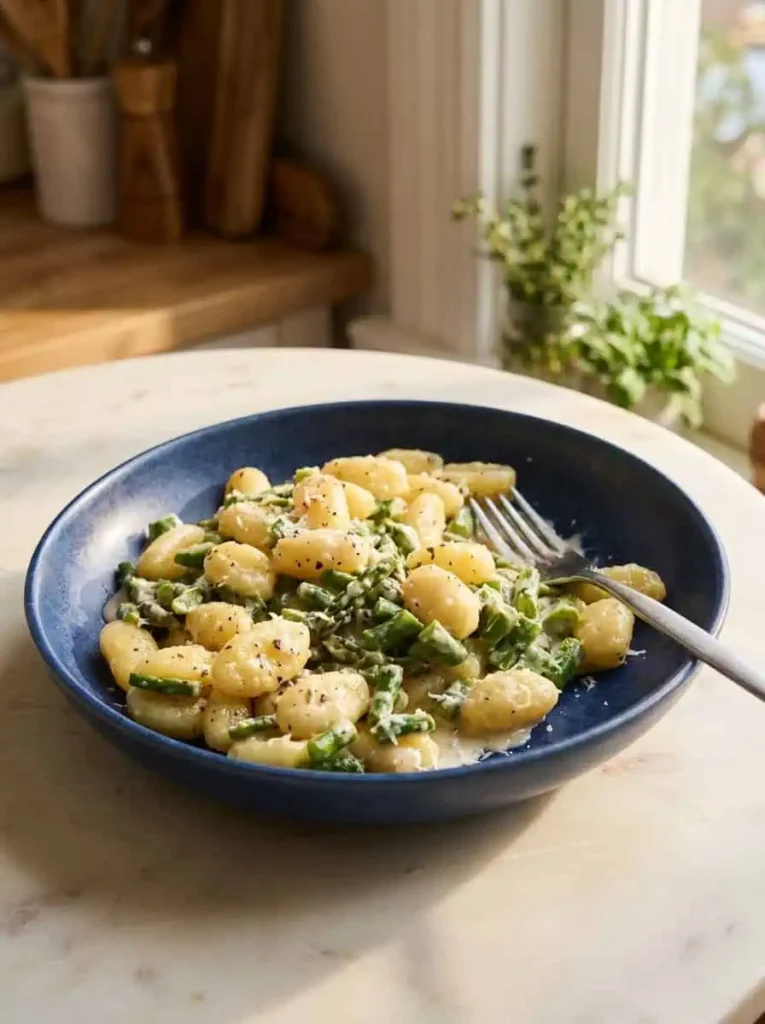
Immediately into bowls, topped with more grated parmesan and a few extra cracks of black pepper. The lemon flavor in the finished dish is bright and forward without being sharp, which is what the double-zest approach achieves: the zest cooked in butter gives roundness and depth, the zest added at the end gives the top brightness that cooks out of zest when exposed to heat.
This works as a vegetarian main with vegetable broth, or as a side alongside grilled fish or chicken. The asparagus is the right vegetable here because it matches the brightness of the lemon and cooks quickly enough not to slow down the rest of the recipe. Serves 4.
One-pan dinners and why they matter
I've cooked one-pan meals in many kitchens over the years, often in places with limited equipment or limited time, and the ones worth returning to are the ones that don't sacrifice flavor for convenience. This dish is genuinely good rather than merely easy. The technique of letting lemon juice thicken a cream sauce is the kind of thing you use in other recipes once you understand it, which is what separates a useful recipe from a forgettable one. Thirty-five minutes, one pan, serves four, and you learn something in the process.
Variations worth trying
Swap the asparagus for broccolini, peas, or thinly sliced zucchini, all of which work at the same cook time. A handful of fresh basil or fresh mint stirred in at the end instead of or alongside the remaining zest adds a different herby note. Crispy pancetta or bacon cooked in the pan before the gnocchi adds a salty richness that the dish absorbs well without losing its lemon character.
Shelf-stable gnocchi and asparagus pan-fried until golden, then tossed in a lemon butter cream sauce that thickens when the lemon juice is stirred in. One pan, 35 minutes.
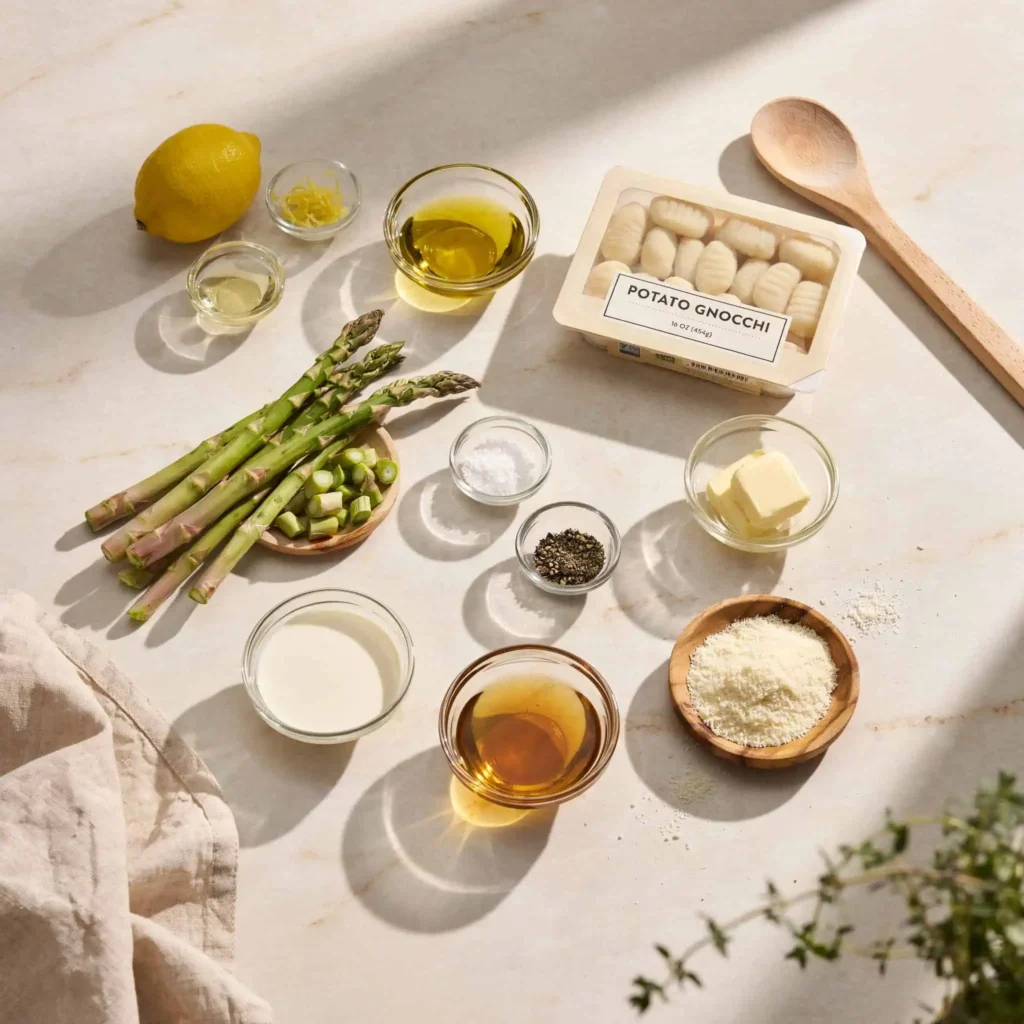
- 1 large lemon (about 1 tablespoon zest and 1 1/2 tablespoons juice)
- 1 tablespoon olive oil
- 1 package shelf-stable potato gnocchi (16 to 18 oz)
- 1 bunch asparagus about 1 lb (tough ends removed)
- stalks cut into 1/2-inch pieces
- Kosher salt and black pepper
- 1 tablespoon unsalted butter
- 3/4 cup heavy cream
- 3/4 cup low-sodium vegetable or chicken broth
- 1/4 cup grated Parmesan (plus more for serving)
- 1 Zest the lemon to get about 1 tablespoon zest. Juice the lemon into a small bowl to get 1 1/2 tablespoons juice. Set both aside separately.
- 2
Heat the olive oil in a large nonstick skillet over medium heat until shimmering. Add the gnocchi in an even layer, breaking apart any stuck together. Cover and cook undisturbed until golden brown underneath, 5 to 7 minutes.- 3
Add the asparagus and a pinch of salt. Toss to combine, cover, and cook 2 to 3 minutes more, stirring once halfway, until the asparagus is bright green and crisp. Transfer the gnocchi and asparagus to a bowl.- 4
Wipe out the skillet if needed and return to medium heat. Melt the butter. Add half the lemon zest and stir constantly for 15 to 30 seconds until fragrant.- 5
Add the heavy cream, broth, 1/4 teaspoon salt, and 1/4 teaspoon pepper. Bring to a simmer over high heat, then reduce and simmer until the sauce lightly coats the back of a spoon, 2 to 3 minutes. Stir in the Parmesan.- 6
Return the gnocchi and asparagus to the skillet and toss. Bring to a steady simmer over high heat and cook until the sauce thickens slightly around the gnocchi, 1 1/2 to 3 minutes.- 7
Remove from heat. Stir in the remaining lemon zest and lemon juice while stirring constantly; the sauce will thicken and turn silky. Season with salt and pepper. Serve immediately with more Parmesan and black pepper..NoteServe immediately; the sauce thickens considerably as it sits. If reheating, add a splash of broth and stir in fresh lemon juice after warming. Use shelf-stable gnocchi, not fresh, for the pan-frying step. No nutrition data was provided for this recipe.
lemon asparagus gnocchi, creamy gnocchi recipe, pan fried gnocchi, easy gnocchi dinner - 2