Creamy Frozen Lemonade
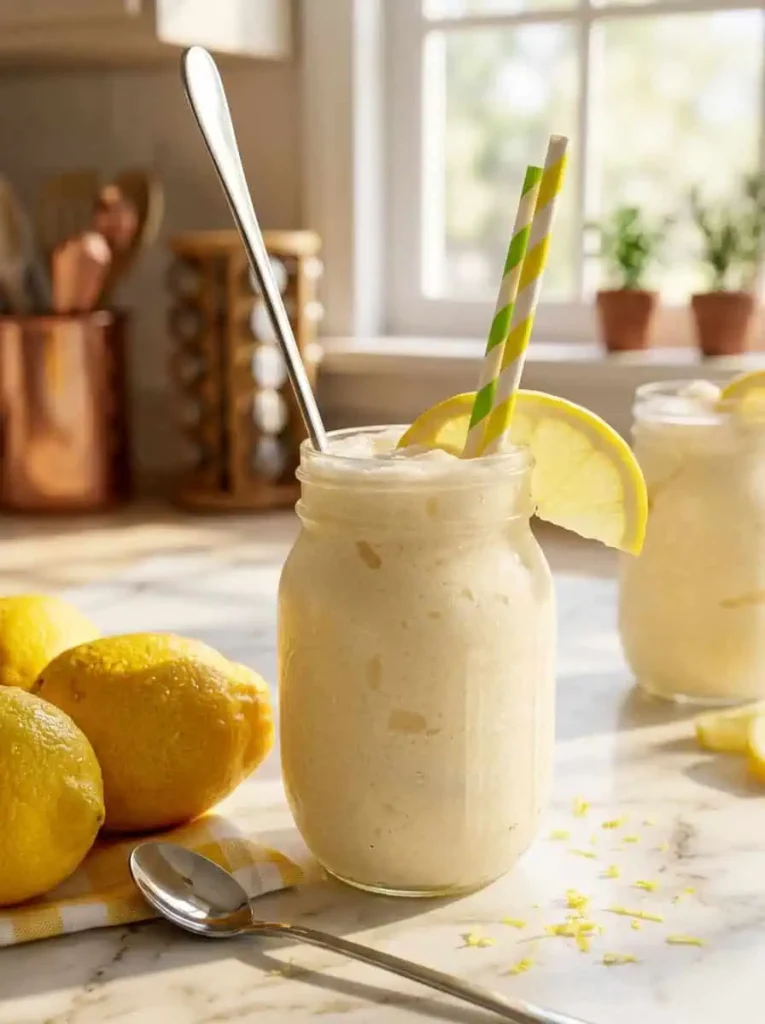
Creamy frozen lemonade is the drink I make when it's too hot to think and I want something that tastes like a milkshake and a lemonade had a very good idea together. Vanilla ice cream, fresh lemon juice, sugar, ice, and a blender. Ten minutes, two big glasses, and you'll stop going through the drive-through for it.
This is one of those recipes that sounds like it shouldn't work. Ice cream and lemon juice in the same glass? But the fat from the ice cream rounds out the tartness instead of fighting it, and the lemon keeps the sweetness from getting cloying. The balance is the whole point, and once you nail it, it tastes better than the chain version because you're using real lemons.
Fresh lemons are not optional
A cup of fresh lemon juice is about four or five lemons, depending on how juicy they are. Roll them hard on the counter before cutting, pressing down with your palm, and you'll get noticeably more juice out of each one. The bottled stuff from concentrate has a flat, cooked taste that sits badly against the vanilla, and since lemon is half the recipe, it shows.
If your lemons are on the smaller side and you're coming up short, don't pad the difference with bottled juice. Just use what you get and add a touch more sugar to compensate. The drink will still be tart and good. It just won't be as punchy, and punchy is the version I prefer.
The pinch of salt sounds like a mistake in a sweet drink, but it does the same thing it does in baking: it sharpens every other flavor. Without it the lemonade tastes a little flat, sweet and sour but one-dimensional. With it everything wakes up. Don't skip it.
Getting the texture right
You want this thick, closer to a Wendy's Frosty than a smoothie. The ice cream and ice together give it that body. Start with the lemon juice, sugar, and salt in the blender and pulse a few times to dissolve the sugar. Then add the ice cream and ice and blend until smooth and thick.
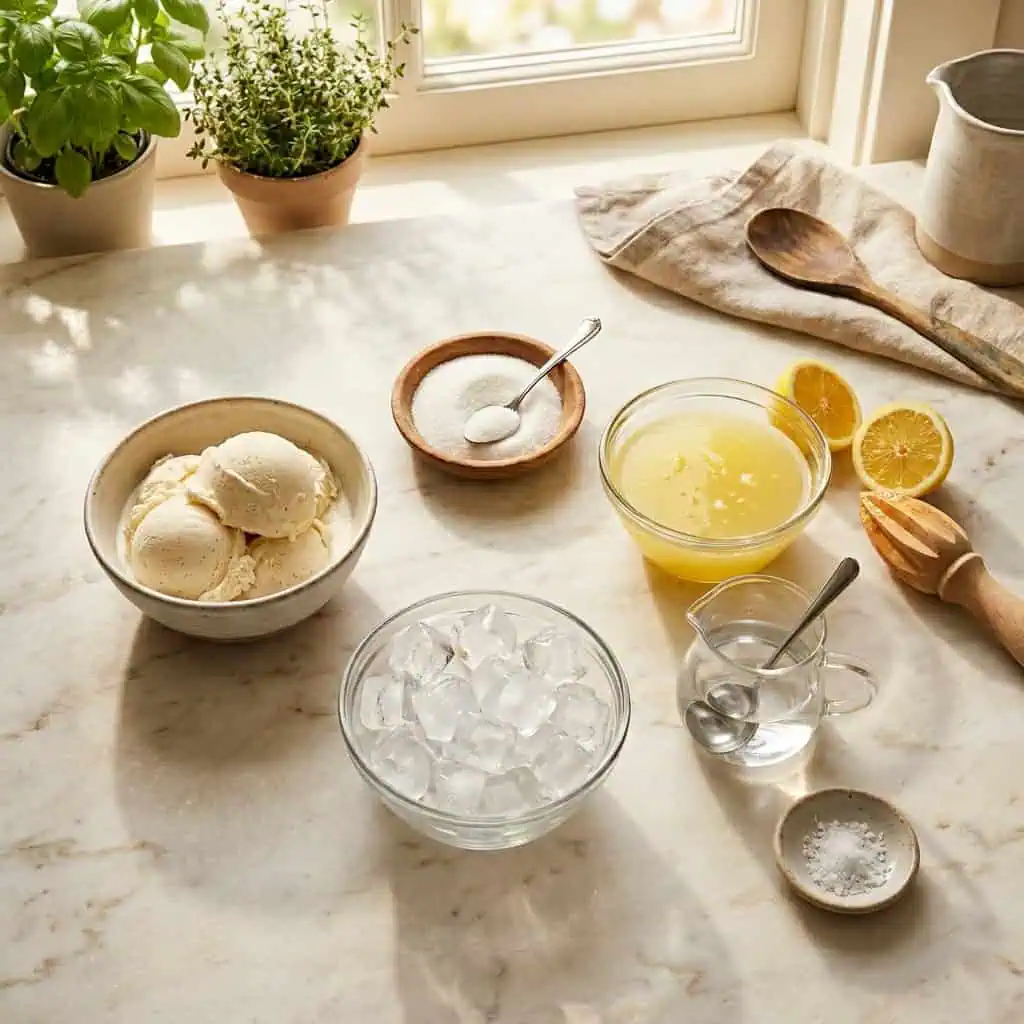
Here's where the cold water comes in, and it's a judgment call. If your blender is struggling or the mixture is too thick to move, add a tablespoon of cold water at a time until it blends smoothly. I usually need two tablespoons; four is the upper end before it starts thinning out more than you want. Less water means thicker, more milkshake-like. More water means easier to drink through a straw but less of that frozen, scoopable texture.
The ice cream brand matters a little. A good-quality vanilla with higher fat content (look for at least 10% milkfat on the label) gives a creamier, richer result. A cheaper, airier ice cream works but you'll get a lighter, icier drink. Not bad, just different. Let the ice cream soften for about five minutes on the counter before blending so your blender doesn't fight frozen bricks.
Tasting and adjusting before you pour
Always taste before serving. This sounds obvious but most people skip it with blended drinks and then wonder why it's too sweet or too sour. The balance point depends on your lemons, your sugar tolerance, and how much water you added. A splash more lemon juice pushes it tart. A spoonful more sugar pulls it sweet. You're looking for the spot where neither one wins and both are loud.
If you overshoot in either direction, the fix is easy. Too sweet: more lemon juice and a couple of ice cubes, blended again. Too sour: another tablespoon or two of sugar, blended until dissolved. The drink is forgiving as long as you adjust before it starts melting.
Where this fits in my kitchen
I first had frozen lemonade from a street vendor somewhere warm, where they made it with condensed milk and ice shaved off a block, and it was the best thing I drank that entire trip. When I got home I tried to recreate it and ended up somewhere between that memory and an American-style frozen lemonade. The ice cream version is the one that stuck, because condensed milk is tricky to get right and ice cream is forgiving.
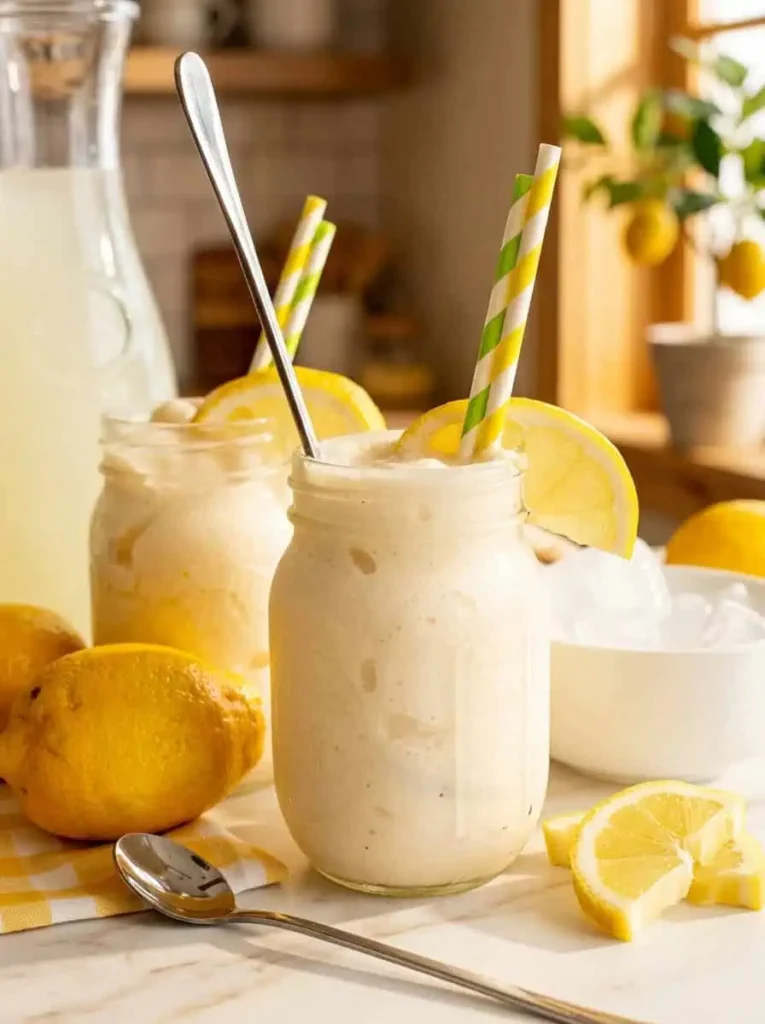
It's technically a dessert and a drink at the same time, which is why I make it on hot weekend afternoons when nobody wants a proper dessert but everyone would say yes to something cold and sweet. Two servings as written, but I've doubled it for a small group and just kept the blender going in batches. It doesn't hold well once blended, so make it right before you serve it, the ice cream melts and you lose that thick frozen texture fast.
A few variations that work
Swap half the lemon juice for lime juice and you've got a frozen creamy limeade that's just as good. Add a handful of fresh strawberries or raspberries with the ice and blend them in for a berry version, you might need a touch more sugar since berries can be tart. A tablespoon of honey instead of some of the granulated sugar adds a slightly different sweetness that pairs well with the lemon.
For an adult version, an ounce or two of vodka or limoncello goes in with the lemon juice. It loosens the texture a bit since alcohol doesn't freeze, so cut the water back to compensate. Serves two generously, or four smaller portions if you're sharing.
Make it a summer standby
If you're hosting, pre-squeeze the lemons and dissolve the sugar in the juice ahead of time. Keep that base in the fridge. When people arrive, dump the base plus ice cream and ice into the blender and you're pouring in under a minute. The base holds for a couple of days refrigerated, though the ice cream and ice have to be added fresh each time or you lose the frozen texture.
A creamy frozen lemonade blended from vanilla ice cream, fresh lemon juice, sugar, and ice. Milkshake-thick, sweet-tart, and ready in 10 minutes flat.
- 2 1/2 cups good-quality vanilla ice cream (slightly softened)
- 1 cup fresh lemon juice (about 4-5 lemons)
- 3/4 cup granulated sugar
- 1 1/2 cups ice
- 2-4 tablespoons cold water (as needed for blending)
- Pinch of salt
- 1 Add the lemon juice, sugar, and a pinch of salt to a blender. Blend briefly until the sugar is mostly dissolved
- 2
Add the ice cream and ice. Blend until smooth, thick, and creamy, stopping to scrape down the sides if needed- 3
If the mixture is too thick to blend smoothly, add cold water one tablespoon at a time until it reaches a thick, milkshake-like consistency- 4
Taste and adjust: add more sugar for sweetness or a splash more lemon juice for extra tang. Pour and serve immediately.NoteUse good-quality vanilla ice cream with at least 10% milkfat for the creamiest result. Let it soften 5 minutes before blending. Serve immediately; the frozen texture doesn't hold once it starts melting. No nutrition data was provided for this recipe.
creamy frozen lemonade, frozen lemonade, frozen lemonade recipe, lemonade milkshake - 2