Cookies and Cream Tres Leches Cake
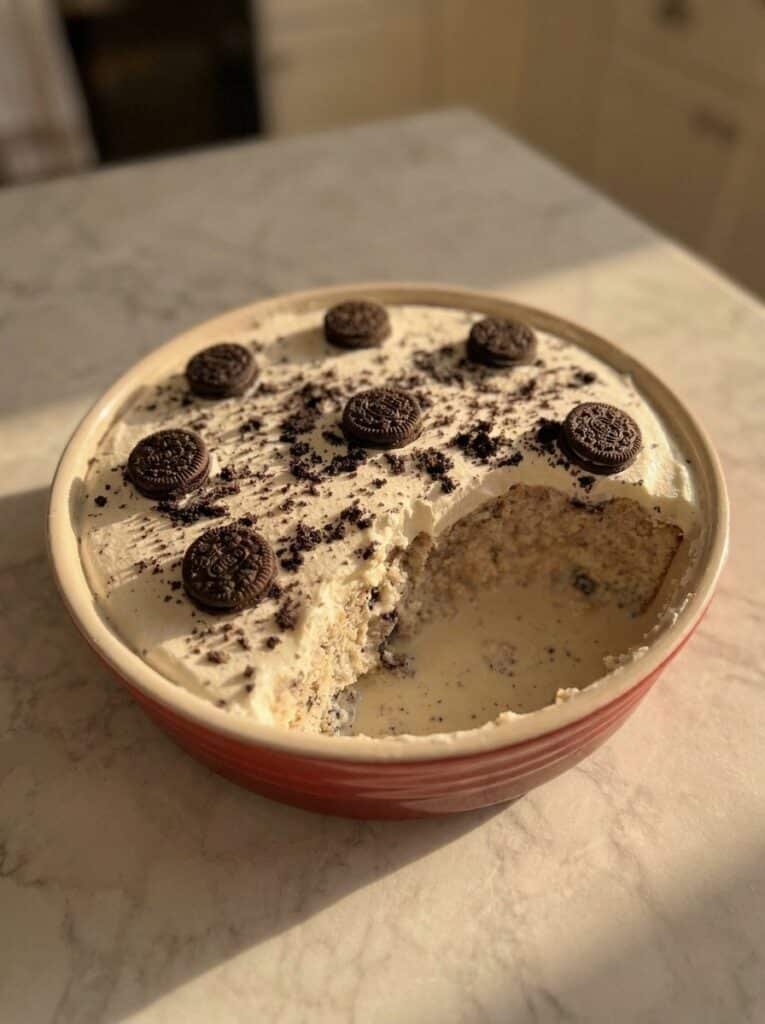
A cookies and cream cake soaked in three milks, chilled overnight and topped with whipped cream.
What the source leaves out
The original is a social media recipe and it is light on the details a written recipe needs.
There are no times, no servings beyond one eight or nine inch cake, and no nutrition. Its ingredient list is built around affiliate links to specific branded products.
What follows uses generic descriptions, and the times and servings are estimated from the method: roughly twenty minutes of active work, the cake's own bake time, and an overnight chill. Nine to twelve servings depending on the pan.
Cool the cake completely first
Before any milk touches it.
A warm cake absorbs liquid unevenly and quickly, soaking through in patches and collapsing where it takes on too much. Cooled, the crumb is set and it draws the milk in slowly and evenly.
This is the most common way tres leches goes wrong.
Poke gently, and not too many holes
A fork used to poke holes across the whole cake.
The holes are channels for the milk to travel down rather than sitting on the surface. Without them, most of the mixture pools on top and the bottom stays dry.
Gently is the qualifier. Aggressive poking tears the crumb into a mush that cannot hold together once saturated.
Eighty percent now, twenty percent later
About four fifths poured over the cake, the rest reserved to serve alongside.
This is a good instruction and it solves a real problem. A cake can only absorb so much, and pouring everything on leaves a pool of milk in the bottom of the dish that never gets taken up.
The reserved fifth then goes on the table for people to add to their own slice, which is how tres leches is often served anyway.
Chill overnight
Covered.
Absorption takes hours rather than minutes. A cake soaked and served an hour later is wet on top and dry underneath.
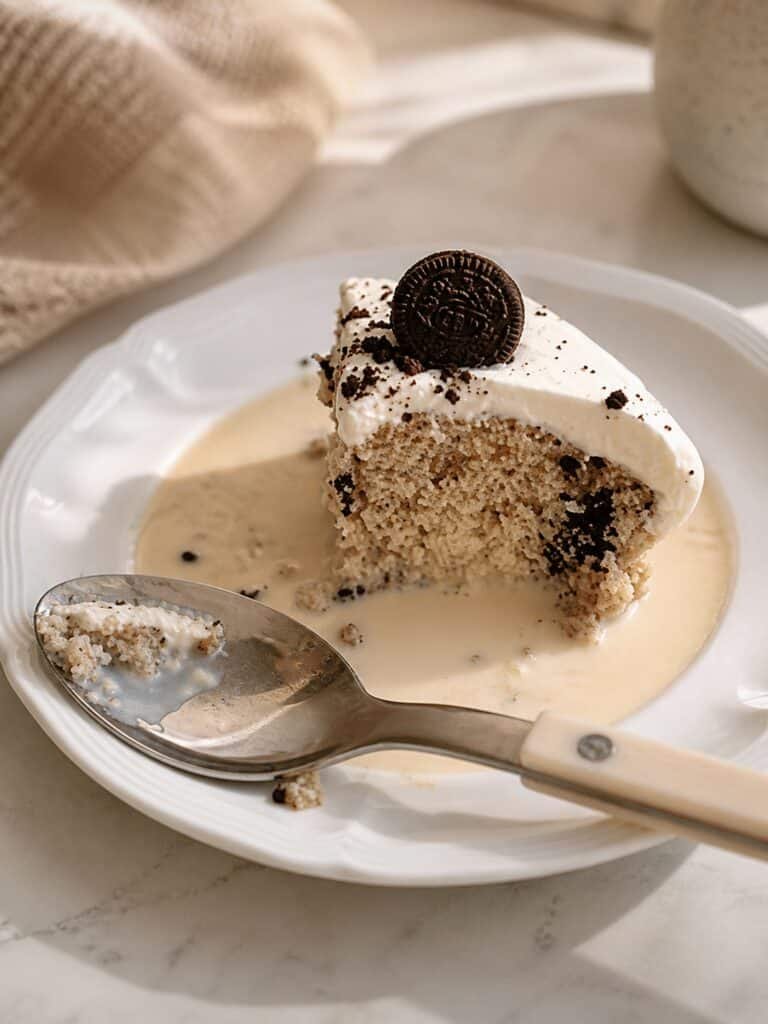
Overnight also lets the texture settle into what tres leches should be: dense and saturated but still holding its structure.
Three milks, three jobs
Heavy cream, evaporated milk and condensed milk.
Each contributes something different. Condensed milk is thick and very sweet and provides most of the sugar. Evaporated milk is concentrated but unsweetened and adds dairy depth without more sweetness. Heavy cream adds fat and richness.
The proportions matter. Using more condensed milk makes it cloying; more evaporated makes it thin.
Whip to soft medium peaks
Three to five minutes on medium high, and the recipe warns against overmixing.
Soft medium peaks means the cream holds a shape that slumps slightly at the tip. That is spreadable.
Taken further, cream goes grainy and eventually splits into butter and buttermilk, which cannot be recovered.
Half a tablespoon of sugar in a cup of cream is very restrained, and deliberately so given how sweet the soaked cake is.
Whip right before serving
Rather than the night before with the soaking.
Unstabilised whipped cream weeps within a few hours, and a layer sitting on a wet cake overnight would slide and separate.
Cookies and cream, and substitutes
The source uses a branded cookies and cream cake mix, which may not be available everywhere.
A plain white cake mix with a cup of crushed chocolate sandwich cookies folded through the batter gives the same result. Crush them fairly fine, since large pieces sink.
The topping is more crushed cookies and whole mini ones, which any equivalent brand covers.
Pan choice
An eight or nine inch round, or a nine by thirteen. The nine by thirteen is easier. A round cake soaked in milk is difficult to remove from the pan, so tres leches is usually served straight from the dish, and a rectangular dish slices more neatly. Storing Three days refrigerated, and it is arguably better on day two than day one. Add the whipped cream per serving rather than covering the whole cake if you expect leftovers.
It does not freeze. The soaked crumb turns to mush on thawing.
Serving the reserved milk
In a small jug alongside. Some people add a spoonful to each slice, which is traditional in parts of Latin America and worth offering rather than assuming.
A chilled tres leches cake made with a cookies and cream base and finished with lightly sweetened whipped cream.
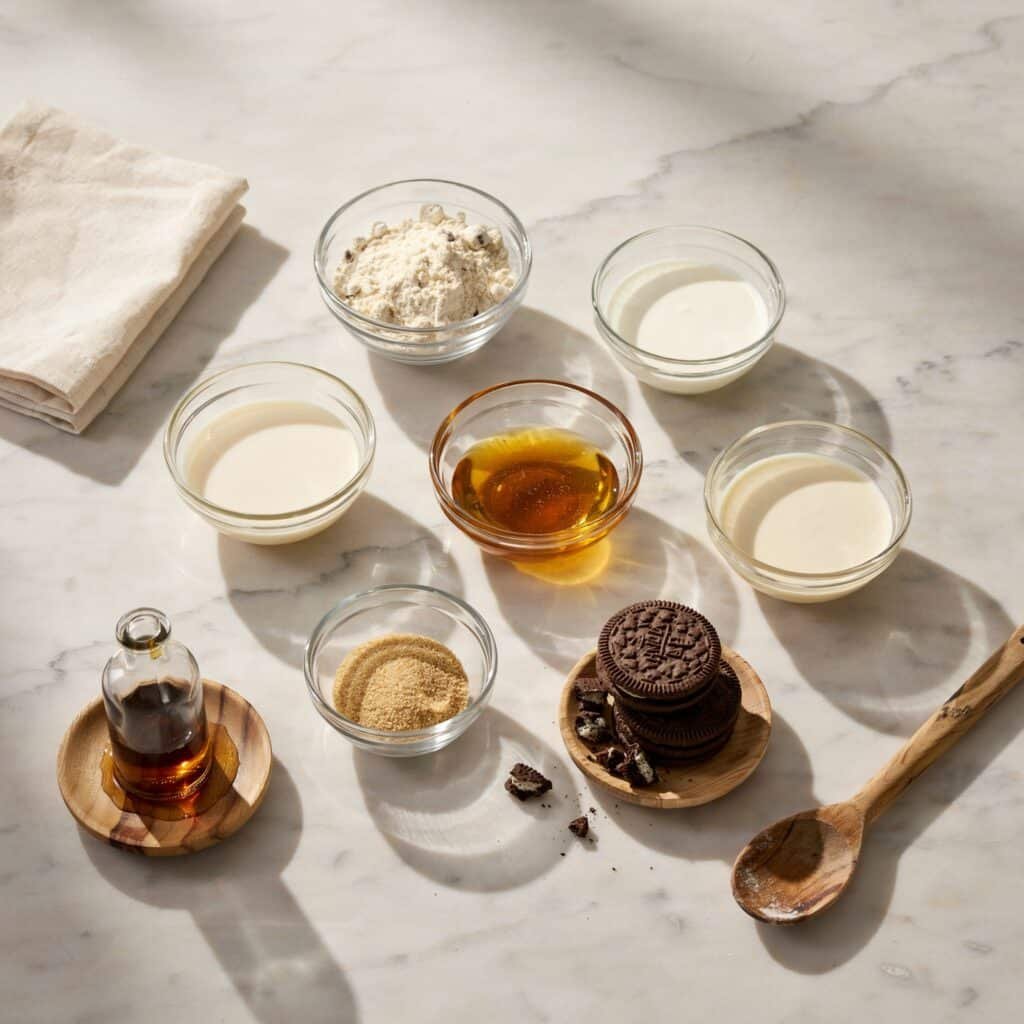
- 1 box cookies and cream cake mix or white cake mix with 1 cup crushed chocolate sandwich cookies
- 1 cup heavy cream for the soak (240 g)
- 1 can evaporated milk (12 oz)
- 1 can condensed milk (14 oz)
- 1 teaspoon vanilla extract
- 1 cup heavy cream for the topping (240 g)
- 1/2 tablespoon granulated sugar (4 g)
- mini chocolate sandwich cookies and crumbles to top.
- 1 Bake the cake according to the instructions on the box, in a greased 8 or 9 inch cake pan or a 9x13 dish. If using plain white cake mix, fold a cup of finely crushed chocolate sandwich cookies through the batter. Let the cake cool completely.
- 2
In a jug combine the 1 cup of heavy cream, the evaporated milk, the condensed milk and the vanilla and whisk thoroughly. Set aside.- 3
Once the cake has cooled completely, use a fork to gently poke holes across the entire cake.- 4
Gently pour about 80 percent of the tres leches mixture directly onto the cake, reserving the remaining 20 percent to serve later.- 5
Cover the soaked cake and chill overnight.- 6
Right before serving, beat the second cup of heavy cream with the granulated sugar until soft medium peaks form, 3 to 5 minutes on medium high. Do not overmix.- 7
Spread a generous amount of whipped cream over the soaked cake, top with the mini cookies and crumbles, and serve with the reserved milk mixture alongside..NoteThe source is a social media recipe with no times, no servings beyond one 8 or 9 inch cake, and no nutrition, and its ingredient list is built around affiliate links to branded products. Generic descriptions are used here and the times and servings are estimated from the method. Cool the cake completely before any milk touches it, which is the most common way tres leches goes wrong. Poke the holes gently, as aggressive poking tears the crumb. Pour about 80 percent of the milk mixture on and reserve the rest to serve, since a cake can only absorb so much. Chill overnight rather than an hour. Whip the cream only to soft medium peaks and only right before serving, as unstabilised cream weeps. A plain white cake mix with a cup of finely crushed chocolate sandwich cookies folded in substitutes for the cookies and cream mix.
Soaked, Creamy, Chocolatey - 2