Cookies and Cream Brownies
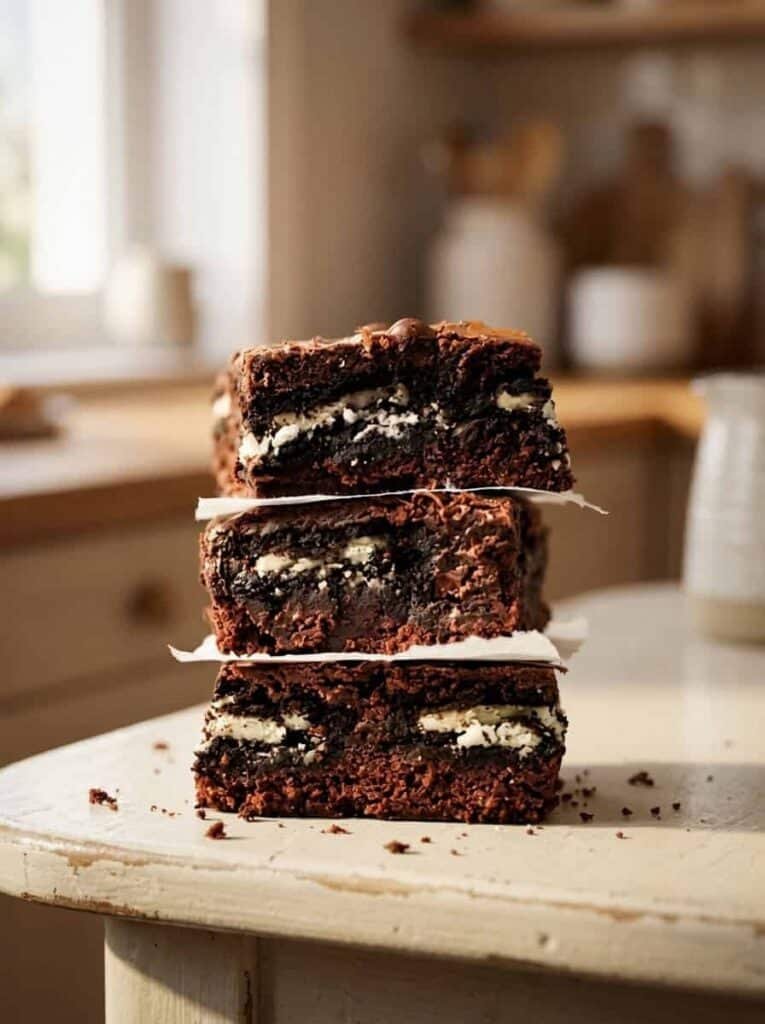
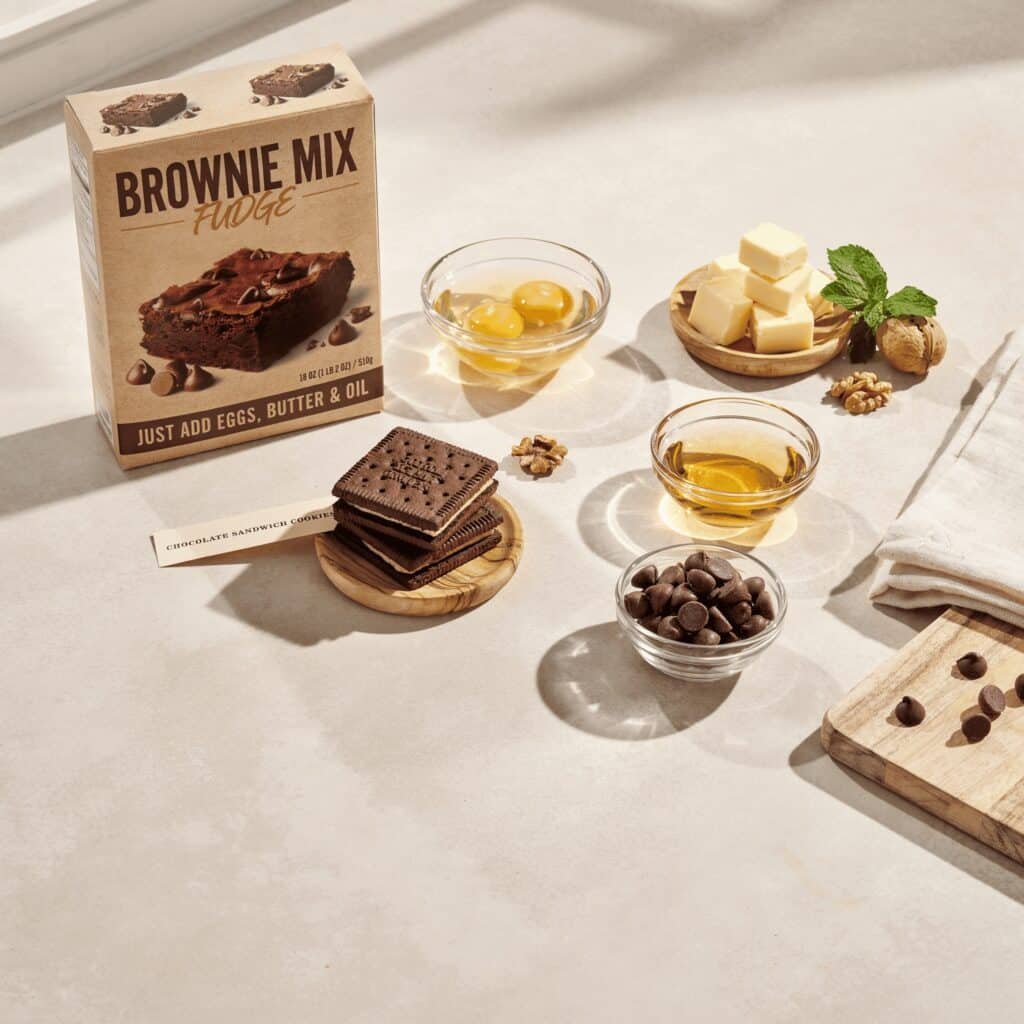
Two boxes of brownie mix and a packet of chocolate sandwich cookies. That is the shopping list.
The cookies go in as a single layer sandwiched between two layers of batter, so they soften into the brownie rather than sitting on top as a crunchy topping. Twenty four servings from a nine by thirteen.
The cookies go in the middle, not on top
Half the batter into the pan, cookies laid evenly across it, remaining batter poured over and spread level.
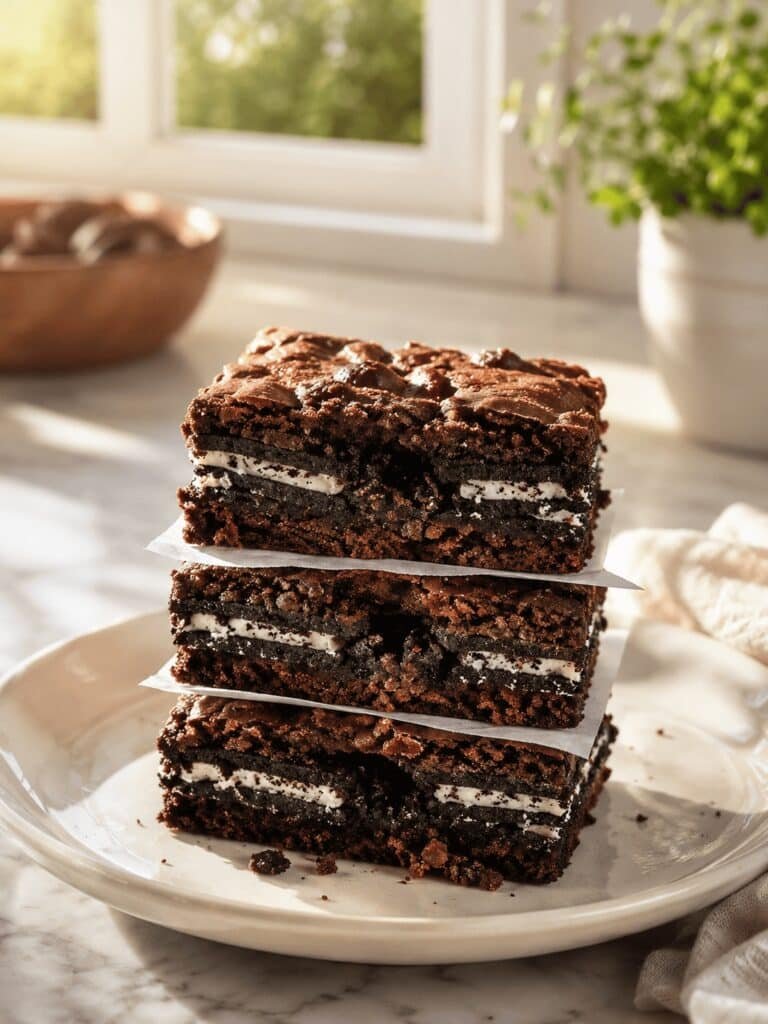
Buried in the middle, the cookies absorb moisture from the batter on both sides during baking. They go soft and cakey and merge into the brownie, leaving distinct pale layers running through each square.
Scattered on top instead, they stay crisp, they brown and can burn, and they fall off when you cut into it. The whole texture of the finished bake changes.
Lay them flat in rows rather than overlapping. Overlapped cookies create a solid barrier that the batter cannot flow around, and the layers separate when you cut.
Two boxes, one pan
Two eighteen ounce boxes made up according to their own package directions, which usually means eggs, oil and water.
Two boxes in a nine by thirteen gives you a thick bake. One box in that pan would be thin and would not hold the cookie layer properly, since there would not be enough batter above and below it.
If you want a smaller batch, use one box and half a packet of cookies in an eight by eight. The proportions scale cleanly.
Line with foil first
Foil across the pan, sprayed with nonstick spray.
Two boxes of brownie mix bakes into a heavy dense slab and it grips a bare pan. Foil lets you lift the whole thing out and cut it on a board, which is the only reliable way to get twenty four even squares.
Leave an overhang on two sides so you have something to grip.
325F rather than the usual 350F
Lower than most brownie boxes specify, and deliberate.
This is a thicker bake than a single box makes, and thickness is the problem. At 350F the edges set and start drying well before the centre catches up. Dropping thirty degrees slows the outside down and lets the middle cook through in the same window.
The trade is time. Thirty five to forty five minutes rather than the twenty five a single box would take.
Test the centre, not the edge
A toothpick in the middle coming out clean.
The middle is where the cookie layer sits and where the batter is deepest, so it is the last part to set. An edge test tells you nothing useful here.
Start checking at thirty five minutes. The range is wide because pan material matters: a glass dish runs slower than metal and can want the full forty five.
Cool completely, then use a plastic knife
This sounds like a strange instruction and it is a genuinely good one.
Brownies stick to metal blades. Chocolate drags along the edge and each cut gets messier than the last. A plastic knife has a slicker surface and less drag, so it cuts cleanly through a cooled brownie without smearing.
If you only have metal, run it under hot water and wipe it dry between cuts.
Cool completely before cutting either way. Warm brownies tear rather than slice, and the softened cookie layer smears.
Adding chocolate chips
Half a cup stirred into the batter if your mix does not already contain them.
Some boxed mixes include chips and some do not. If yours does not, half a cup adds pockets of melted chocolate that the mix alone will not give you. It is the single change that most moves this away from tasting like a box.
Storing
An airtight container at room temperature, up to five days. <p>They stay soft over that time, and the cookie layer continues absorbing moisture, so day two and three are arguably better than day one. Do not refrigerate, which firms the brownie and makes it dry. ## Using a homemade brownie base Any brownie recipe scaled to fill a nine by thirteen works in place of the two boxes. The cookie layer and the method stay the same. A homemade base gives more chocolate depth and adds fifteen minutes to the process.
Other cookies
Any sandwich cookie works. Mint, peanut butter and golden vanilla versions all behave the same way in the middle layer, since the mechanism is the cookie softening rather than anything about the flavour.
Fudgy layered brownies made from boxed mix with a hidden layer of chocolate sandwich cookies through the centre.
- 2 boxes brownie mix plus the ingredients listed on the box (18 ounce each)
- 1 package chocolate sandwich cookies
- 1/2 cup chocolate chips . (optional)
- 1 Preheat the oven to 325F. Line a 9x13 inch baking dish with aluminium foil leaving an overhang on two sides and spray with nonstick spray.
- 2
In a large bowl whisk together the brownie mix and the ingredients according to the package directions. Stir in the chocolate chips if using.- 3
Pour half the batter into the baking dish and line the cookies evenly on top in flat rows without overlapping.- 4
Pour the remaining batter over the cookies and spread evenly.- 5
Bake 35 to 45 minutes, until a toothpick inserted in the centre comes out clean. Start checking at 35 minutes.- 6
Let cool completely, then lift out using the foil and cut into 24 squares using a plastic knife..NoteThe cookies go between two layers of batter rather than on top, so they soften into the brownie instead of staying crisp. Lay them flat in rows without overlapping. Line the pan with foil leaving an overhang so the slab can be lifted out to cut. 325F is lower than most box directions and is deliberate for a thick bake. Test the centre rather than the edge and start checking at 35 minutes; glass dishes run slower than metal. Cool completely and use a plastic knife for clean cuts. Add half a cup of chocolate chips if your mix does not already contain them. Keeps 5 days airtight at room temperature; do not refrigerate.
Fudgy, Layered, Easy - 2