Coconut Balls Dipped in Chocolate
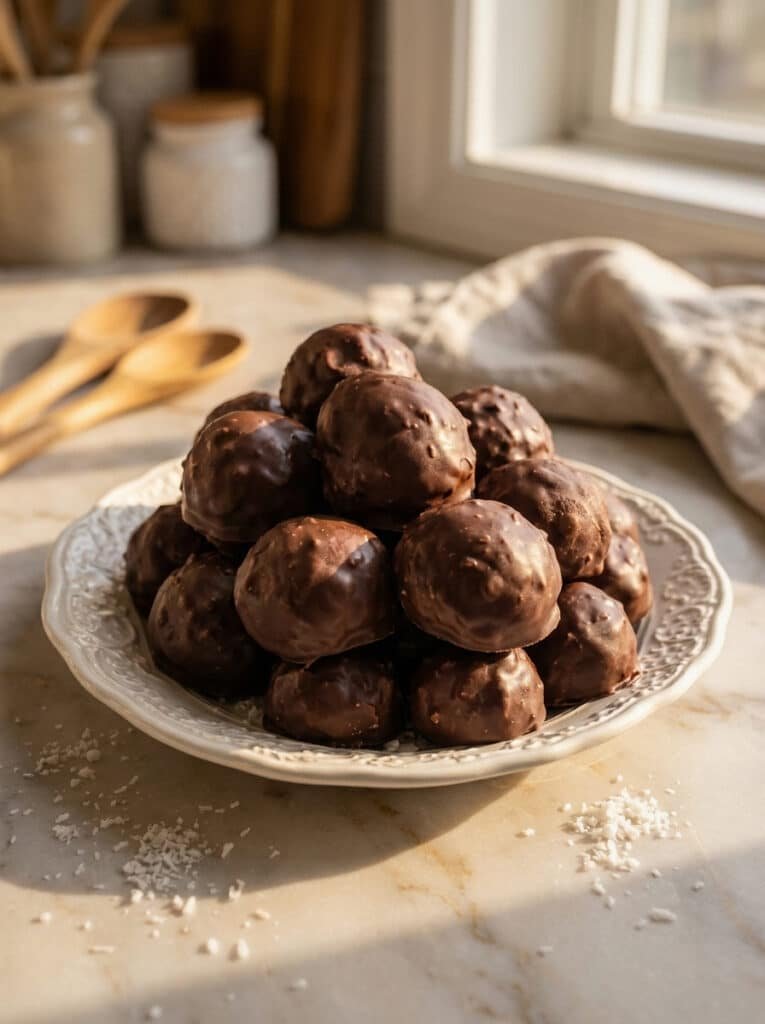
Coconut and condensed milk rolled into balls and dipped in chocolate. No baking at all.
What the source leaves out
No yield, no prep time, no total time and no nutrition anywhere.
A pound of coconut with a can of condensed milk makes roughly forty balls at an inch and a half. Rolling takes around thirty minutes and dipping another thirty, plus freezer time in between.
Allow about two hours in total, most of it hands-on. Those figures are estimated from the quantities rather than taken from the source.
The source says double broiler and means double boiler
A small thing, but worth knowing if you go looking for one.
A double boiler is a bowl set over a pan of simmering water, which heats the contents gently and indirectly. A broiler is a grill element, which is the opposite of what you want near chocolate.
You do not need to buy anything. A heatproof bowl over a saucepan works, as long as the water does not touch the bowl base.
Freeze the mixture before rolling
Ten minutes, which the recipe recommends and which makes a real difference.
The mixture is extremely sticky straight after mixing, and cold firms the condensed milk enough to handle.
The source is honest that you may need to return it to the freezer repeatedly during rolling. That is normal rather than a sign anything is wrong.
If the balls get sticky as you work, rolling them in a little extra coconut helps.
Dip one at a time
Which the source stresses and which is the most useful instruction it gives.
The chocolate is warm and the balls are cold and soft. More than one in the bowl at a time and the warm chocolate starts melting them, at which point you have coconut suspended in your chocolate rather than coated by it.
One in, one out, onto fresh wax paper. It is slower and it is the only way that works.
Turn the heat off once melted
The residual warmth in the water holds the chocolate fluid long enough to dip a whole batch.
Leaving the heat on risks overheating, and chocolate that gets too hot seizes into a grainy mass that cannot be brought back.
The source describes the warning sign accurately: the chocolate starts clumping and loses its smoothness. At that point it is finished and a fresh batch is the only option.
Medium-low, and stir frequently
Exact temperature is not critical, which is true for melting chocolate rather than tempering it.
Stirring distributes the heat so no part of the bowl gets far ahead of the rest. Chocolate left unstirred scorches against the bowl while the top is still solid.
Melting chocolate rather than chips
Twelve ounces.
Melting wafers contain more cocoa butter or added vegetable fat, so they flow more thinly and set with a snap. Regular chocolate chips are formulated to hold their shape and they melt into something thick and reluctant to coat.
If you only have chips, a teaspoon of coconut oil per cup thins them enough to dip with.
Sweetened condensed milk, not evaporated
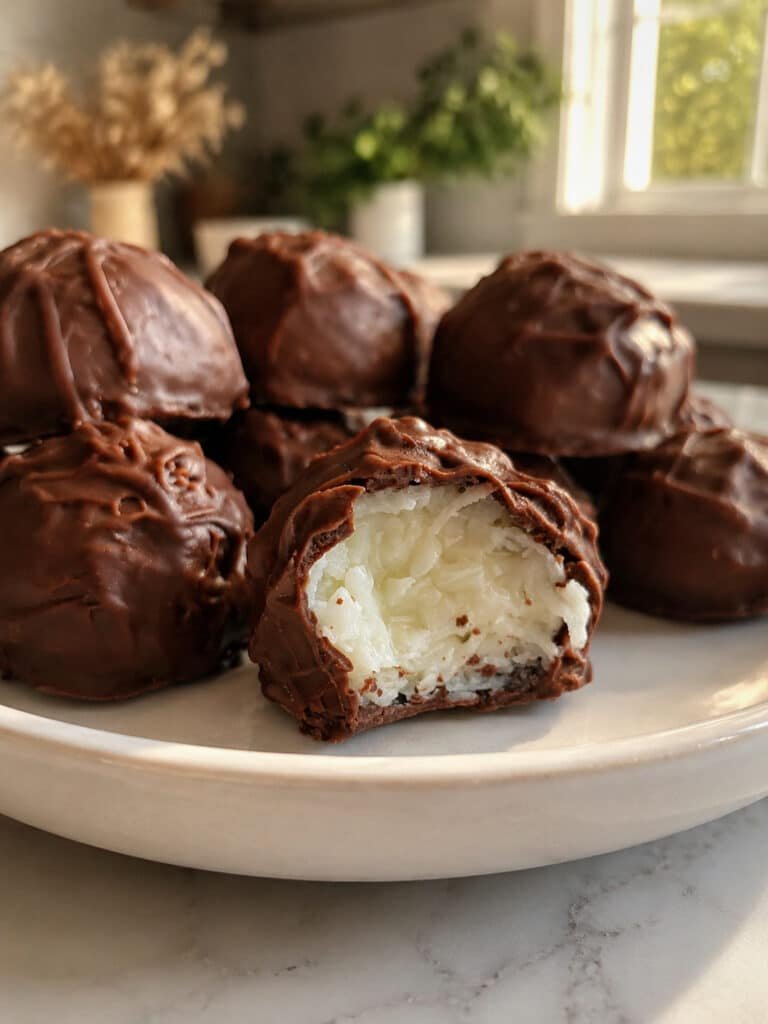
One can, and the source says no substitutes for good reason.
Condensed milk is thick and heavily sweetened, and it is the binder holding a pound of coconut together. Evaporated milk is unsweetened and pourable, and it would give you wet coconut that never sets.
The two sit next to each other on the shelf in near-identical cans.
Storing
Airtight in the fridge, which the source recommends.
They keep about two weeks. The coating stays firmer cold, and these are pleasant straight from the fridge.
They also freeze for three months. Thaw in the fridge rather than at room temperature, which makes the chocolate sweat.
Making them into bars
The source suggests shaping some into small logs rather than balls, which is faster than rolling and gives something closer to a candy bar. Dip them the same way.
Leaving out the nuts
The pecans or almonds are marked optional. Without them the mixture is slightly stickier and needs a little longer in the freezer, but it works.
A no-bake coconut candy dipped in melting chocolate, made with five ingredients.
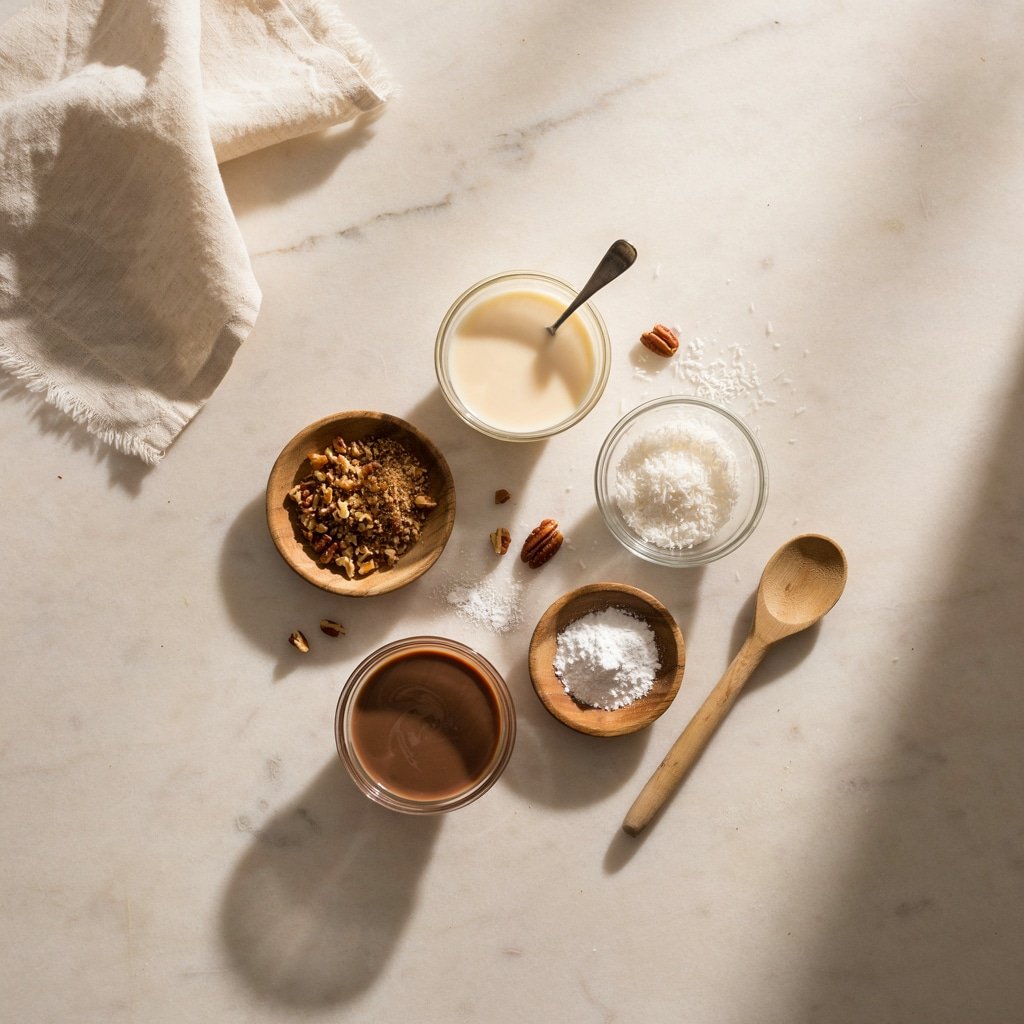
- 1 can sweetened condensed milk 14 oz (not evaporated milk)
- 1 1/2 cups finely chopped pecans or almonds optional
- 1 lb sweetened shredded coconut
- 1/2 cup powdered sugar
- 12 oz melting chocolate milk or white or a mix.
- 1 In a large bowl combine the sweetened condensed milk, coconut, crushed nuts and powdered sugar and mix well. Place in the freezer for 10 minutes, which makes the sticky mixture far easier to handle.
- 2
Once cold, roll into 1 to 1 1/2 inch balls and set on a baking sheet lined with wax paper. If the mixture becomes too sticky as you work, coat the balls in a little more coconut and return them to the freezer.- 3
Melt the chocolate in a heatproof bowl set over a pan of simmering water, with the water not touching the bowl. Keep the heat at medium-low and stir frequently. If the chocolate clumps and loses its smoothness it has overheated and cannot be recovered.- 4
Once fully melted, turn the heat off. The residual warmth keeps the chocolate fluid while you dip.- 5
Dip one ball at a time, using a toothpick or fork, and place each on fresh wax paper. Do not dip more than one at a time, as the warm chocolate will melt the cold balls.- 6
Chill in the freezer for an hour to set, then store in an airtight container in the fridge..NoteThe source gives no yield, times or nutrition. A pound of coconut with a can of condensed milk makes roughly 40 balls at an inch and a half, and the whole thing takes about two hours; these figures are estimated. The source says double broiler and means double boiler, which is a heatproof bowl over simmering water with the water not touching the bowl base. Freeze the mixture 10 minutes before rolling and return it as needed, which the source notes is normal. Dip one ball at a time, since warm chocolate melts cold coconut balls if several go in together. Turn the heat off once the chocolate has melted, as residual warmth holds it fluid and overheating seizes it permanently. Use melting chocolate rather than chips, or thin chips with a teaspoon of coconut oil per cup. Use sweetened condensed milk, not evaporated, which would never set.
Chewy, Sweet, Chocolatey - 2