Classic Cheesecake
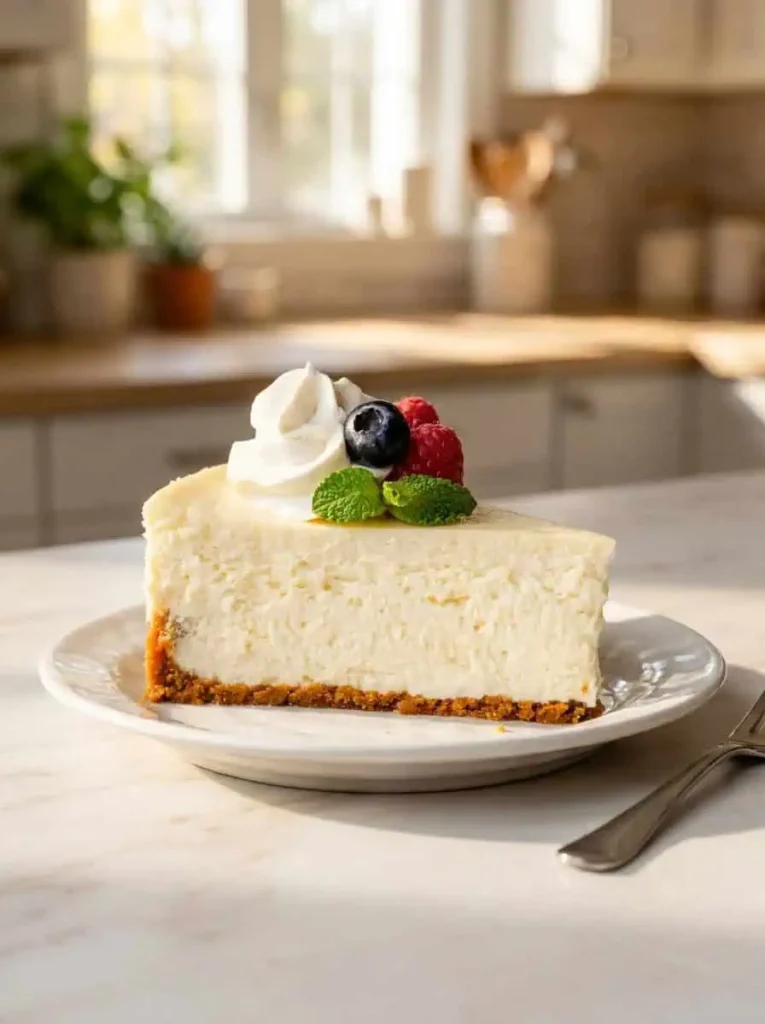
Classic cheesecake is one of those recipes where the technique matters more than the ingredient list. The ingredients are simple: cream cheese, sugar, sour cream, eggs, vanilla, lemon juice, and a graham cracker crust. What separates a cheesecake that's smooth and set from one that cracks down the middle or comes out grainy is how you treat the batter and what you do in the oven. The water bath is the main thing. Not optional, not a suggestion, the main thing.
This recipe takes seven and a half hours from start to serve, including chilling time. Active time is closer to forty-five minutes. It serves twelve to sixteen people comfortably from one springform pan, and it can be made up to two days in advance. For the kind of dessert people actually talk about after dinner, it's worth planning around.
The graham cracker crust
One and a half cups of graham cracker crumbs, a quarter cup of sugar, and five tablespoons of melted butter. If you're starting from whole graham crackers, grind them in a food processor until fine. Mix the sugar in, then the melted butter. The mixture will look sandy with no large clumps.
Press it into an ungreased nine or ten-inch springform pan, using medium pressure from your palm or the flat bottom of a measuring cup. You want it compact but not hammered down: too much force makes the crust dense and hard to cut through. Press until it's no longer crumbly and holds together when you press a small amount between two fingers. Take it about an inch up the sides. Bake at 350 for ten minutes, then set aside to cool while you make the filling.
The filling, and why everything needs to be room temperature
Four blocks of full-fat brick cream cheese, softened to room temperature. This is the step most people skip and the one that causes most problems. Cold cream cheese doesn't beat smooth; it beats lumpy, and those lumps don't disappear in the oven. Set the cream cheese out for at least two hours before you start. Same for the sour cream and the eggs.
Beat the cream cheese and sugar together on medium-high until smooth and creamy, about two minutes. Scrape down the sides of the bowl. Add the sour cream, vanilla, and lemon juice and beat until fully combined. The lemon juice is listed as optional but it sharpens the flavor without making the cheesecake taste of lemon; I always add it.
Now the eggs, one at a time on medium speed, beating just until each one disappears into the batter before adding the next. The moment the final egg is incorporated, stop the mixer. This is the other critical moment. Overbeating after the eggs go in incorporates too much air, which causes the cheesecake to puff up in the oven and then collapse and crack as it cools. Low speed, just combined, done.
The water bath and why it matters
A cheesecake baked without a water bath bakes unevenly: the edges cook faster than the center, the top dries out, and the surface cracks. A water bath surrounds the pan with gentle, even steam that moderates the temperature and keeps the humidity high inside the oven. The cheesecake bakes more slowly and evenly, the surface stays smooth, and the texture is silkier throughout.
Wrap the springform pan in one or two layers of heavy-duty aluminum foil, going up the sides to prevent water from seeping in through the springform seal. Place the wrapped pan inside a large roasting pan. Pour the cheesecake batter into the crust. Boil a kettle of water and pour it into the roasting pan around the springform until there's about an inch of water. Carefully transfer to the oven, or put the roasting pan in the oven first and pour the water in there.
If wrapping the pan in foil feels precarious, there's an alternate method: bake the cheesecake on the center rack and place a pan of boiling water on the rack below. The steam does similar work without the cheesecake sitting in water, and there's no risk of water seeping into the crust. Both methods work; the traditional water bath gives a slightly more even result.
Baking and the slow cool
Fifty-five to seventy minutes at 350. The cheesecake is done when the edges are set and the center still has a slight wobble when you gently shake the pan, like a set gelatin rather than liquid. If the top starts to brown before the center is set, tent loosely with foil.
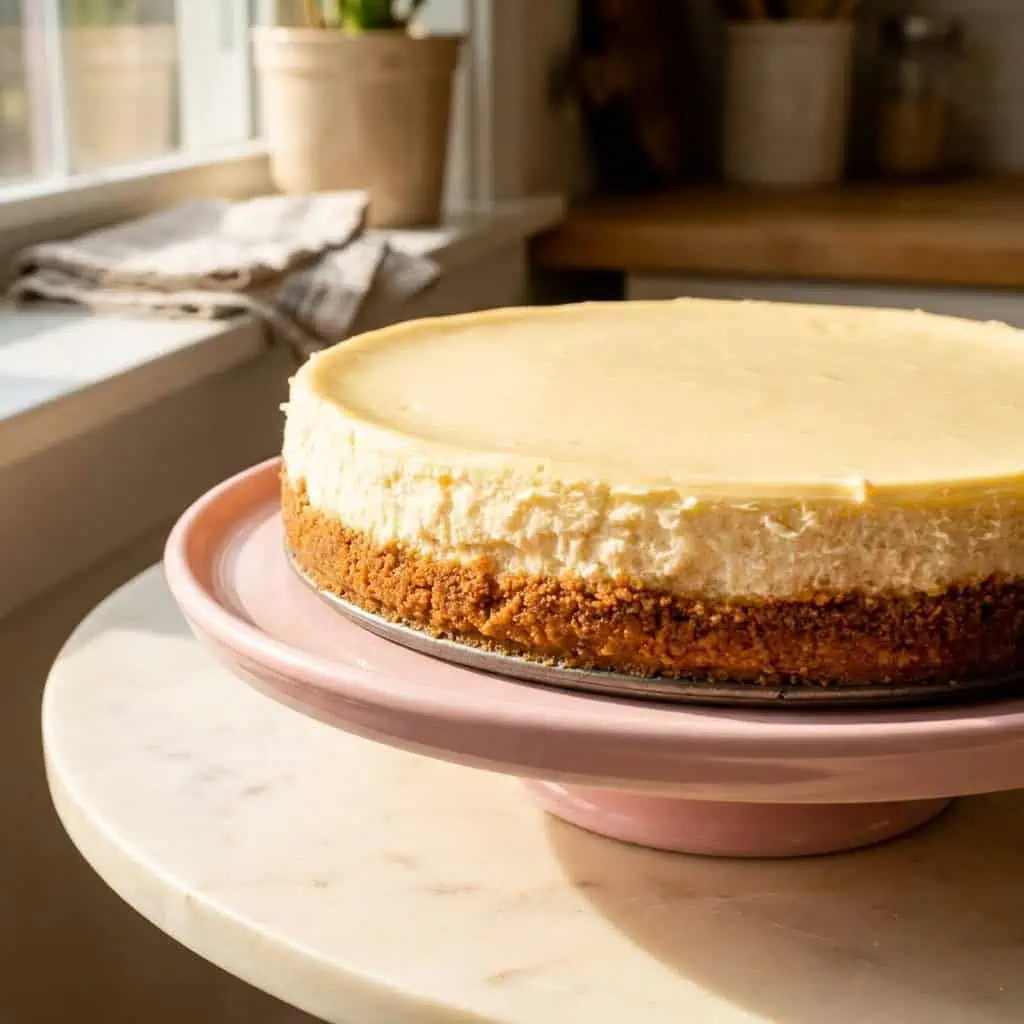
When it's done, turn the oven off, crack the door open, and leave the cheesecake inside for an hour. This gradual cool-down prevents the rapid temperature change that causes cracking. After an hour, move to a wire rack and cool completely to room temperature, then cover and refrigerate for at least four hours, preferably overnight. Cold cheesecake is firmer, cleaner to slice, and better tasting than a barely-cooled one.
To unmold, run a thin knife around the inside edge of the springform ring before releasing the latch. For clean slices, wipe the knife and dip it in warm water between each cut. Cold knife against cold cheesecake drags and tears; a warm, clean blade slices through smoothly.
Why cheesecake rewards patience
I've made cheesecake in different kitchens with different ovens, and the one consistent truth is that it cannot be rushed. Every shortcut costs something: room-temperature ingredients save lumps, the water bath saves cracks, the slow oven cool saves more cracks, the refrigerator chill saves a gummy texture. You can skip any one of these steps and still get something edible. You can't skip all of them and get a cheesecake worth serving.
The flavor is simple and genuinely satisfying in a way that elaborate desserts sometimes aren't. Cream cheese, a little sweetness, a little tang from the lemon, the buttery crunch of the crust. It's a dessert that doesn't need a topping, though raspberry sauce, caramel, or fresh fruit all work well on top if you want to dress it up. Serves 12 to 16. Store covered in the fridge for up to four days.
Make it days ahead
This cheesecake is better on day two than day one, and it holds in the fridge for two full days before serving without any loss of quality. If you want to plan further ahead, cheesecake freezes well for up to three months. Freeze the fully cooled, untopped cheesecake (still in the springform base) until solid, then wrap tightly in plastic wrap and foil. Thaw overnight in the fridge. Add any topping after thawing.
Classic cheesecake with a graham cracker crust, full-fat cream cheese filling, and a water bath for an even, crack-free bake. Serves 12 to 16.
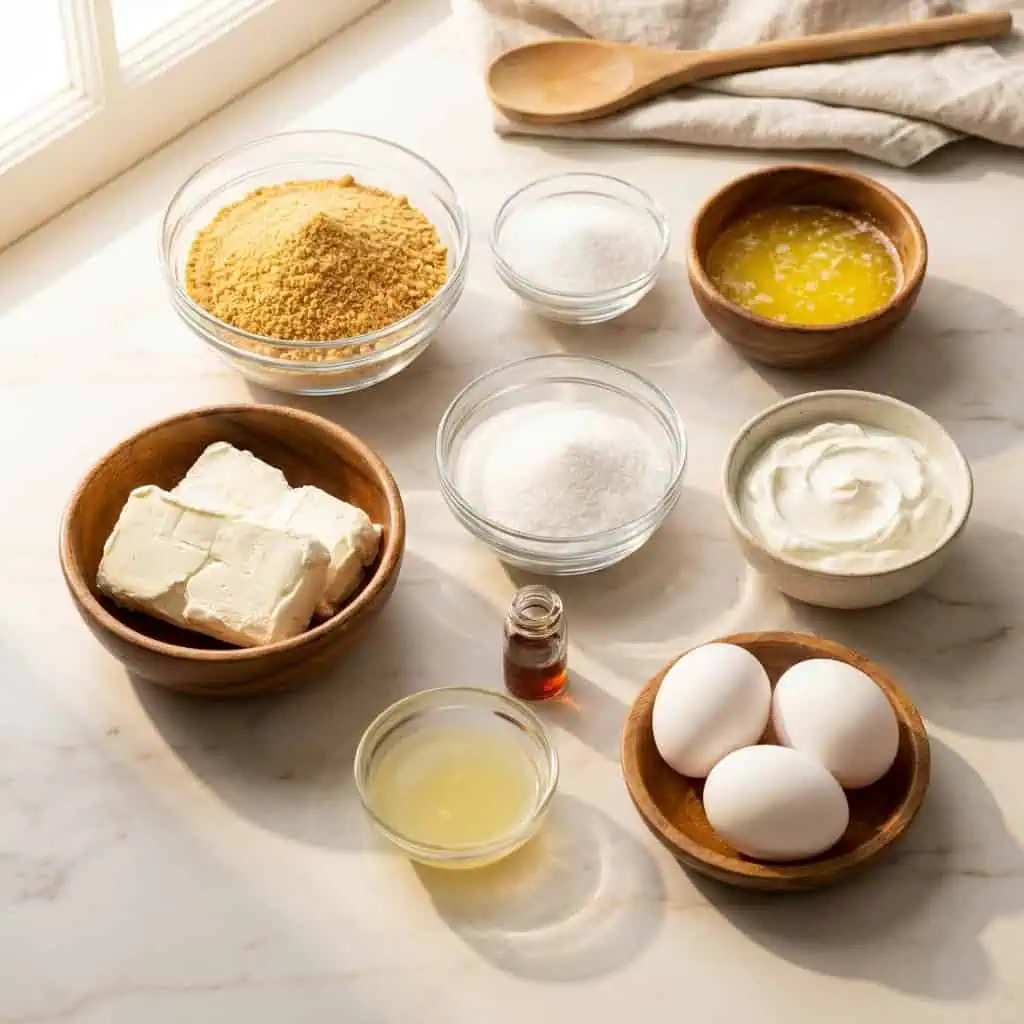
- 1 1/2 cups graham cracker crumbs 180g
- 1/4 cup granulated sugar 50g
- 5 tablespoons unsalted butter 71g melted (for crust)
- 32 oz full-fat brick cream cheese 904g (softened to room temperature)
- 1 cup granulated sugar 200g
- 1 cup full-fat sour cream 240g (at room temperature)
- 1 teaspoon pure vanilla extract
- 2 teaspoons fresh lemon juice (optional but recommended)
- 3 large eggs (at room temperature)
- 1 Adjust the oven rack to the lower-middle position and preheat to 350 degrees Fahrenheit.
- 2
Make the crust: mix the graham cracker crumbs and sugar together, then stir in the melted butter until the mixture is sandy. Press into the bottom and about 1 inch up the sides of an ungreased 9 or 10-inch springform pan using medium pressure. Bake for 10 minutes. Set aside.- 3
Make the filling: beat the softened cream cheese and sugar on medium-high until smooth and creamy, about 2 minutes. Add the sour cream, vanilla, and lemon juice and beat until combined. Add the eggs one at a time on medium speed, beating just until each one is incorporated. Stop the mixer as soon as the last egg is combined.- 4
Wrap the outside of the springform pan in 1 to 2 layers of heavy-duty foil. Place inside a large roasting pan. Pour the batter over the crust and smooth the top. Pour 1 inch of boiling water into the roasting pan around the springform.- 5
Bake for 55 to 70 minutes until the edges are set and the center has a slight wobble. Tent with foil if the top browns. Turn the oven off, crack the door open, and leave the cheesecake inside for 1 hour.- 6
Remove from the oven and water bath. Cool completely on a wire rack, then cover and refrigerate for at least 4 hours or overnight.- 7
Run a knife around the inside edge of the pan, release the springform ring, and slice with a clean warm knife, wiping and dipping between each cut..NoteAll ingredients must be at room temperature before mixing; cold cream cheese will not beat smooth. Do not overbeat after the eggs go in. Rest Time is 1 hour in the turned-off oven plus a minimum 4-hour refrigerator chill (300 minutes combined). Serves 12 to 16; servings set to 14 as midpoint.
classic cheesecake recipe, homemade cheesecake, cheesecake with water bath, cream cheese cheesecake - 2