Cinnamon Bun Bread
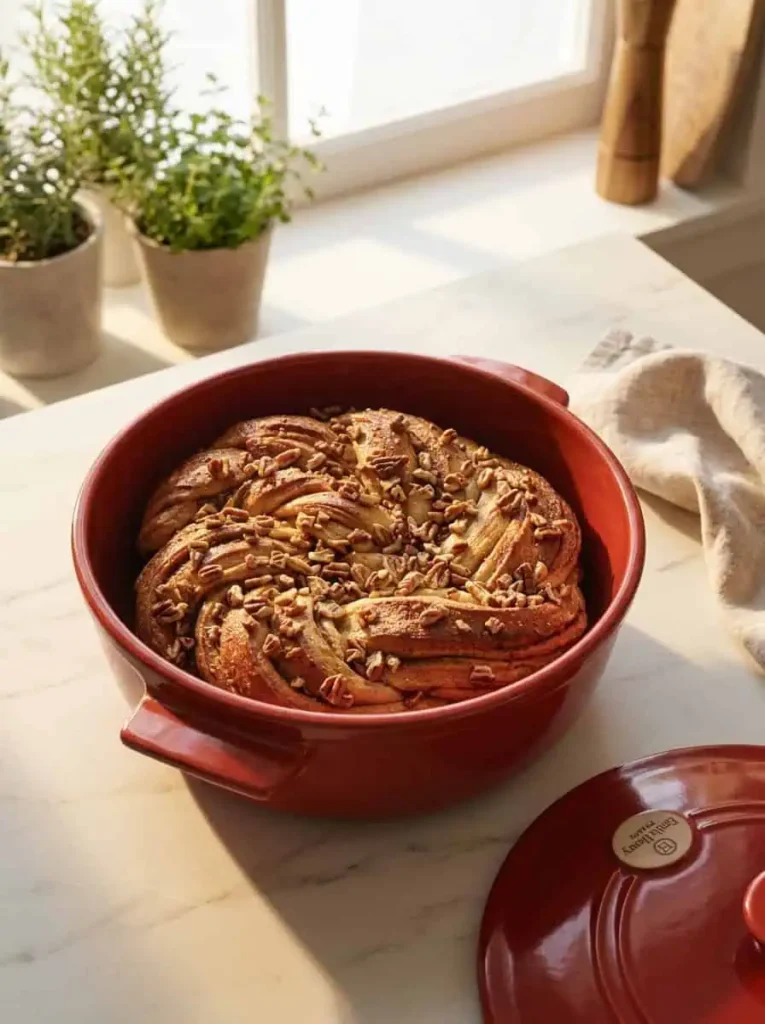
This bread sits in an interesting middle ground: it has the braided, coiled shape of a European enriched loaf, but what's inside is pure cinnamon roll territory, sweet filling spiraling through every layer, with a sugar and pecan top that caramelizes in the Dutch oven. It takes about four hours from start to finish, most of which is just waiting for dough to rise, and it fills the kitchen with a smell that makes it very hard to wait for it to cool.
The technique isn't difficult but it asks for attention at a few specific moments. The shaping is the part most people worry about and it's also the most fun: roll, fill, slice, twist, coil. Each step takes about two minutes. The Dutch oven or cloche does the hard work of baking evenly. Read through the whole recipe once before you start, because the dough needs to rise twice and timing matters more than speed.
The dough, and why potato flour is in it
This is an enriched dough: flour, butter, milk powder, sugar, salt, yeast, water, and vanilla. The potato flour is the ingredient that raises questions. It absorbs moisture and holds it, which keeps the crumb soft and pillowy longer than a plain flour dough would stay fresh. You can feel the difference in the finished loaf: a slice the next day still has that slight give instead of drying into something you'd have to toast. It's worth sourcing if you can find it.
Weigh the flour if you can. A cup of flour scooped from the bag can weigh anywhere from 120 to 160 grams depending on how packed it is; 360 grams is 360 grams. The ratio of flour to liquid determines everything about how the dough feels and how the bread bakes. A digital kitchen scale is the single most useful thing you can own for bread baking.
Mix all the dough ingredients together until you have a smooth, tacky dough, by hand, stand mixer, or bread machine on the dough cycle. The butter goes in at room temperature, not cold, so it can incorporate fully. It should take eight to ten minutes in a stand mixer at medium speed or about twelve minutes by hand. Cover and let rise until nearly doubled, one to one and a half hours.
The filling and the shaping
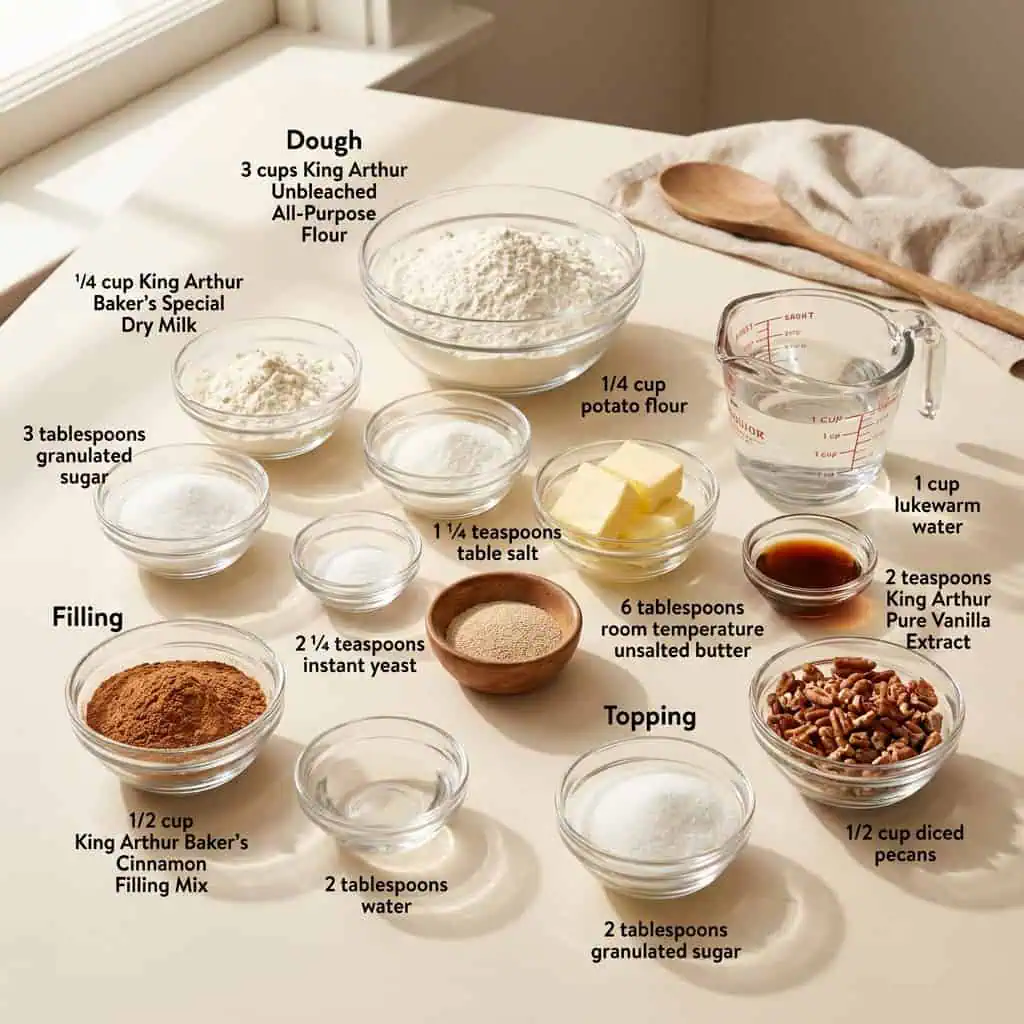
King Arthur's Cinnamon Filling Mix is what the original recipe calls for, and it's a concentrated paste that stays put during baking instead of leaking and burning. If you can't find it, half a cup of granulated sugar mixed with a tablespoon of cinnamon works, but skip the water. The substitute is thinner and will run toward the edges, so be ready for drips on your baking surface.
Roll the risen dough on a lightly greased surface into a 24 by 10 inch rectangle. Spread the filling evenly across the whole surface, right to the edges. Roll it into a log from the long side, pinching the seam shut as firmly as you can. Now cut the log in half lengthwise with a bench knife or sharp chef's knife, one clean cut down the middle. You'll see the layers exposed, filling and dough alternating. These are the two strands you'll twist.
Cross the two strands in the center, cut sides facing up, and twist outward toward both ends, keeping those cut sides up as much as possible. The exposed filling on top is what gives the finished loaf its streaked, dramatic look. Then coil the twisted strand into a tight spiral and settle it into the Dutch oven or cloche. Sprinkle two tablespoons of sugar and the optional pecans over the top.
The second rise and the Dutch oven advantage
Cover the loaf and let it rise again until noticeably puffy and spread to nearly fill the base of the pot, forty-five minutes to an hour. If you're not using SAF Gold instant yeast, the rise may take longer. Give it the time it needs; under-proofed bread doesn't open up properly in the oven and stays dense.
The Dutch oven matters. Covered, it traps steam from the dough during the first part of the bake, which keeps the crust soft while the interior sets. Without the lid, the outside browns before the inside is done and you get a dark crust over a gummy center. Remove the lid for the last five to ten minutes to let the top color and form a slight crust. An internal temperature of 190 to 200 degrees tells you it's done. A thermometer takes the guesswork out and is worth using.
If you don't have a Dutch oven, a baking sheet lined with parchment works. Tent loosely with foil partway through if the edges are browning too fast.
Coming at this from a bread-baking background
Enriched breads with sweet fillings show up across almost every baking culture I've come across. Cardamom buns in Scandinavia, babka in Eastern Europe, pain brioche in France, various sweet braids from the Maghreb and Middle East. They all share the same idea: use a rich dough as the vehicle for something sweet and aromatic, then shape it so the filling is woven through every bite rather than sitting in a pocket. This loaf fits that tradition while tasting distinctly of cinnamon rolls, which is a combination I didn't know I needed until I made it the first time.
It's best the day it's baked, pulled apart warm from the coil, though it holds reasonably well for a day or two covered at room temperature. Toast a slice the next morning and it comes back most of the way. Makes one ten-inch loaf.
The coil matters for more than looks
A tight coil keeps the filling from unspiraling during the second rise and bake, which is why the original recipe specifically says "tight." A loose coil lets the strands separate and you lose the visual drama of the layers. If yours comes loose during shaping, just press the outer end firmly against the side of the coil and let the rise glue it in place. It usually holds.
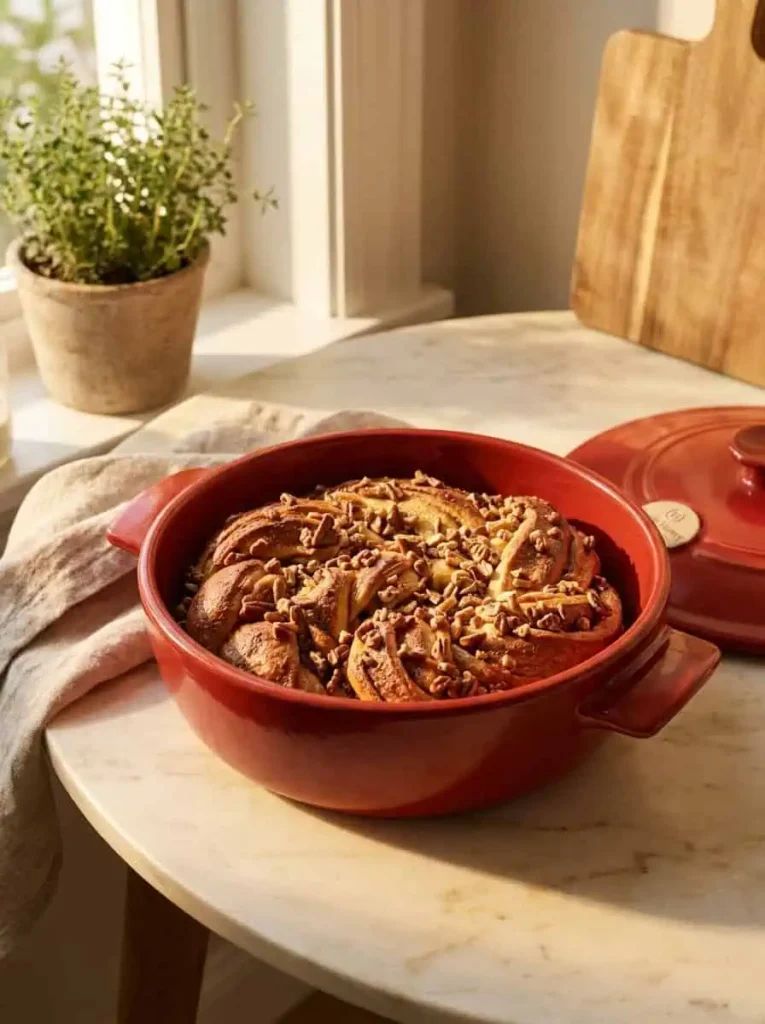
An enriched, braided cinnamon bread coiled and baked in a Dutch oven. Soft crumb from potato flour, cinnamon filling woven through every layer, caramelized sugar and pecans on top.
- 3 cups all-purpose flour (360g)
- 1/4 cup potato flour (43g)
- 1/4 cup nonfat dry milk powder (28g)
- 3 tablespoons granulated sugar (35g)
- 1 1/4 teaspoons table salt (8g)
- 2 1/4 teaspoons instant yeast
- 6 tablespoons unsalted butter (85g)
- at room temperature
- 1 cup lukewarm water (227g)
- 2 teaspoons vanilla extract
- 1/2 cup cinnamon filling mix (or 1/2 cup granulated sugar plus 1 tablespoon cinnamon (82g)
- omit water)
- 2 tablespoons water 28g (For filling if using filling mix)
- 2 tablespoons granulated sugar (25g)
- 1/2 cup diced pecans (57g) (optional for topping)
- 1 Mix all dough ingredients together until you have a smooth dough. Knead by hand for about 12 minutes, or 8 to 10 minutes in a stand mixer on medium speed. Cover and let rise at room temperature until nearly doubled, about 1 to 1 1/2 hours.
- 2
Transfer the risen dough to a lightly greased surface. Pat or roll into a 24 x 10 inch rectangle.- 3
Mix the cinnamon filling and water together until combined. Spread evenly over the dough all the way to the edges.- 4
Roll the dough into a log from the long side. Pinch the seam closed firmly.- 5
Using a bench knife or sharp chef's knife, cut the log in half lengthwise in one clean cut.- 6
Cross the two strands in the center, cut sides facing up. Twist them together toward both ends, keeping the cut sides up as much as possible.- 7
Form the twisted strands into a tight coil and place in the base of a Dutch oven or cloche. Sprinkle sugar and optional pecans on top.- 8
Cover and let rise until noticeably puffy and the loaf nearly fills the base, about 45 minutes to 1 hour. Meanwhile preheat the oven to 400 degrees Fahrenheit.- 9
Bake covered for 25 to 30 minutes, then remove the lid and bake for a further 5 to 10 minutes until golden with dark brown cinnamon streaks. Internal temperature should reach 190 to 200 degrees Fahrenheit.- 10
Transfer to a rack and let cool before pulling apart or slicing..NoteWeigh the flour for consistent results. Potato flour keeps the crumb soft and moist; substitute equal weight all-purpose flour if unavailable but the loaf will dry out faster. If using the cinnamon sugar substitute for the filling (1/2 cup sugar + 1 tbsp cinnamon), omit the water and expect some runoff onto the pan. Rest Time includes 1 to 1.5 hours first rise plus 45 to 60 minutes second rise. No nutrition data was provided for this recipe.
cinnamon bun bread, cinnamon roll bread, sweet braided bread, Dutch oven bread - 2