Chicken Pot Pie Pasta
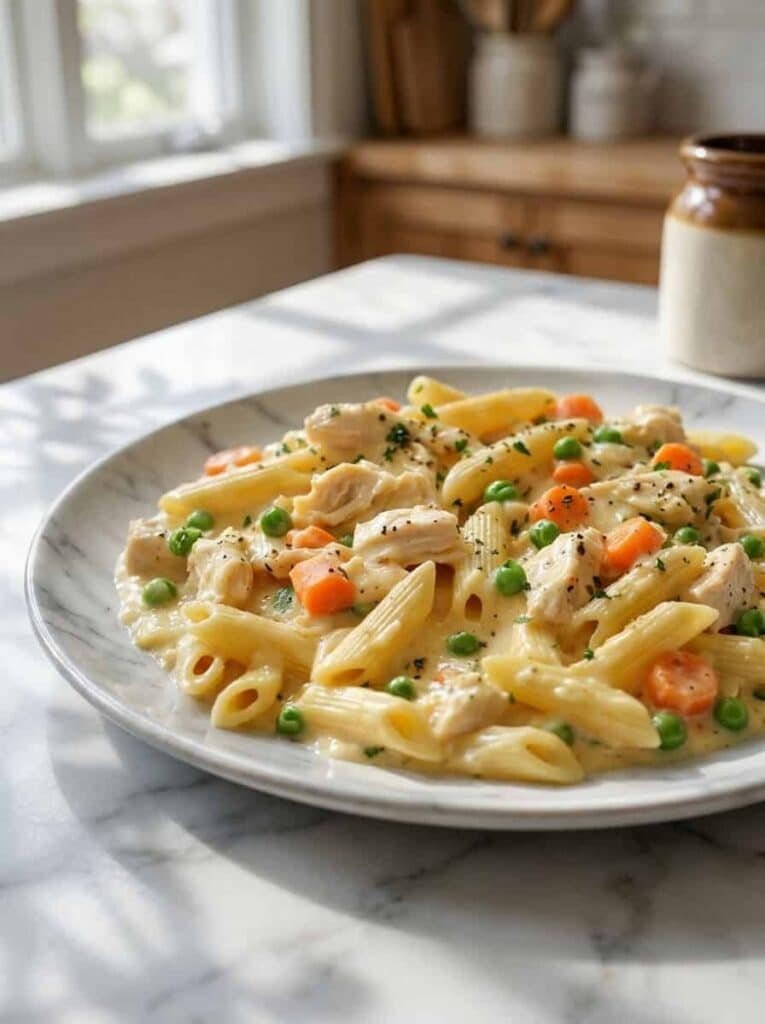
Chicken pot pie filling served over penne instead of under pastry. The sauce, the vegetables and the chicken are all the same; only the starch changes.
It is a sensible swap. Pot pie filling is essentially a thick veloute with chicken and vegetables in it, and thick sauces and pasta have always gone together.
Use the same pot for everything
Cook the pasta, drain it, then build the sauce in the same pot.
This is the practical detail that makes it a weeknight dish rather than a project. One pot, one colander, no separate saucepan.
The pot will still be warm, which helps the butter melt evenly.
Sweat the vegetables properly
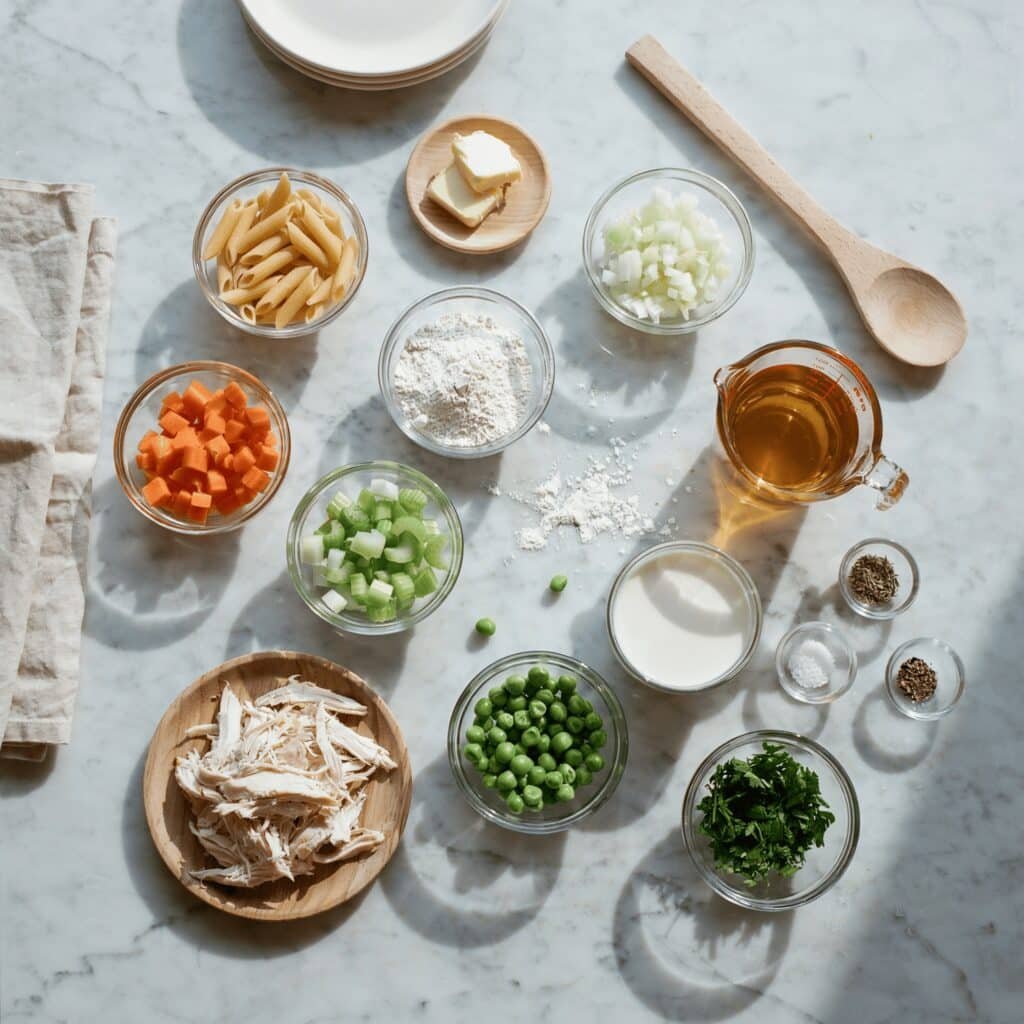
Onion, carrots and celery diced and cooked in butter five to seven minutes until soft.
This is a mirepoix, the same base a pot pie uses, and the time matters. Carrots in particular take the full seven minutes to soften, and undercooked carrot in a creamy sauce is unpleasant and obvious.
Dice them all to a similar size so they finish together.
Coat the vegetables in flour before any liquid
A third of a cup sprinkled over and stirred to coat everything evenly.
This makes a roux using the butter already in the pan plus the moisture from the vegetables. Coating the vegetables means the flour is distributed rather than sitting in one place, which is what prevents lumps later.
Let it cook a minute before liquid goes in. Raw flour tastes pasty and that carries through the whole sauce.
Whisk the liquid in gradually
Two cups of chicken broth and one cup of milk, added slowly while whisking, until there are no lumps.
Gradually is the instruction that decides whether this works. Liquid poured in all at once seizes the flour into lumps that will not whisk out.
Then simmer about five minutes until it thickens. It should coat the back of a spoon.
Everything else is already cooked
Two cups of cooked shredded chicken, frozen peas and dried thyme stirred in.
The chicken needs heating rather than cooking, and the peas go from frozen to done in a couple of minutes in a hot sauce. Neither needs long.
Rotisserie chicken is the obvious source. Leftover roast chicken works and is what this kind of recipe is traditionally for.
Pasta last
Added to the pot and stirred through so every piece is coated.
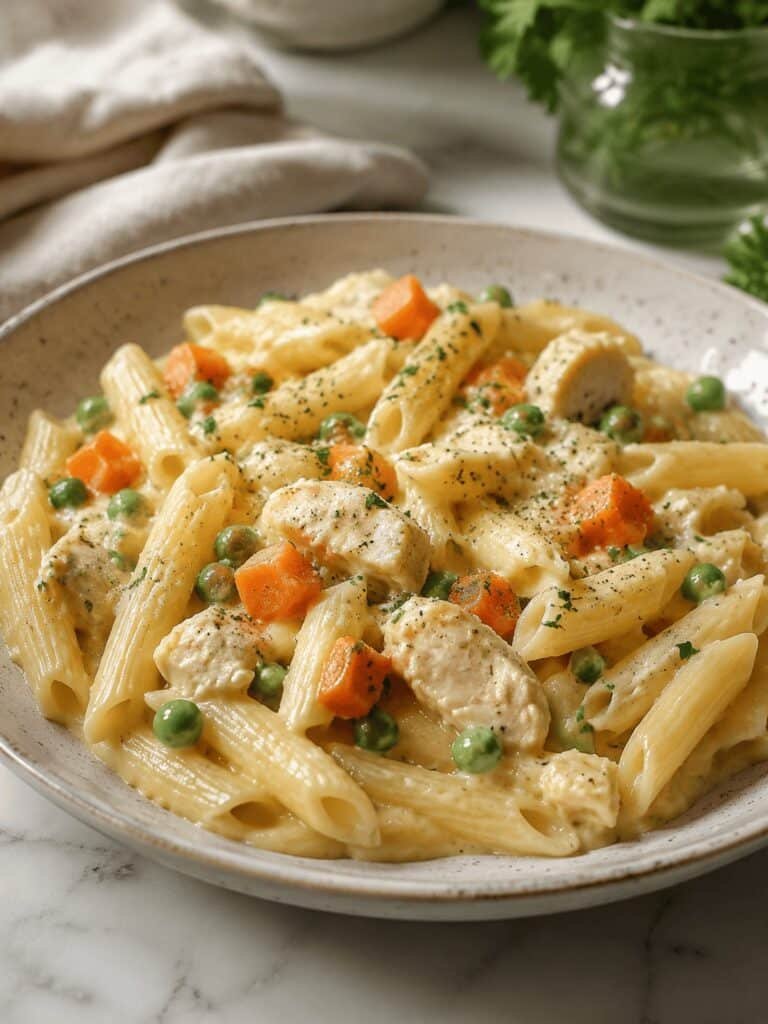
Cooked al dente, since it sits in a hot sauce and keeps softening. Fully cooked pasta going into a thick sauce comes out soft.
Penne is specified and any short shape with ridges or hollows works, since a thick sauce needs something to hold onto.
About the source
This recipe comes from a page with no author expertise attached to it and no stated times or yield, which is worth knowing.
The method itself is standard and sound: it is a roux-based sauce with cooked chicken and vegetables, which is a technique with a long history. Nothing about it is unusual or risky.
The times and servings given here are estimated from the method rather than taken from the source. Around forty minutes and four to six servings from eight ounces of pasta.
Why this works as a swap
Pot pie filling and pasta sauce are closer relatives than they appear.
A pot pie filling is a veloute, which is a stock-based sauce thickened with a roux, with things suspended in it. Plenty of classic pasta sauces are built the same way. The technique transfers directly.
What you lose is the pastry, which is a real loss if that is what you wanted. What you gain is a dish that takes forty minutes instead of an hour and a half and needs no rolling, chilling or blind baking.
Serving
Chopped parsley over the top, which adds colour to a dish that is otherwise entirely cream coloured. <p>It needs nothing alongside it, being protein, vegetables and starch together. ## Seasoning it properly Salt and pepper to taste, and this dish needs more than you might expect. A cream and flour sauce is bland by default, and two cups of broth plus a cup of milk is a lot of liquid to season.
Taste after the sauce thickens and before the pasta goes in, which is the last easy moment to adjust.
Adding more vegetables
Mushrooms sauteed with the mirepoix, or corn added with the peas, both suit it. Anything watery should be cooked off first, since extra liquid thins a sauce you just spent five minutes thickening.
A creamy chicken pot pie pasta with carrots, celery, peas and thyme in a roux-thickened sauce over penne.
- 8 oz penne pasta
- 2 tablespoons butter
- 1 small onion diced
- 2 carrots diced
- 2 celery stalks diced
- 1/3 cup all-purpose flour
- 2 cups chicken broth
- 1 cup milk
- 2 cups cooked chicken shredded
- 1/2 cup frozen peas
- 1/2 teaspoon dried thyme
- salt and pepper to taste
- chopped parsley to garnish.
- 1 Cook the penne according to the package instructions until al dente. Drain and set aside.
- 2
In the same pot melt the butter over medium heat. Add the diced onion carrots and celery and saute 5 to 7 minutes until soft.- 3
Sprinkle the flour over the softened vegetables, stirring well to coat everything evenly, and cook about a minute.- 4
Gradually whisk in the chicken broth and milk, ensuring there are no lumps. Bring to a simmer, stirring frequently, until the sauce thickens, about 5 minutes.- 5
Add the cooked chicken, frozen peas and dried thyme. Season generously with salt and pepper and stir to combine, letting the peas and chicken heat through.- 6
Add the cooked pasta to the pot and stir into the sauce until every piece is coated.- 7
Serve hot, garnished with chopped parsley..NoteThe source gives no times or yield; roughly 40 minutes and 4 to 6 servings are estimated from the method. Cook the pasta first and build the sauce in the same pot. Sweat the vegetables the full 5 to 7 minutes, since undercooked carrot in a creamy sauce is obvious. Coat the vegetables in flour before adding liquid so it distributes, and let it cook a minute to remove the raw flour taste. Whisk the broth and milk in gradually, or the flour seizes into lumps. Cook the pasta al dente, as it keeps softening in the hot sauce. Season generously after the sauce thickens and before the pasta goes in.
Creamy, Comforting, Hearty - 2