Chicken Piccata with Angel Hair
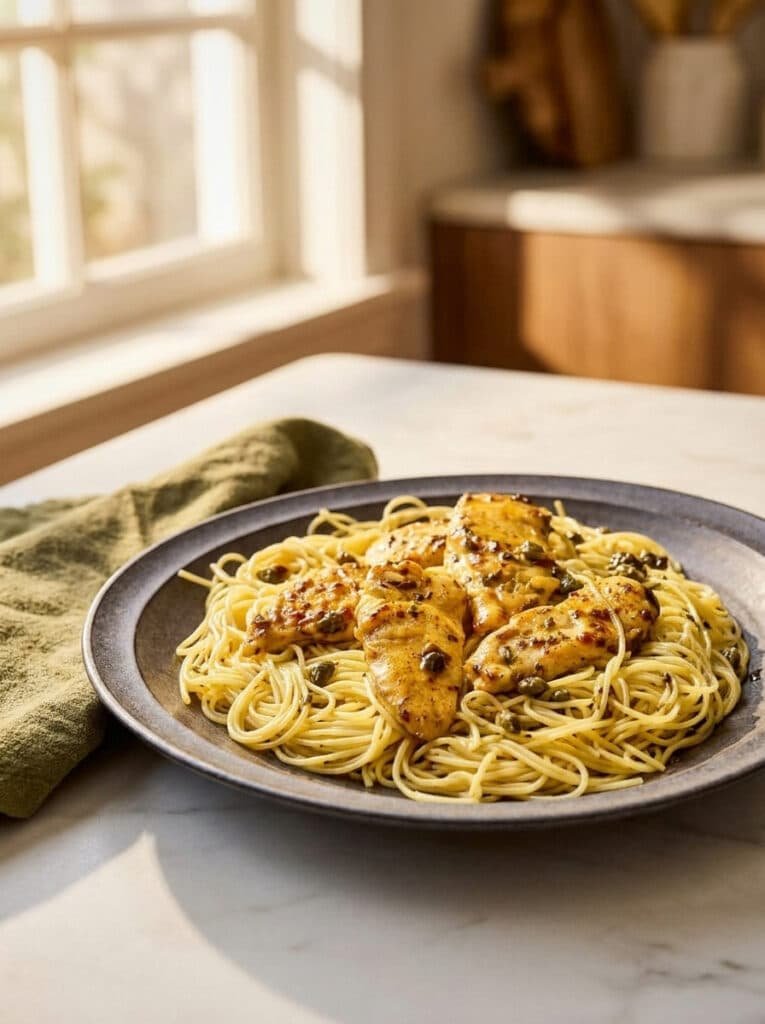
Floured chicken pieces in a lemon, wine and caper sauce over angel hair. Four servings.
The chicken is in the pan too long
The source browns it five minutes per side, then returns it to simmer another fifteen. For breast pounded thin and cut into two-inch pieces, that is a great deal of cooking.
Thin chicken pieces are done in about three minutes per side. Another fifteen in simmering liquid takes them well past tender and into dry and stringy.
Better sequence: brown three to four minutes per side, remove, build and reduce the sauce for the full fifteen minutes on its own, then return the chicken for the last two or three minutes to warm through and absorb the sauce.
Chicken should reach an internal temperature of 165F, which the source never states.
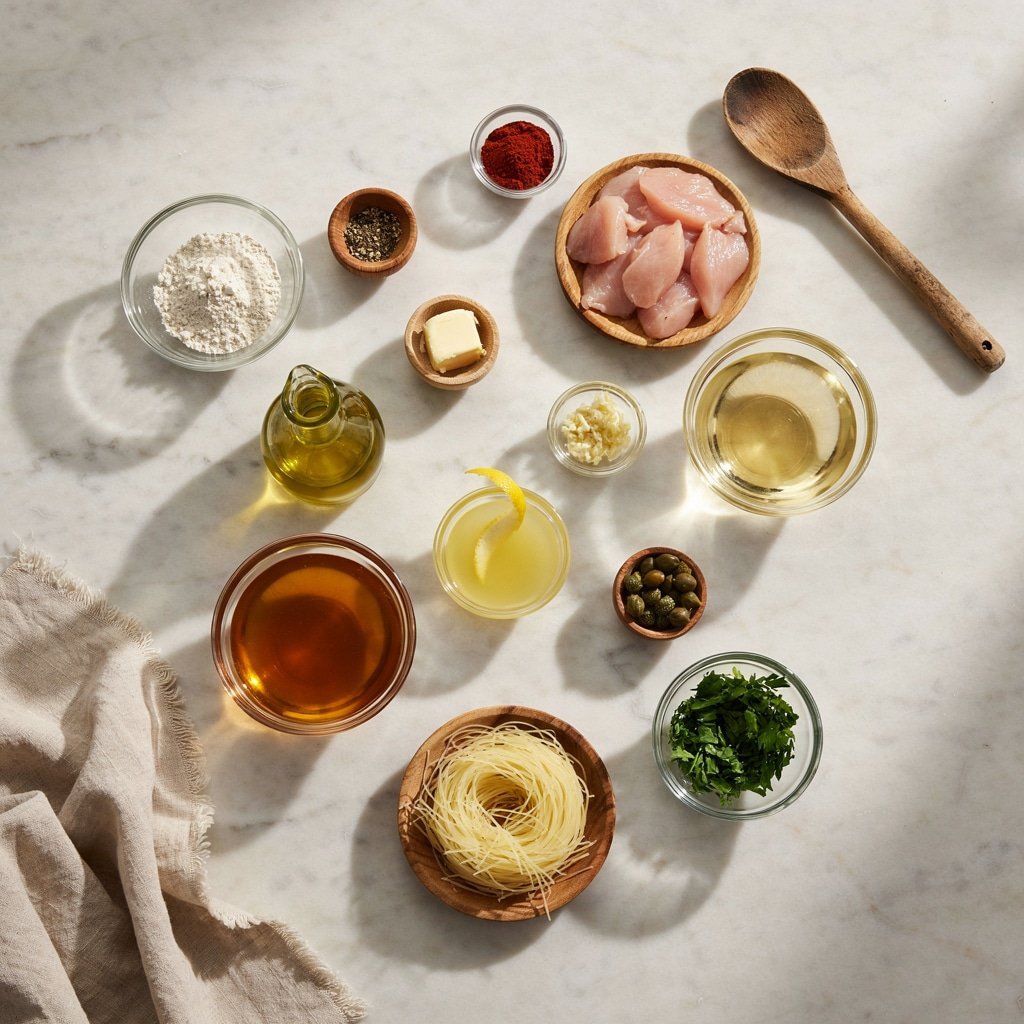
The pasta is listed as already cooked
Its ingredient list says the angel hair is cooked and drained, and then step nine cooks it.
Uncooked is what you buy. The pasta gets boiled four to five minutes near the end, timed so it is ready when the sauce is.
Angel hair cooks very fast, so start the water early and drop the pasta once the sauce is reducing.
Pound the chicken evenly
Which the ingredient list assumes and the method never mentions.
A chicken breast is thick at one end and thin at the other, so an unpounded piece cooks unevenly no matter how careful you are. Pounding to a consistent thickness fixes that.
Put it between two sheets of plastic wrap and work from the centre outward with a rolling pin or the flat of a heavy pan. About a quarter inch is right here, since the pieces are then cut small.
Cook the garlic first, then take it out
One minute until golden and fragrant, then transferred to a plate.
Garlic burns in the time it takes to brown chicken, and burnt garlic turns the whole sauce bitter. Removing it protects it, and it goes back in later with the broth.
Golden and fragrant is the cue. Brown is too far.
Deglaze while the pan is hot
A cup of wine poured in and boiled hard, scraping the bottom with a wooden spoon.
Those browned bits stuck to the pan are concentrated flavour from the chicken and the flour coating, and wine dissolves them in a way water would not.
Scrape properly. Anything left welded to the pan is flavour you paid for and did not use.
Reduce the wine by half
About five minutes at a hard boil.
A cup of wine unreduced would make the sauce thin and sharply alcoholic. Halving it concentrates the flavour and cooks off most of the alcohol.
Dry white is specified. Something you would drink; a sweet wine throws the balance against the lemon.
Butter at the end, off the boil
Two tablespoons stirred in with the parsley after the sauce has cooked.
This is the standard finish for a pan sauce. Butter swirled into a sauce below boiling point emulsifies and gives it body and shine. Boiled, it splits into oil.
The other two tablespoons went in earlier for cooking the chicken.
Dredge in flour, not batter
A third of a cup with pepper and paprika, coating the chicken evenly.
That thin flour layer does two jobs: it browns readily, and it thickens the sauce as the chicken sits in it later. It is the only thickener in the recipe.
Shake off the excess. A thick coating goes gluey rather than crisp.
Capers, undrained of their punch
Two tablespoons.
Capers are the sharp counterpoint to a cup of wine and a quarter cup of lemon juice. Drain them but do not rinse; that brine is part of the seasoning.
At 385mg of sodium per serving this is moderate, and the capers are most of it.
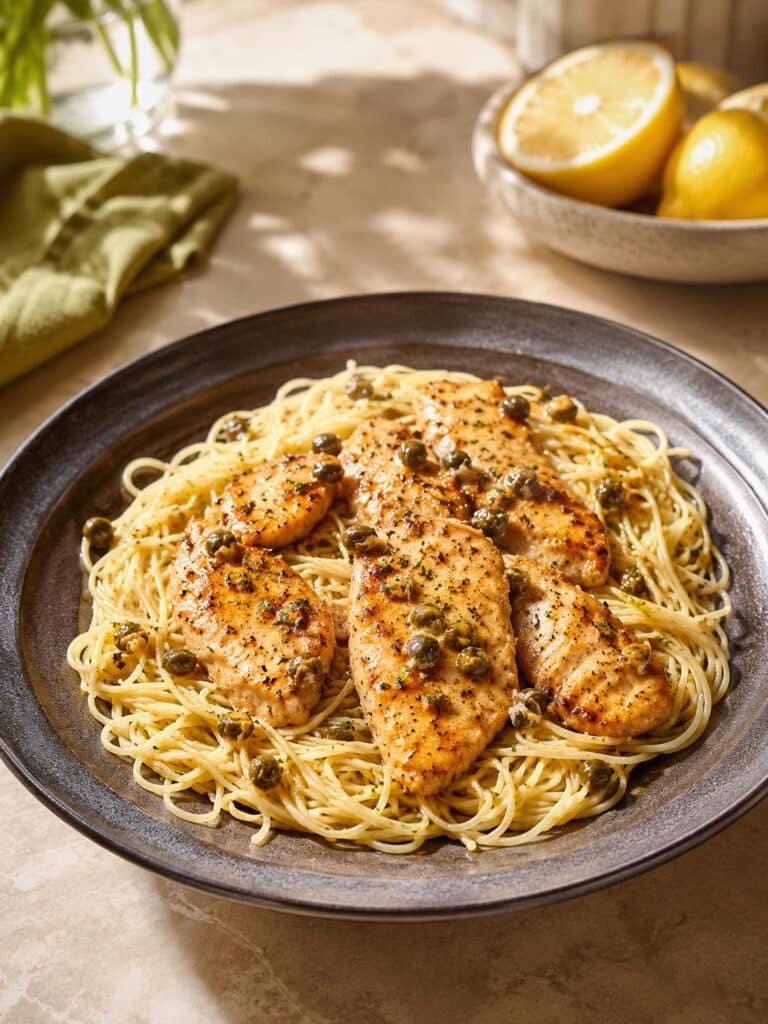
Serving
The chicken goes onto a dish with a few spoonfuls of sauce over it, then the pasta is tossed in the pan with the remaining sauce. Plating the pasta first and the chicken on top keeps the coating from going soggy.
The veal version
The source notes the sauce suits veal medallions, which is the traditional piccata. Veal cooks faster still, so two minutes per side is plenty.
A classic chicken piccata with capers and lemon, served over angel hair.
- 1/3 cup all-purpose flour
- 1/4 tsp fresh ground black pepper
- 1/4 tsp paprika
- 1 lb skinless boneless chicken breast pounded thin and cut into 2-inch pieces
- 2 tbsp olive oil
- 1 clove garlic minced
- 4 tbsp butter divided
- 1 cup dry white wine
- 1/3 cup chicken broth
- 1/4 cup fresh lemon juice
- 2 tbsp capers
- 2 tbsp chopped fresh parsley
- 8 oz angel hair pasta uncooked.
- 1 Whisk the flour, pepper and paprika together in a shallow dish. Dredge the chicken until evenly coated, shaking off the excess.
- 2
Heat the oil in a large skillet over medium-high. Add the garlic and cook about 1 minute until golden and fragrant, then transfer it to a plate so it does not burn.- 3
Melt 2 tablespoons of the butter in the same skillet. Add the chicken and cook until browned and cooked through to 165F, about 3 to 4 minutes per side rather than the longer time in the original. Transfer to a plate.- 4
Pour the wine into the hot skillet and bring to a boil over high heat, scraping the browned bits from the bottom with a wooden spoon. Boil until reduced by half, about 5 minutes.- 5
Whisk in the chicken broth, the reserved garlic, lemon juice and capers and cook 5 minutes.- 6
Reduce the heat to medium and let the sauce continue thickening for about 15 minutes without the chicken in it.- 7
Meanwhile bring a large pot of lightly salted water to a boil and cook the angel hair 4 to 5 minutes until tender but firm. Drain well.- 8
Stir the parsley and remaining 2 tablespoons of butter into the sauce off the boil so it emulsifies. Return the chicken for the last 2 to 3 minutes to warm through.- 9
Transfer the chicken to a serving dish and drizzle with a few tablespoons of sauce. Add the drained pasta to the skillet and toss to coat with the remaining sauce, then portion onto plates and top with the chicken..NoteThe source cooks the chicken 5 minutes per side then simmers it another 15, which is far too long for breast pounded thin and cut into 2-inch pieces and gives dry stringy chicken. Brown 3 to 4 minutes per side, remove, reduce the sauce for the full 15 minutes on its own, then return the chicken for the last 2 to 3 minutes. Chicken should reach 165F, which the source never states. The source ingredient list describes the angel hair as already cooked and drained while step 9 cooks it; buy it uncooked and boil it 4 to 5 minutes near the end. Remove the garlic after its minute so it does not burn during the chicken browning. Reduce the wine by half. Add the final butter off the boil so it emulsifies rather than splitting. Shake excess flour off the chicken.
Lemony, Briny, Buttery - 2