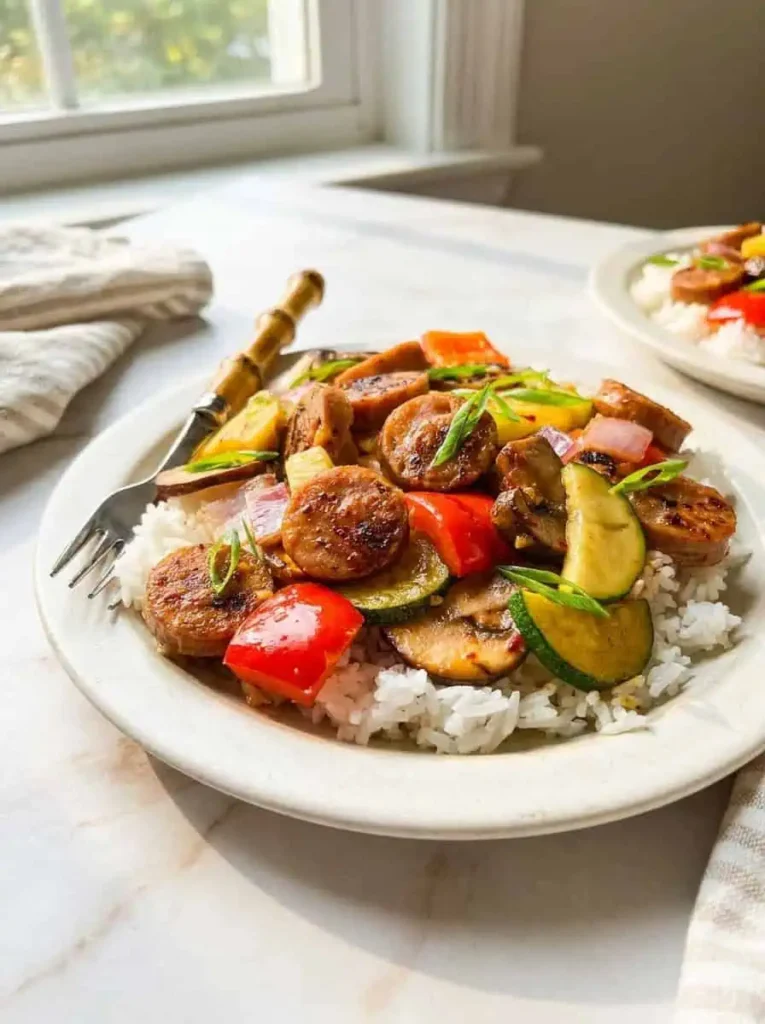
Chicken apple sausage stir fry is the weeknight dinner I make when I want something that tastes intentional but takes less than half an hour. The sausage is already seasoned and sweet from the apple, the sauce takes two minutes to whisk together, and the vegetables are whatever's in the fridge that cooks fast. Twenty-two minutes from cold skillet to plate, and it goes over rice or noodles or on its own.
The combination of apple sausage and a slightly spicy, mustardy sauce sounds specific, and it is, but it works because the sweetness of the sausage and the tang of the dijon and coconut aminos are exactly the right contrast. It's the kind of dish that gets requested again before the pan is even washed.
The sausage and why it matters
Chicken apple sausage, already cooked, cut into quarter-inch rounds. Applegate and Aidell's are the brands most people reach for, and both work well. The Aidell's tends to have a bit more moisture, which helps in a hot pan. Slice them thick enough that you get some surface area to brown against the skillet rather than thin coins that just heat through without color.
They cook in one tablespoon of olive oil over medium-high for three to five minutes until browned on both sides. Don't crowd the pan or they'll steam instead of sear. If your skillet is smaller, do them in two batches. The browning matters: that's where the flavor development happens, and a pale sausage round going into the sauce is a missed opportunity. Pull them out and set them aside while the vegetables go in.
The vegetables, cooked in order
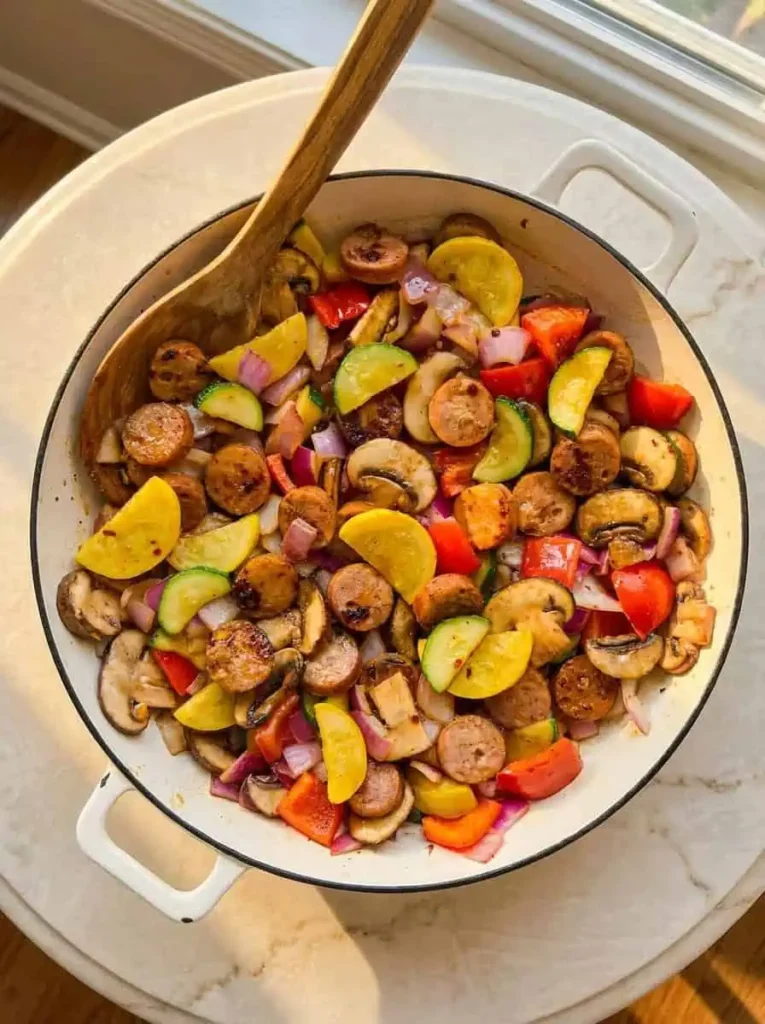
Red bell pepper, red onion, zucchini, yellow squash, mushrooms. The second tablespoon of olive oil goes in, then everything at once with a sprinkle of salt and pepper. Five to seven minutes over medium-high, stirring often, until they're browned at the edges and just softened. This is the moment where most stir fries go wrong: either the heat is too low and the vegetables steam and go limp, or they're stirred too constantly and never build any color.
You want high heat and movement, but not frantic movement. Stir every thirty seconds or so, letting the vegetables sit against the hot surface between stirs. The mushrooms will release water; keep the heat up and they'll reabsorb it and brown. The squash should be tender but still have some bite. Soggy squash in a stir fry is one of the more disappointing things you can produce in a kitchen.
The sauce, whisked and waiting
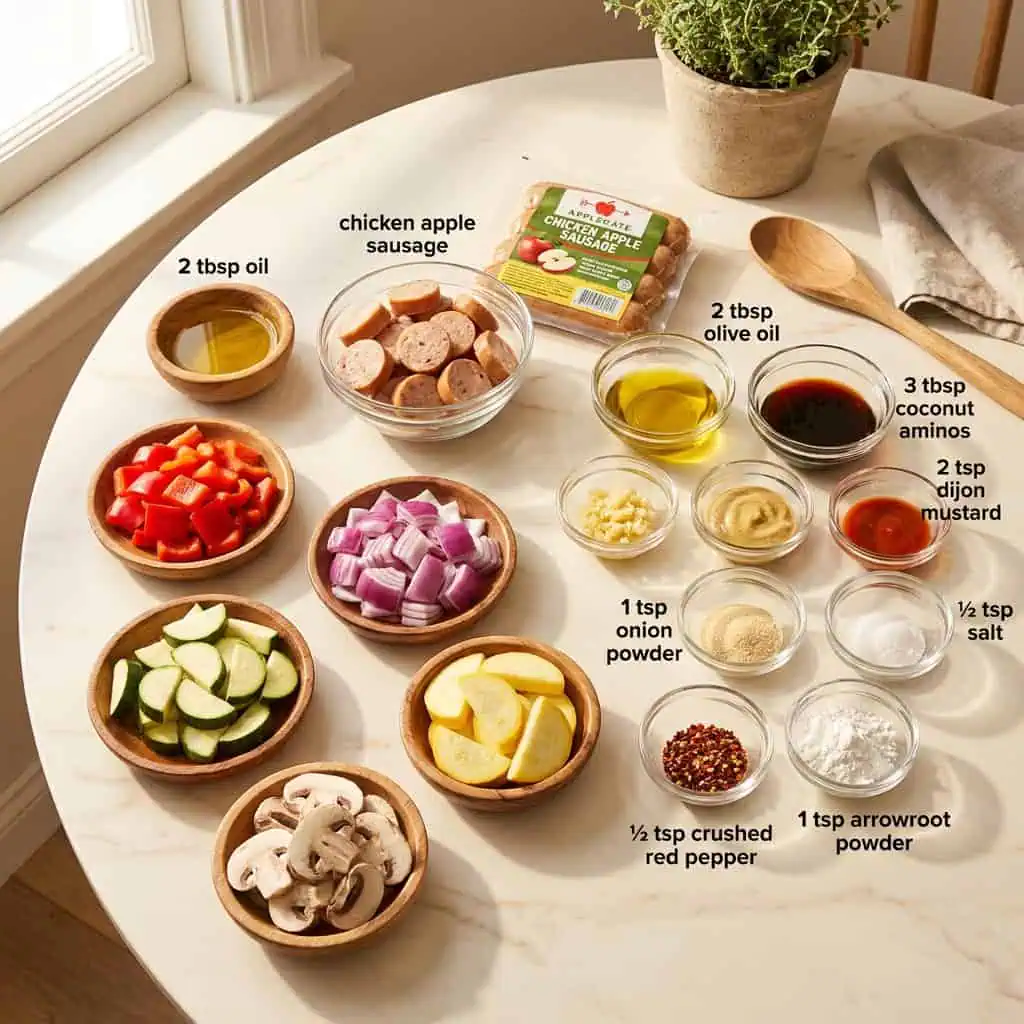
The sauce comes together before any cooking starts: two tablespoons of olive oil, three tablespoons of coconut aminos, a tablespoon of dijon mustard, two teaspoons of hot sauce, a minced garlic clove, half a teaspoon each of salt and crushed red pepper, a teaspoon of onion powder, and a teaspoon of arrowroot powder. Whisk until smooth and set aside.
Coconut aminos if you haven't used them: they're a soy sauce alternative made from fermented coconut sap, slightly sweeter and less salty than soy. They're used here because this recipe is designed to be gluten-free and Whole30-compatible, but if you have neither concern, low-sodium soy sauce or tamari works in the same amount. The flavor profile shifts slightly toward more savory and less sweet, which isn't a problem.
The arrowroot powder is the thickener. It works the same way cornstarch does in a stir fry sauce: it turns the thin, watery sauce into something that clings to the sausage and vegetables and coats everything evenly. Without it the sauce runs to the bottom of the pan and pools. Whisk it in well before cooking so it's fully dissolved.
Bringing it together
The sausage goes back into the pan with the cooked vegetables, then the sauce goes over everything. One to two minutes over medium-high heat, stirring constantly, until the sauce thickens and coats every piece. The arrowroot thickens fast, so watch it. Once it looks glossy and clingy rather than watery, it's done.
Serve over white rice or gluten-free noodles, with sliced green onions on top. The green onion isn't just garnish; it adds a fresh, slightly sharp note that cuts through the richness of the sauce and the sausage fat. Don't skip it. If you're tracking nutrition, the figures below are for the stir fry only, not including rice.
Getting the most from pre-cooked sausage
Pre-cooked chicken apple sausage is already seasoned and safe to eat cold, which means your only job in the pan is to add color and heat. The challenge is that it's lean, leaner than pork sausage, and lean sausage can dry out fast if the pan is too cool or the cooking time goes too long.
Medium-high heat and a timer are your allies. Three minutes per side in a lightly oiled pan gives you a browned exterior while keeping the inside juicy. Past five minutes total and the sausage starts losing moisture quickly. Pulling it out of the pan while you cook the vegetables isn't just organizational; it protects the texture. It goes back in at the very end, just long enough to reheat in the sauce.
A quick dinner I keep coming back to
Stir fries are one of the cooking techniques that translates almost everywhere. The principle, high heat, fast cooking, everything prepped before the pan gets hot, shows up in one form or another across most of the cuisines I've cooked through over the years. This version is distinctly American in its flavors, apple sausage and dijon don't come from any traditional stir fry tradition, but the method is the same and the result is just as satisfying. Twenty-two minutes, one pan, four servings. Serves 4, nutrition per serving doesn't include rice.
Swap the vegetables freely
The sauce and the sausage are the constants; the vegetables are entirely flexible. Broccoli florets, snap peas, thinly sliced cabbage, bok choy, asparagus cut into pieces, even frozen edamame added straight from the bag. Whatever needs using works here. Harder vegetables like broccoli go in first; delicate ones like snap peas or spinach go in with the sauce at the very end. The same twenty-two minute timing holds.
Chicken apple sausage stir fry with fresh vegetables in a quick coconut aminos, dijon, and hot sauce glaze. Gluten-free, ready in 22 minutes, serves over rice or noodles.
Ingredients
2tbsp olive oil (divided)
1pack chicken apple sausages (about 12 oz)
cut into 1/4-inch rounds
1red bell pepper
cut into 1-inch pieces
1red onion (chopped)
1small zucchini
cut into half-moons
1small yellow squash (cut into half-moons)
4oz sliced mushrooms
Salt and pepper
Sliced green onions (for serving)
Cooked white rice or gluten-free noodles (for serving)
2tbsp olive oil (for sauce)
3tbsp coconut aminos
1tbsp dijon mustard
2tsp hot sauce
1clove garlic (minced)
1tsp onion powder
1/2tsp salt
1/2tsp crushed red pepper
1tsp arrowroot powder
Instructions
1
Whisk all stir-fry sauce ingredients together in a small bowl until smooth. Set aside
2
Heat 1 tablespoon olive oil in a large skillet over medium-high heat. Add the sausage rounds in a single layer and cook for 3 to 5 minutes, turning once, until browned. Remove and set aside
3
Add the remaining tablespoon of olive oil to the skillet. Add the bell pepper, onion, zucchini, yellow squash, and mushrooms. Season with salt and pepper and cook, stirring every 30 seconds or so, for 5 to 7 minutes until browned at the edges and just tender
4
Return the sausage to the pan. Pour the sauce over everything and stir over medium-high heat for 1 to 2 minutes until the sauce thickens and coats everything evenly
5
Serve over white rice or gluten-free noodles, topped with sliced green onions.
Nutrition Facts
Servings 4
Amount Per Serving
Calories356kcal
% Daily Value *
Total Fat27g42%
Saturated Fat5g25%
Trans Fat10g
Cholesterol60mg20%
Sodium1523mg64%
Potassium471mg14%
Total Carbohydrate17g6%
Dietary Fiber3g12%
Sugars6g
Protein16g32%
Vitamin A 1508 IU
Vitamin C 61 mg
Calcium 32 mg
Iron 2 mg
* Percent Daily Values are based on a 2,000 calorie diet. Your daily value may be higher or lower depending on your calorie needs.
Note
Nutrition figures are for 1/4 of the stir fry only and do not include rice or noodles. Keep heat at medium-high so vegetables brown rather than steam.