Butter Soy and Furikake Pasta
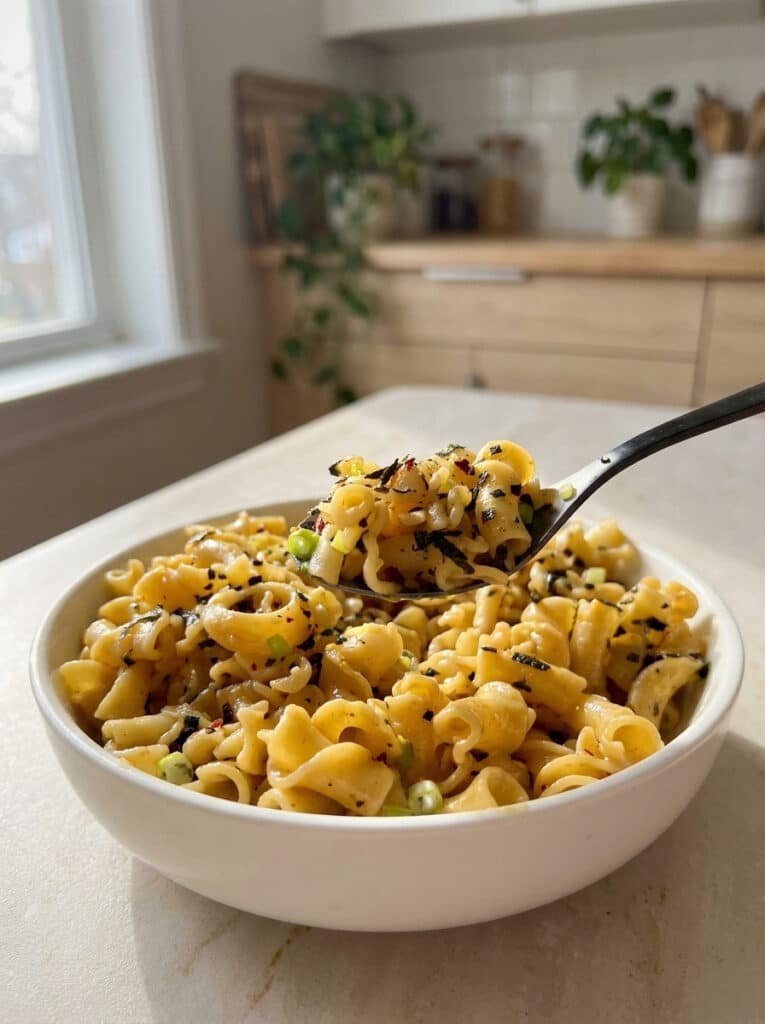
Garlic and chilli in butter, tossed with pasta and soy sauce and topped with furikake. Two servings, about fifteen minutes.
The source gives no quantities for the pasta
It says pasta for two, which assumes you know what that means.
Around 200g dry, or 100g per person, is the standard restaurant portion for a main. Some people want more; 125g each is generous.
The quantity above uses 200g. Adjust the soy sauce alongside if you change it, since the balance depends on the ratio rather than the absolute amount.
Soy sauce carries the salt
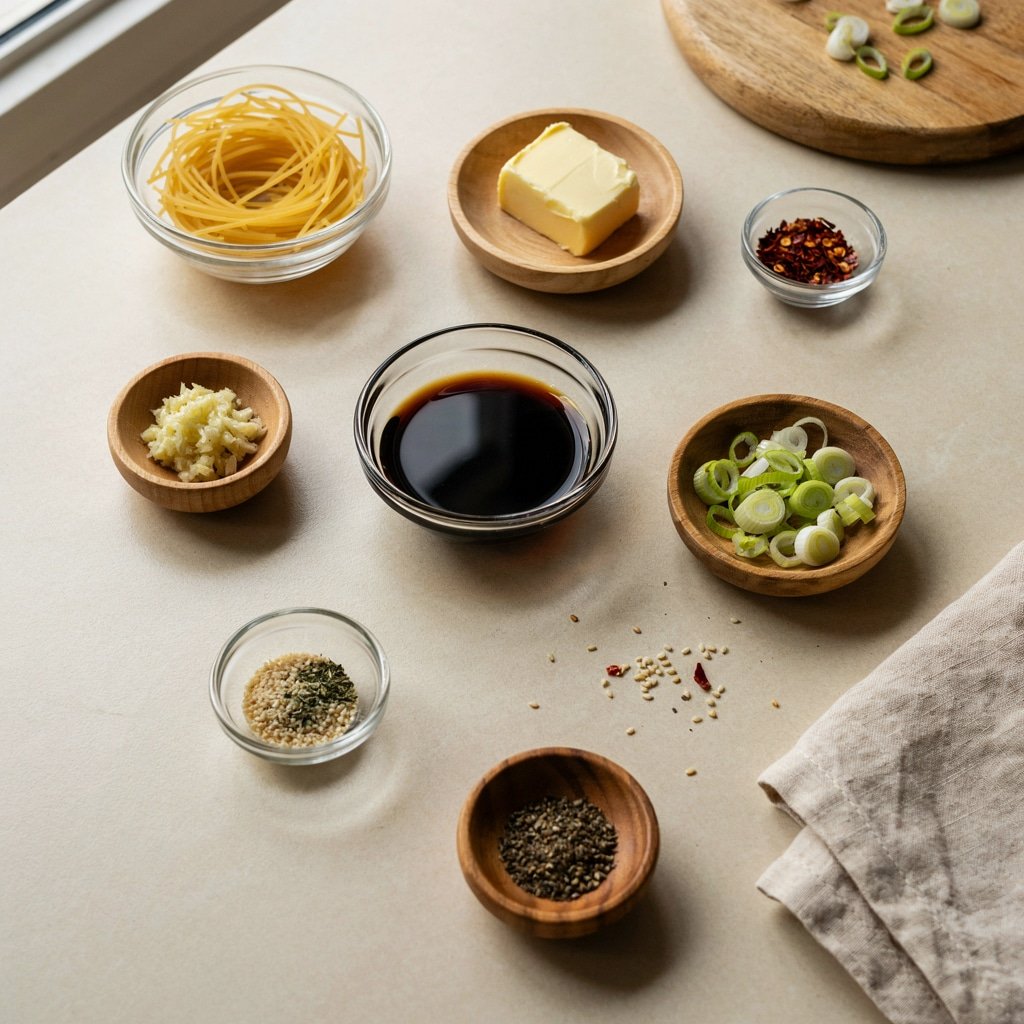
One to two tablespoons, and the source gives no sodium figure.
A tablespoon of regular soy sauce runs roughly 900mg of sodium. At two tablespoons split between two people, that is around 900mg each from the soy alone, before the salted pasta water and the furikake, which also contains salt.
Start with one tablespoon and taste. You can always add more, and the recipe is written that way for good reason.
Reduced sodium soy sauce works and cuts the figure by about forty percent.
Butter and oil together
Two tablespoons of butter melted in the oil already in the pan.
Butter alone burns at the temperature needed to brown floured chicken, since its milk solids scorch. Oil alone browns well but contributes nothing.
Together the oil raises the smoke point and the butter still gives the flavour and the browning. It is a standard pan-frying combination and it is why both are listed.
Salt the pasta water lightly here
Which is a departure from the usual advice.
Normally pasta water should taste like the sea. Here the sauce is soy sauce, and pasta water gets added to the pan as well, so heavily salted water compounds with an already salty sauce.
A modest amount of salt is enough.
Reserve the pasta water before draining
Which is easy to forget and impossible to fix.
That starchy water is what turns butter and soy sauce into something that coats pasta rather than sitting at the bottom of the bowl. The starch acts as an emulsifier.
Scoop out a mugful before you tip the pan. A splash goes in first and more follows if needed.
Gentle heat for the garlic
A few minutes until fragrant, not browned.
Four or five cloves of minced garlic in butter over high heat burns in under a minute, and burnt garlic is bitter throughout the dish.
Medium-low, stirring, until it smells sweet and turns pale gold at most. Butter also browns quickly, and that is a different flavour from what this dish wants.
Toss until glossy
Which is the visual cue the source gives and it is a good one.
Glossy means the butter, soy and starchy water have emulsified into a light sauce clinging to the pasta. Dull and separate means it needs more water and more tossing.
Keep it moving in the pan. Emulsions form through agitation.
What furikake is
A Japanese rice seasoning, typically nori, sesame seeds, salt and sugar, often with dried fish or egg.
It brings salt, umami and texture in one addition, which is why it works on pasta as readily as on rice.
Vegetarian versions exist and are usually labelled as such. Check the packet if that matters, since many contain bonito.
It goes on at the table rather than into the pan. Heat destroys the nori and the sesame goes soft.
Serving

Immediately, in bowls, with the spring onions and furikake scattered over.
The source gives no nutrition figures, which is reasonable for a dish this loosely specified. Butter, pasta and soy are the whole picture.
Adjusting the heat
A teaspoon of chilli flakes is noticeable but not aggressive. Half a teaspoon keeps it mild, and the recipe invites you to adjust it either way.
Where the idea comes from
Furikake is a standard noodle topping in Japanese home cooking, and this borrows that habit for Italian pasta. Butter and soy sauce together is also a common Japanese pasta treatment rather than an invention.
A fifteen minute pasta using Japanese pantry staples, finished with furikake and spring onions.
- 200 g pasta about 7 oz for two (any long shape)
- 2 tbsp butter
- 1 tsp chilli flakes adjust to preference
- 4 cloves garlic minced
- 1 tbsp soy sauce start here and add to taste
- 2 spring onions sliced
- furikake seasoning to top
- black pepper.
- 1 Cook the pasta according to the package instructions in lightly salted water. Salt it less than usual, since the sauce is soy sauce. Reserve a mugful of the pasta water before draining.
- 2
Heat the butter in a pan over medium-low. Add the garlic, chilli flakes and a good crack of black pepper and saute gently a few minutes until fragrant, without letting the garlic brown.- 3
Add the cooked pasta to the pan with a splash of the reserved pasta water and toss well to coat.- 4
Season to taste with soy sauce, starting with one tablespoon. Add more pasta water if needed and keep tossing until the sauce turns glossy and clings to the pasta.- 5
Serve into bowls and top with furikake seasoning and sliced spring onions..NoteThe source gives no pasta quantity, no servings and no times; 200g dry is the standard portion for two and is used here. It also gives no nutrition. Soy sauce is the main sodium source at roughly 900mg per tablespoon, so start with one tablespoon and taste rather than adding two up front; reduced sodium soy cuts this by about 40 percent. Salt the pasta water lightly rather than heavily, which is a departure from the usual advice, because the sauce is soy sauce and the pasta water goes into the pan too. Reserve pasta water before draining, as its starch is what emulsifies the butter and soy into a sauce. Cook the garlic over gentle heat until fragrant, not browned, since burnt garlic turns the whole dish bitter. Add furikake at the table rather than in the pan, as heat ruins the nori. Many furikake blends contain bonito; check the packet if you need it vegetarian.
Savory, Glossy, Umami - 2