Beer Bread
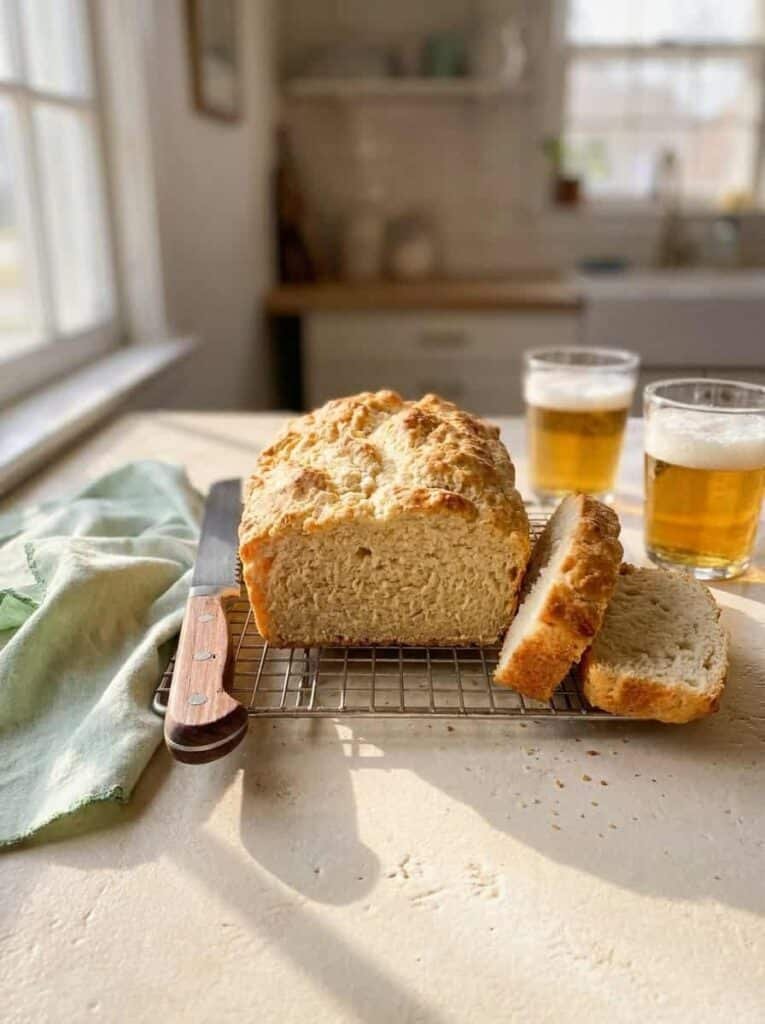
Six ingredients, no kneading, no proving, and no yeast. The carbonation and the baking powder do the lifting.
One loaf, about an hour and three minutes start to finish.
Sift the flour, or spoon it in
The source is emphatic about this and it is right, if slightly forcefully expressed.
Scooping a measuring cup directly into a flour canister compacts the flour, and a compacted cup can hold twenty percent more than a properly measured one. In a recipe with three cups of flour, that is most of an extra cup.
Too much flour in a batter this simple gives you a dense heavy loaf, which is where the complaints about it coming out like a brick originate.
Sift it, or spoon it into the cup and level it off. Better still, weigh it: three cups is around 360 grams.
The beer is the leavening, partly
One twelve ounce can, and the carbonation does real work.
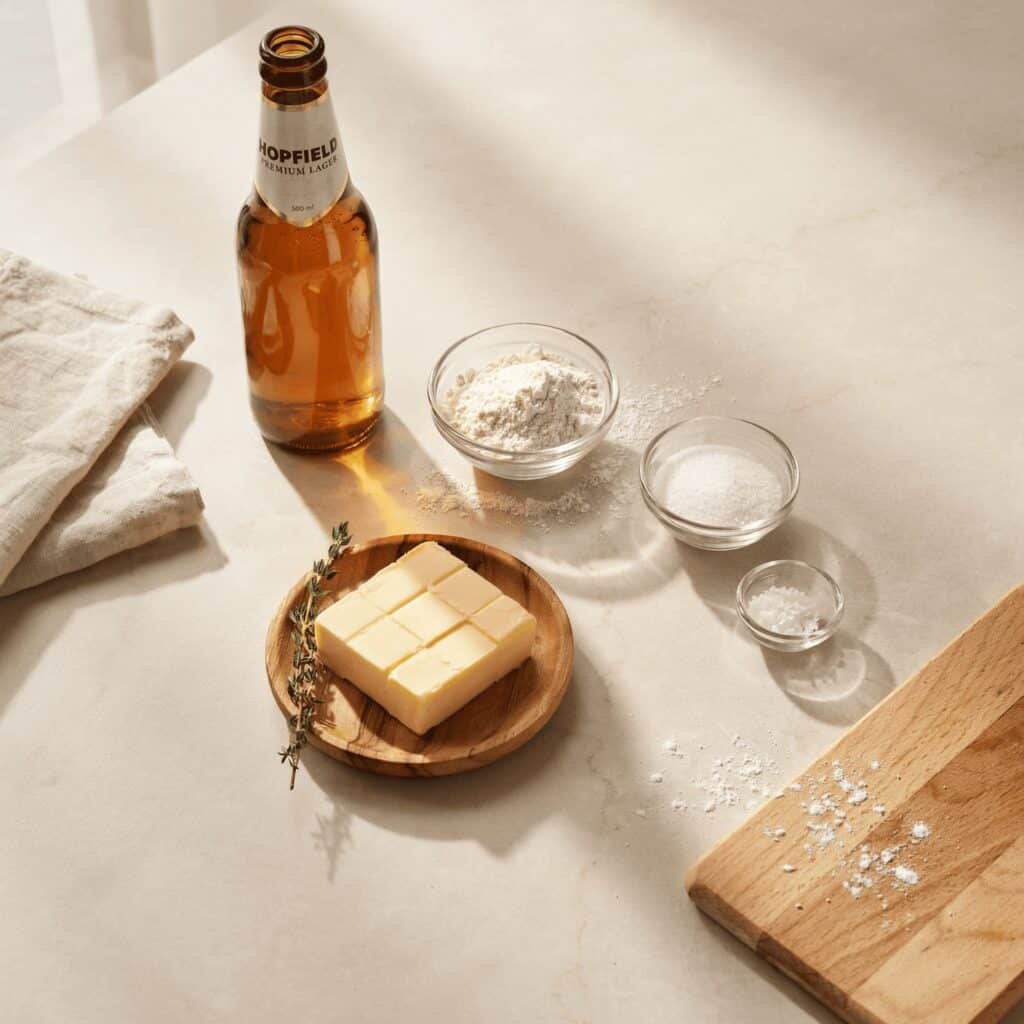
Carbon dioxide dissolved in the beer comes out of solution as the batter warms, expanding and lifting it. That happens alongside the baking powder rather than instead of it.
The beer also brings yeast flavour and a faint bitterness that gives the loaf its character. A very hoppy beer will taste noticeably bitter in the finished bread; a mild lager gives a softer result.
Use it cold and mix quickly. A flat beer that has been open on the counter has lost most of its carbonation and the loaf will be denser.
Butter over the top, or mixed in
Half a cup melted, poured over the batter in the pan.
Poured over, it soaks down through the top and creates a crunchy, buttery crust that is the distinctive feature of this loaf. That is what the recipe intends.
Mixed into the batter instead, it distributes through the crumb and gives a softer, more conventional bread crust. The source offers both and both are good.
A quarter cup does the job if half a cup seems excessive, which the recipe acknowledges.
Put a sheet pan underneath
On the shelf below, to catch butter that drips.
Half a cup of melted butter poured over a loaf pan will find its way over the edge, and butter on an oven floor smokes and burns.
This is the sort of instruction that sounds fussy until the first time you skip it.
Self-rising flour changes the recipe
If you use it, omit both the baking powder and the salt.
Self-rising flour already contains both, in roughly the proportions this recipe calls for. Adding more baking powder on top gives a metallic taste and a loaf that rises fast and collapses.
An hour at 375F
Then out of the pan and cooled at least fifteen minutes.
The cooling matters more in a quick bread than people expect. The crumb is still setting when it comes out of the oven, and cutting immediately gives you a gummy texture that resolves as it cools.
Non-alcoholic versions
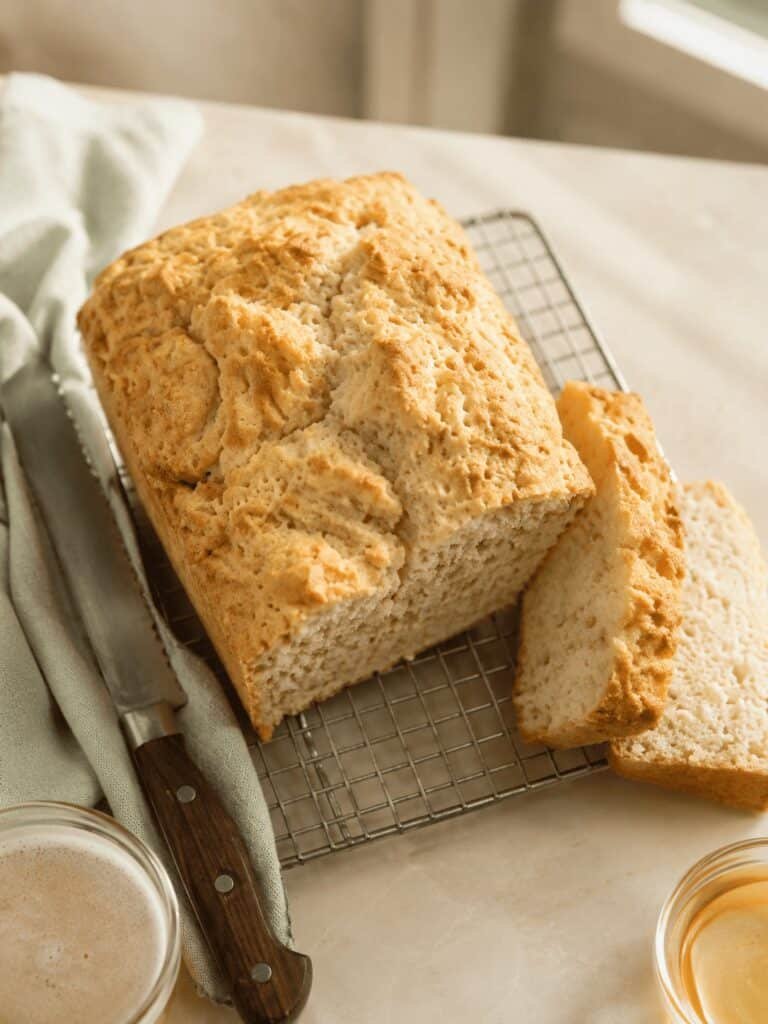
The source recommends adding a packet of dry active yeast or two teaspoons of bread machine yeast if using a non-alcoholic beverage.
That is because non-alcoholic beers and sodas vary in carbonation, and some flat substitutes leave the loaf relying on baking powder alone. The yeast provides insurance.
Sparkling water works and gives a plainer loaf with no beer flavour. Non-alcoholic beer is the closer substitute.
Serving
With soup is the classic pairing and it is a good one, since a hearty crumb holds up to being dipped. <p>Six to eight servings. It is best on the day it is made and it firms up noticeably by day two, at which point toasting it is the answer. ## Which beer to use A mild lager or pale ale gives the most balanced loaf. Stout and porter give a darker, maltier bread that suits winter soups. Very hoppy IPAs turn noticeably bitter as the loaf bakes and the flavour concentrates.
If you would not drink it, the loaf will not improve it.
Additions
A cup of grated cheddar and a tablespoon of chopped rosemary folded through the batter makes a considerably more interesting loaf. Add them after the beer, with as little mixing as possible.
A six ingredient beer bread with no yeast, no kneading and no proving, ready in about an hour.
- 3 cups flour sifted
- 3 teaspoons baking powder (omit if using self-rising flour)
- 1 teaspoon salt (omit if using self-rising flour)
- 1/4 cup sugar
- 1 can beer (12 ounce)
- 1/2 cup melted butter . (1/4 cup also works)
- 1 Preheat the oven to 375F and place a sheet pan on the shelf below to catch any dripping butter
- 2
Mix the sifted dry ingredients with the beer, using it cold and mixing quickly- 3
Pour into a greased loaf pan- 4
Pour the melted butter over the top of the mixture for a crunchy crust, or mix it into the batter instead for a softer one- 5
Bake 1 hour, then remove from the pan and cool at least 15 minutes before cutting.NoteSift the flour or spoon it into the measuring cup and level it off; scooping compacts the flour and can add up to a fifth more than intended, which is the usual cause of a dense heavy loaf. Three cups is around 360g by weight. Use the beer cold and mix quickly, since the carbonation is part of the leavening. If using self-rising flour, omit both the baking powder and the salt. Pour the melted butter over the top for a crunchy crust, or mix it into the batter for a softer one; a quarter cup is enough if half a cup seems excessive. Place a sheet pan on the shelf below to catch dripping butter. For a non-alcoholic version add a packet of dry active yeast or two teaspoons of bread machine yeast. Cool at least 15 minutes before cutting.
Hearty, Buttery, Crusty - 2