Apple Fritter Waffle Donuts
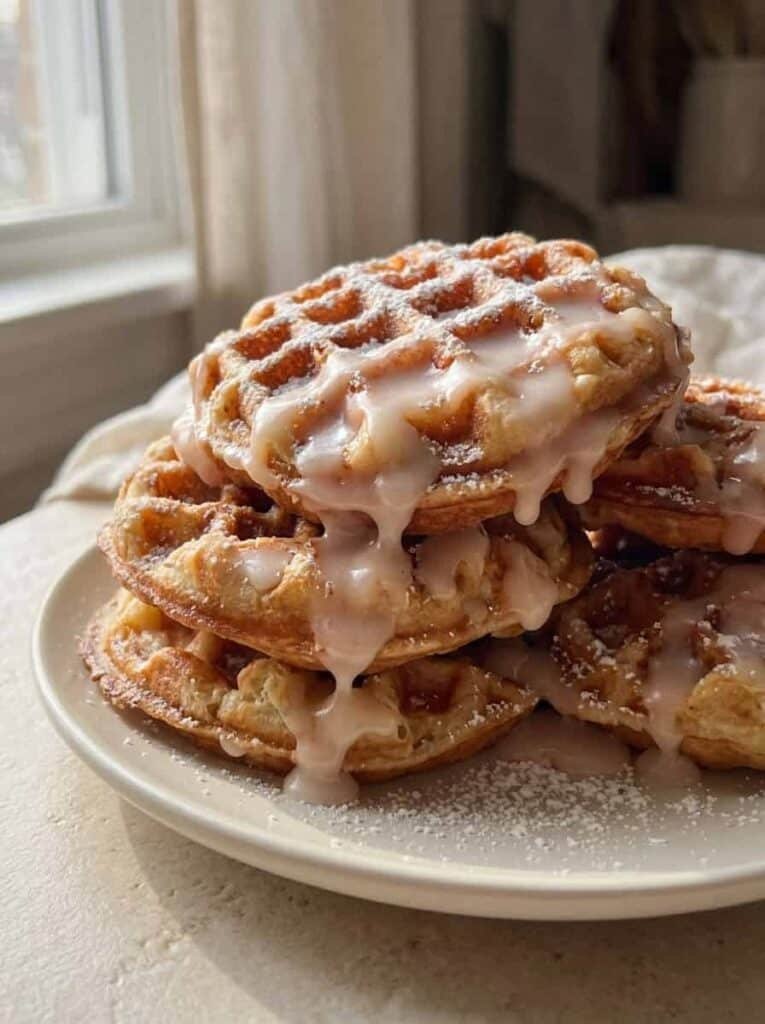
Waffle batter with diced apple through it, cooked in a waffle iron and glazed. It borrows the flavour of an apple fritter without any deep frying.
The method here is reconstructed
Worth stating plainly at the top. The source provides an ingredient list and nothing else, with no instructions, no times, no yield and no temperatures.
What follows is the standard method those ingredients call for, which is the muffin method: dry ingredients whisked, wet ingredients whisked separately, combined briefly, then cooked. It is the same approach any waffle or quick bread recipe with this ingredient list would use.
The times and the yield are estimates from experience with similar batters rather than figures from the source. Treat the first batch as a test and adjust.
Muffin method, not creaming
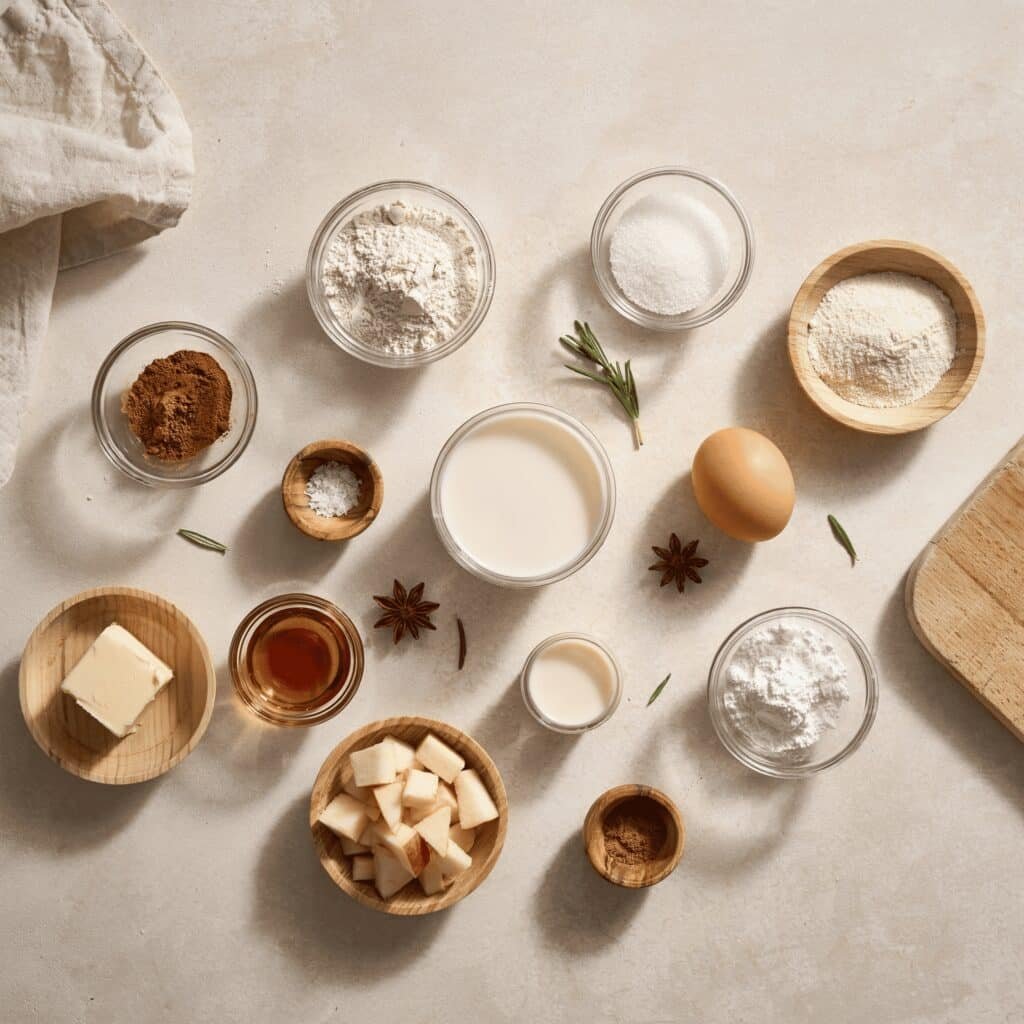
Dry in one bowl, wet in another, then combined until just moistened.
There is melted butter here rather than softened, which is the signal. Melted butter cannot hold air, so there is nothing to gain from creaming, and the leavening comes entirely from two teaspoons of baking powder.
Stop mixing while the batter still looks slightly lumpy. Overworking develops gluten and gives a tough, chewy result rather than a tender one.
Apples in the batter, diced small
Two medium apples, peeled and diced.
Small dice is what makes this work in a waffle iron. Large pieces sit proud of the batter, hold the iron open and prevent it closing properly, so the waffle cooks unevenly.
Quarter inch pieces distribute through the batter and soften in the time the waffle takes.
Peeled rather than skin on. Waffle batter is thin and pieces of skin create weak points where it tears coming out of the iron.
Grease the iron even if it is non-stick
Apple pieces release sugar as they heat and that sugar sticks. Brush the wells with melted butter or oil before each batch.
Do not overfill. Batter with fruit in it spreads less predictably than plain batter, and overfilling means it forces out of the sides.
Glaze the waffles warm, not hot
A cup of powdered sugar with two to three tablespoons of milk and optional cinnamon.
Warm waffles absorb the glaze slightly and it sets into the surface. Hot ones melt it and it runs straight off onto the plate. Cold ones take it as a distinct opaque layer, which is a different look.
Start with two tablespoons of milk and add the third only if it is too thick to pour. Glaze that is too thin soaks in and disappears.
What to expect
Not a donut, despite the name, and not really a fritter either.
An apple fritter is a yeasted dough with apple through it, deep fried, which gives a crisp shell and a soft interior. This is a chemically leavened batter cooked in a waffle iron, so it is closer to an apple waffle with a glaze.
That is a good thing in its own right and it is considerably less work. Setting expectations matters because the name promises something else.
Two teaspoons of baking powder, no soda
Which tells you something about the batter.
Baking soda needs an acid to react with, and there is none here: milk rather than buttermilk, no vinegar, no brown sugar. Baking powder brings its own acid and works regardless.
Two teaspoons for two cups of flour is a standard ratio and it is what gets a fairly heavy batter, weighed down with two apples, to rise in a waffle iron.
Serving
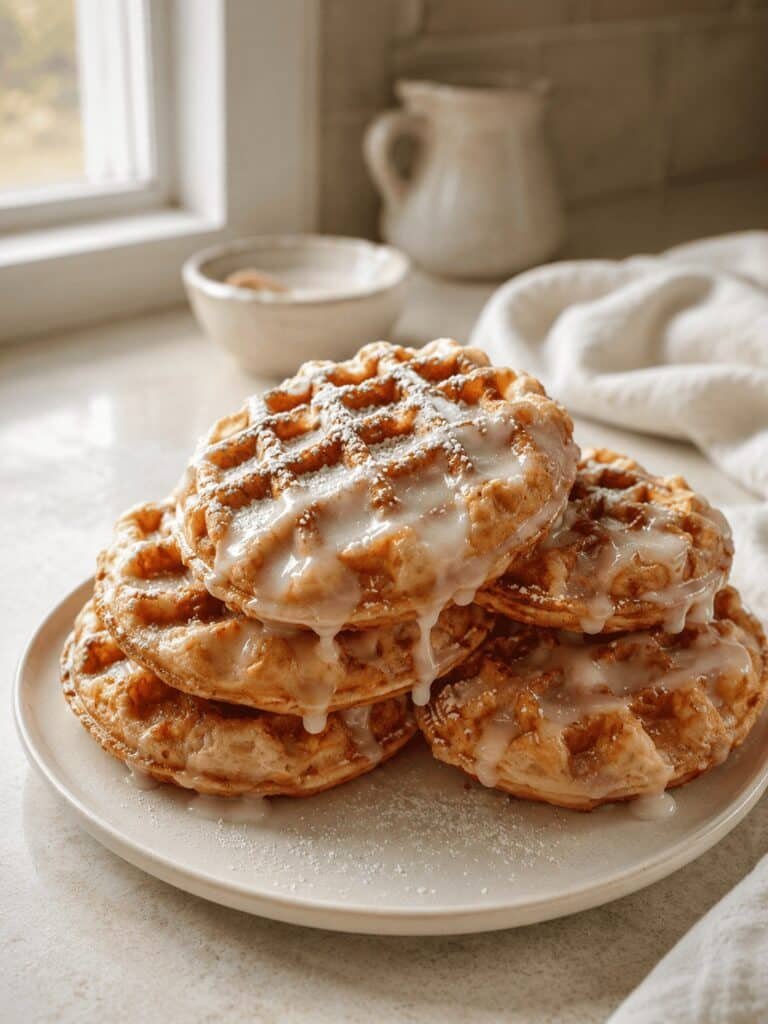
Warm, glazed, and eaten fairly promptly. Waffles soften as they cool and a glazed one goes soft faster. <p>Around six to eight waffles depending on your iron, which is an estimate rather than a stated yield. ## Which apples Firm varieties hold their shape in a hot iron. Granny Smith is tart and stays distinct; Honeycrisp is sweeter and crisper. Softer apples like Golden Delicious break down into wet pockets.
Making them ahead
The unglazed waffles freeze well. Cool completely, freeze flat, then reheat in a toaster and glaze fresh. Glazed waffles do not freeze; the glaze goes cloudy and sticky.
Apple fritter flavours in a waffle iron, with a powdered sugar glaze and no deep frying.
- 2 cups all-purpose flour
- 1/3 cup granulated sugar
- 2 teaspoons baking powder
- 1 teaspoon ground cinnamon
- 1/4 teaspoon salt
- 3/4 cup milk
- 1 large egg
- 1/4 cup unsalted butter melted
- 1 teaspoon vanilla extract
- 2 medium apples peeled and diced small
- 1 cup powdered sugar
- 2 to 3 tablespoons milk (for the glaze)
- 1/4 teaspoon ground cinnamon for the glaze . (optional)
- 1 Preheat a waffle iron and brush the wells with melted butter or oil.
- 2
In a large bowl whisk together the flour, granulated sugar, baking powder, cinnamon and salt.- 3
In a separate bowl whisk the milk, egg, melted butter and vanilla until combined.- 4
Pour the wet into the dry and mix only until no dry flour remains, leaving the batter slightly lumpy. Fold in the diced apples.- 5
Ladle batter onto the centre of the hot iron without overfilling, close the lid and cook until golden and the steam slows, about 4 to 5 minutes depending on your iron. Repeat, greasing between batches.- 6
Whisk the powdered sugar with 2 tablespoons of milk and the cinnamon if using, adding the third tablespoon only if too thick to pour.- 7
Drizzle the glaze over the waffles while they are warm rather than hot, and serve..NoteIMPORTANT: the source provides an ingredient list only, with no instructions, times, yield or temperatures. The method here is reconstructed as the standard muffin method those ingredients call for, and the times and yield are estimates rather than figures from the source. Treat the first batch as a test. Use melted butter as listed and do not cream it; the lift comes from the baking powder. Stop mixing while the batter still looks slightly lumpy. Dice the apples small, about a quarter inch, or they hold the iron open. Peel them, since skin creates weak points in a thin batter. Grease the iron between batches. Glaze while warm rather than hot or cold.
Glazed, Spiced, Crisp - 2