Apple Fritter Bread
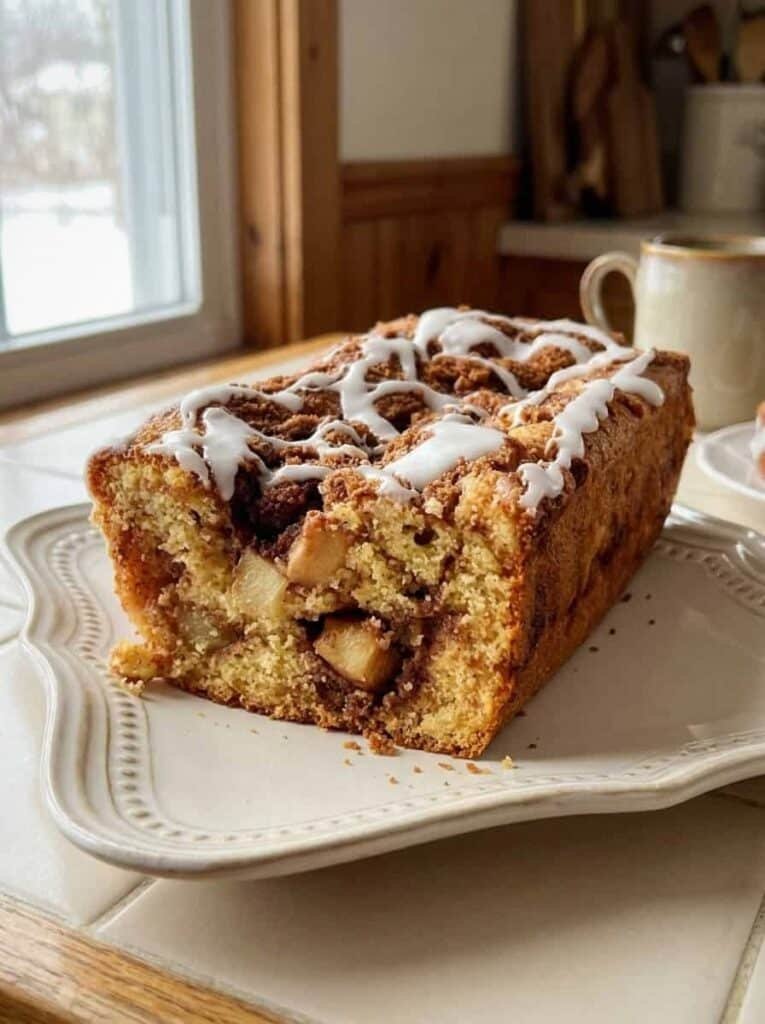
A loaf with layers of cinnamon apple through it and brown sugar over the top, glazed once cooled.
An hour, and the layering is what makes it look like more work than it is.
Divide everything in half, twice
Half the batter, half the apples, the remaining batter, the rest of the apples, then the reserved brown sugar over the top.
That structure is the whole recipe. Mixed together instead, the apple distributes evenly and you get an apple loaf, which is fine and not what this is.
Layered, you get distinct bands of cinnamon apple running through the crumb, which is what makes it read as a fritter.
The brown sugar is also divided: half goes with the apples, half over the top where it caramelises into a crust.
Two teaspoons of cinnamon, split
One into the batter, one with the apples.
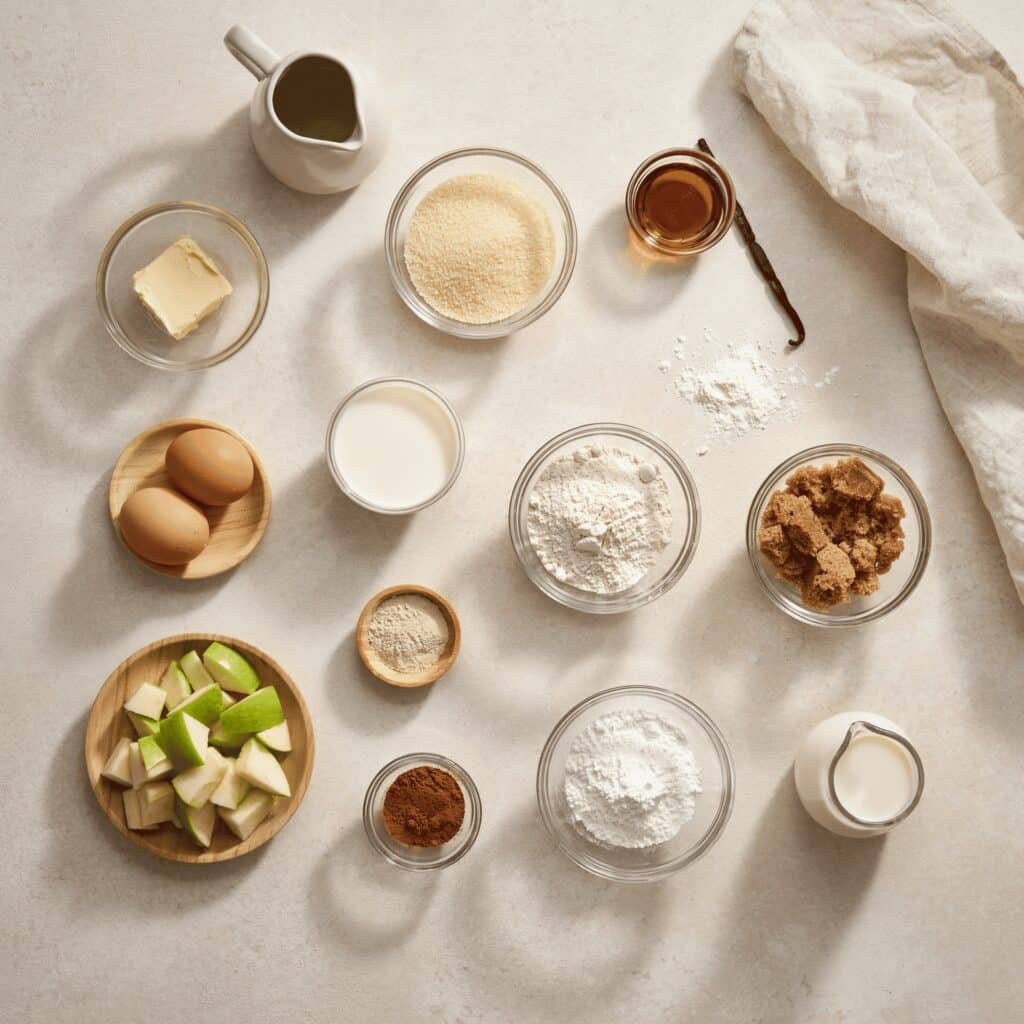
Cinnamon in the batter perfumes the whole loaf as a background note. Cinnamon on the apples concentrates in the layers, so those bands taste distinctly spiced against a milder crumb.
Doing all of it one way loses the contrast.
Baking soda without much acid
A teaspoon and a half, which is a considerable amount for a cup and a half of flour.
Baking soda needs an acid to react with. Here the only real source is the brown sugar, which is mildly acidic from its molasses, plus a little from the milk.
That is a thin acid supply for this much soda, and it is worth knowing that the loaf relies on it. If you find the finished bread tastes faintly soapy or metallic, reduce the soda to a teaspoon next time.
Granny Smith for the apples
Two of them, peeled and chopped.
Tart apples against a cup of brown sugar plus half a cup of granulated plus a glaze is what stops the loaf being cloying. Granny Smith also holds its shape through fifty minutes of baking where softer varieties collapse.
Chop rather than slice. Chunks distribute through the layers where slices lie flat and create planes the loaf splits along.
Cream for two minutes
Butter and granulated sugar with an electric mixer until fluffy.
There is no baking powder here, only soda, so the air beaten in during creaming is a meaningful part of the lift.
Room temperature butter. Cold will not aerate.
Stir the flour in, do not beat it
Flour, baking soda and cinnamon stirred in after the wet ingredients.
The recipe says stir rather than beat, and that is the right instruction. Beating at this stage develops gluten and gives a tough, chewy loaf rather than a tender one.
Stop when the flour disappears.
Fifty minutes to an hour at 350F
In a greased loaf pan.
That is a wide range and it reflects how much loaf pans vary. A darker metal pan bakes faster than glass or light aluminium.
Test with a skewer through the centre, avoiding an apple chunk if you can, which will read wet regardless.
If the top is browning fast before the middle sets, tent it loosely with foil.
Glaze the cooled loaf
A cup of powdered sugar with two tablespoons of milk, drizzled over.
Cooled rather than warm. A warm loaf melts the glaze and it runs down the sides and pools on the plate rather than setting on top.
Two tablespoons gives a thick drizzle. Add a third if you want it thinner and more spread out.
Serving and keeping
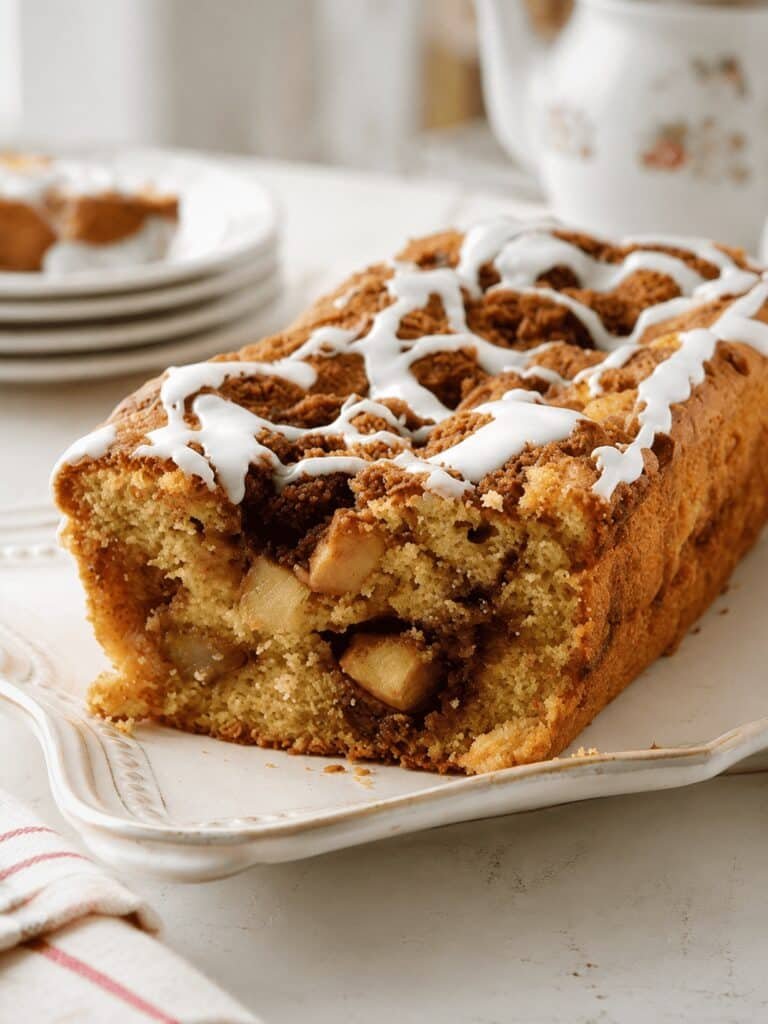
Sliced, at around 302 calories per slice. <p>Three days covered at room temperature. It stays moist thanks to the apples, and it toasts well after that. ## Why it is called fritter bread An apple fritter is a yeasted dough with apple through it, deep fried and glazed. This borrows the apple, the cinnamon and the glaze and puts them in a quick bread.
It is not a fritter and it does not pretend to be. What it shares is the flavour profile and the finish.
Freezing
Unglazed, the loaf freezes for three months wrapped tightly. Glaze it after thawing, since a frozen glaze goes cloudy and weeps as it comes back to room temperature.
A moist apple fritter bread with layers of cinnamon apple and a brown sugar crust, glazed once cool.
- 1 stick butter (1/2 cup)
- 1/2 cup granulated sugar
- 2 teaspoons vanilla
- 1/2 cup whole milk
- 2 eggs
- 1 1/2 cups flour
- 1 1/2 teaspoons baking soda
- 1 cup brown sugar divided
- 2 Granny Smith apples peeled and chopped
- 2 teaspoons cinnamon divided
- 1 cup powdered sugar
- 2 tablespoons milk for the glaze.
- 1 Cream together the butter and granulated sugar with an electric mixer until fluffy, about 2 minutes. Add the vanilla, 1/2 cup milk and eggs and beat until combined. Stir in the flour, baking soda and 1 teaspoon of the cinnamon.
- 2
In a bowl mix together the chopped apples, half of the brown sugar and the remaining teaspoon of cinnamon.- 3
Pour half of the batter into a greased loaf pan. Top with half of the apples. Add the remaining batter then the rest of the apples. Sprinkle the remaining brown sugar over the top.- 4
Bake in a preheated 350F oven for about 50 minutes to 1 hour, tenting loosely with foil if the top browns before the centre sets. Remove and cool.- 5
To make the glaze, combine the powdered sugar and milk and drizzle over the cooled bread..NoteBoth the brown sugar and the cinnamon are divided; half the sugar goes with the apples and half over the top, and one teaspoon of cinnamon goes into the batter with one on the apples. Layer rather than mixing the apples through, which is what creates the distinct bands. The teaspoon and a half of baking soda is a lot for the acid available, which comes mainly from the brown sugar; reduce to a teaspoon if the loaf tastes faintly soapy. Use Granny Smith, which holds its shape over 50 minutes and cuts the sweetness. Chop rather than slice the apples. Stir the flour in rather than beating it. Tent with foil if the top browns before the centre sets. Glaze only once cooled. Keeps 3 days covered or 3 months frozen unglazed.
Moist, Cinnamon, Glazed - 2