Almond Cream Cake
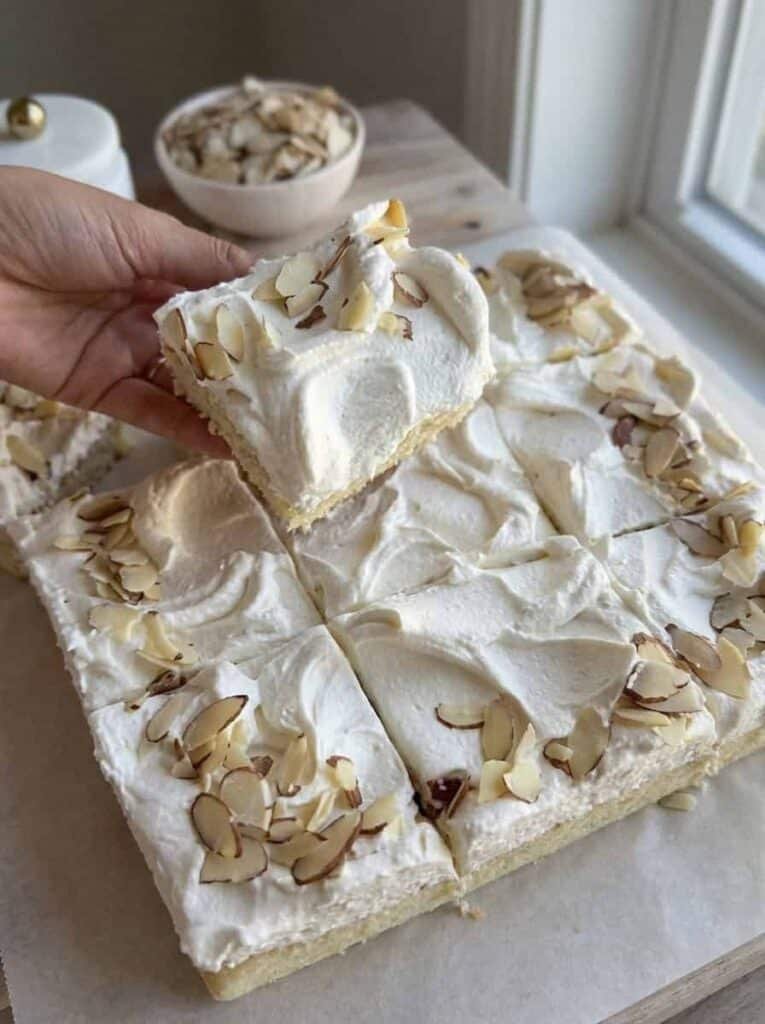
Frangipane par-baked in the pan, then a ricotta cake batter spooned over it and baked together. Two layers from one bake.
Nine squares, and about two hours including cooling.
Par-bake the frangipane first
Ten to fifteen minutes at 350F, until the edges just start to set.
This is the step the whole recipe depends on. Frangipane is butter, sugar, eggs and almond flour, and it is soft and spreadable at room temperature. Spoon a wet cake batter straight onto it and the two mix together into one muddled layer.
Ten minutes of baking sets the surface enough to hold the batter above it while the interior stays soft and continues cooking through the main bake.
Edges just starting to set is the cue. Fully baked frangipane at this stage would be overcooked by the end.
Spoon the batter from the edges inward
Starting around the edges so you do not disturb the bottom layer.
Pouring into the middle drives the batter down through the frangipane. Starting at the edges lets it spread across the surface and meet in the centre, floating rather than sinking.
Spoon it rather than pour it, and spread gently with a spatula if it needs evening out.
Warm water for the eggs and ricotta
Two containers of hot tap water, with the sealed ricotta in one and the eggs in the other, for ten to fifteen minutes.
This is a genuinely useful trick and it solves a real problem: cold ricotta and cold eggs will not emulsify smoothly with oil, and the batter comes out curdled looking with visible lumps of cheese.
Still sealed matters for the ricotta. Water getting into the container thins the batter unpredictably.
Ten to fifteen minutes is enough while you make the frangipane, which is why the recipe sequences it that way.
Tent with foil partway through
Twenty five to thirty minutes uncovered, then loosely tented for another fifteen to twenty.
The top browns before the centre sets, because there is a wet ricotta batter over a layer of frangipane and the heat has a long way to travel.
Loosely is the word. Foil pressed down traps steam against the surface and softens the crust you just built.
The recipe advises checking before the twenty five minute mark and tenting earlier if it is browning fast, which is sensible since ovens vary.
A few crumbs on the toothpick
Rather than clean.
There is ricotta in this batter and it stays moist. A clean toothpick means overbaked, and the cake will be dry.
Two flours in the frangipane
Two cups of almond flour and a single tablespoon of all-purpose.
The almond flour is the substance. The tablespoon of wheat flour adds just enough gluten to give the layer a little structure, so it holds together under the cake batter rather than staying entirely soft.
One tablespoon is not enough to make this a wheat-based layer. It is a stabiliser.
Chill the bowl for the cream
Ten to fifteen minutes in the freezer, along with the beaters.
Cream whips because fat globules cluster around air bubbles, and that happens more readily when the fat is cold and firm. A warm bowl works against it, and cream whipped in one takes longer and holds less air.
Whip to stiff peaks and keep it refrigerated until you frost.
Cool completely before frosting
Which is the usual rule and it matters more here.
Whipped cream has no stabiliser in it beyond the powdered sugar. On a warm cake it melts and slides off within minutes.
An hour on a rack is what the recipe allows and it is about right for a nine inch square.
Serving and keeping
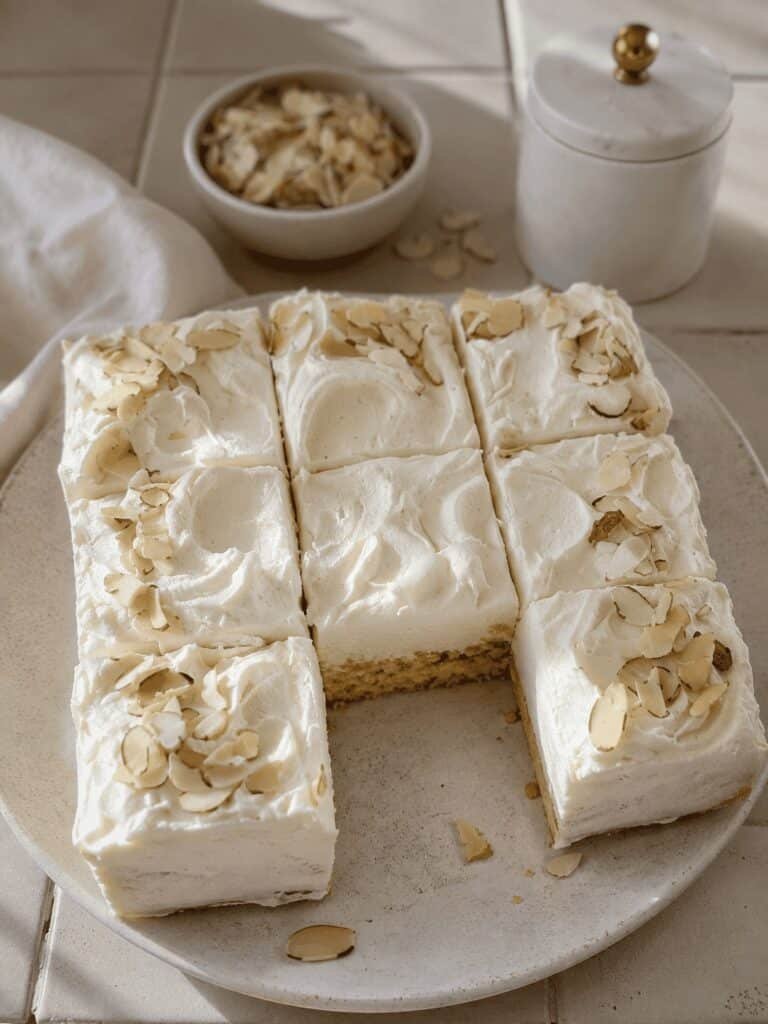
Sliced almonds over the cream, then cut into nine squares. <p>Refrigerated because of the cream, and best within two days. The whipped cream weeps after that and the almonds soften. ## The ricotta A cup of whole milk ricotta, and full fat rather than part skim. Part skim is wetter and grainier, and it makes a looser batter with a less tender crumb.
Drain it if it looks watery in the tub. Excess whey thins the batter.
Olive oil in a cake
Half a cup, and a mild one rather than a peppery extra virgin. Oil keeps the crumb soft as it cools where butter would firm it up, which suits a cake served cold from the fridge.
A two layer almond and ricotta cake baked in one pan, topped with lightly sweetened whipped cream.
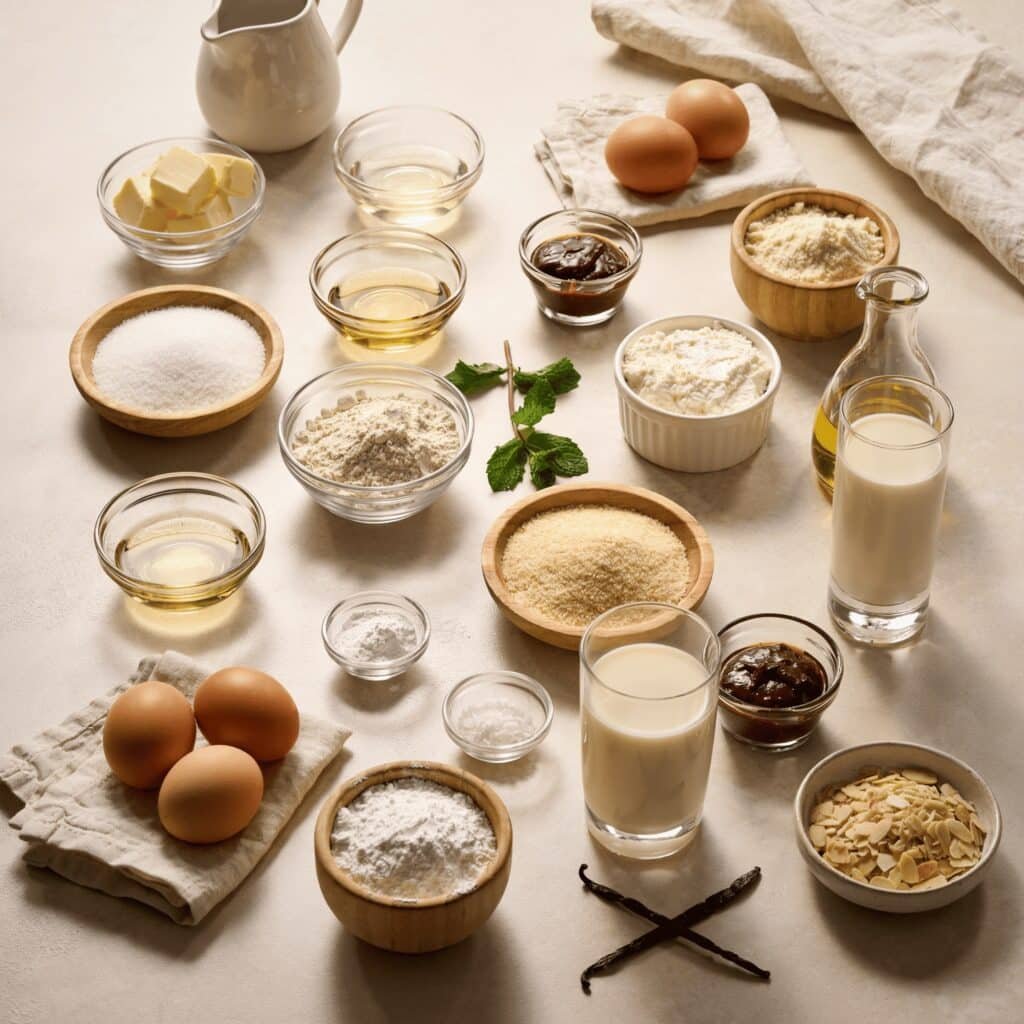
- 1/2 cup softened unsalted butter (113 g)
- 1 cup sugar for the frangipane (200 g)
- 2 teaspoons vanilla bean paste or extract
- 1/4 teaspoon almond extract
- 2 room temperature eggs for the frangipane
- 2 cups almond flour (210 g)
- 1 tablespoon all-purpose flour
- 1 cup whole milk ricotta cheese (220 g)
- 1/2 cup olive oil or other neutral oil (105 g)
- 1 cup sugar for the cake batter (200 g)
- 1 tablespoon vanilla bean paste or pure vanilla extract
- 1/8 teaspoon almond extract for the batter
- 2 large eggs at room temperature for the batter
- 1/2 teaspoon baking soda
- 1/2 teaspoon salt
- 1 cup all-purpose flour (150 g)
- 1 1/2 cups heavy whipping cream (355 g)
- 1/2 tablespoon vanilla bean paste for the cream
- 2 tablespoons powdered sugar
- 1/2 cup sliced almonds.
- 1 Fill two containers with hot tap water. Submerge the sealed ricotta container in one and the eggs in the other for 10 to 15 minutes while you make the frangipane.
- 2
Preheat the oven to 350F. Grease a 9x9 inch cake pan and line it with parchment cut to size.- 3
To a medium bowl add the softened butter, 1 cup sugar, vanilla and 1/4 teaspoon almond extract. Mix with an electric mixer until creamy. Add 2 room temperature eggs and mix until well combined.- 4
Add the almond flour and 1 tablespoon of all-purpose flour and mix until fully combined into a creamy paste.- 5
Transfer to the prepared pan and bake at 350F for 10 to 15 minutes, until the edges just start to set. Make the cake batter while it bakes.- 6
In a large bowl combine the ricotta, olive oil, 1 cup sugar, 1 tablespoon vanilla and 1/8 teaspoon almond extract. Mix until fully combined then add the 2 eggs and mix well.- 7
Add the baking soda and salt and mix until evenly distributed. Add the 1 cup of all-purpose flour and mix only until no specks of flour or lumps remain.- 8
Remove the par-baked frangipane from the oven and gently spoon the cake batter on top starting around the edges so you do not disturb the bottom layer. Bake 25 to 30 minutes, then tent loosely with foil and bake a further 15 to 20 minutes, until a toothpick inserted in the centre comes out with just a few crumbs. Check before 25 minutes and tent earlier if browning quickly.- 9
Cool in the pan a few minutes then turn out onto a wire rack to cool completely.- 10
Chill a mixing bowl and beaters in the freezer 10 to 15 minutes. Whip the cream with the vanilla and powdered sugar to stiff peaks and refrigerate until ready.- 11
Once the cake is completely cool spread the whipped cream over the top, decorate with sliced almonds, slice and serve..NotePar-bake the frangipane 10 to 15 minutes until the edges just start to set, which is what stops the cake batter sinking into it. Spoon the batter on starting around the edges rather than pouring into the middle. Warm the sealed ricotta and the eggs in hot tap water for 10 to 15 minutes; cold ingredients will not emulsify with the oil and the batter curdles. Tent loosely with foil after 25 to 30 minutes, or earlier if browning fast. Pull it when a toothpick has a few crumbs rather than coming out clean, since the ricotta keeps it moist. Chill the bowl and beaters before whipping the cream. Cool the cake completely before frosting, as unstabilised whipped cream slides off a warm cake. Keeps 2 days refrigerated.
Moist, Nutty, Creamy - 2