


Spiced pumpkin donuts fried and dipped in vanilla glaze. Fourteen donuts plus holes.
Deep frying safely
Three inches of oil in a heavy bottomed pot at 350F, which is a significant volume and the recipe gives no guidance on pot size.
Fill the pot no more than a third full with oil. Three inches in a small pot leaves no headroom, and oil expands as it heats before the donuts displace more.
Use a thermometer rather than guessing. 350F is the target and the gap between correct and smoking is narrow.
Never move a pot of hot oil. If it catches fire, smother it with a lid or a baking sheet and turn off the heat. Never use water, which vaporises instantly and throws burning oil across the room.
Lower the donuts in gently and away from you. Keep children out of the kitchen for this.
Let the oil cool completely in the pot before moving or disposing of it.
Two or three at a time

Which the method specifies and which is about temperature rather than crowding.
Cold dough dropped into hot oil pulls the temperature down. Too many at once and the oil falls well below 350F, at which point the donuts absorb oil instead of frying and come out greasy.
Let the oil come back up between batches. A thermometer makes this obvious.
Five or six holes at a time, since they are much smaller.
The dough must chill
Fifteen minutes in the refrigerator, covered.
This is a wet dough carrying a cup of pumpkin puree and half a cup of sour cream. Straight after mixing it is too soft to roll or cut cleanly.
Chilling firms it enough to handle. Longer is fine if you get held up.
Half an inch thick
Rolled out on a floured surface.
Donuts puff considerably in hot oil. Rolled thinner they fry into crisp discs; thicker and the outside browns before the middle cooks.
A three inch cutter for the donuts and a one inch cutter for the holes. Scraps reroll, though the second rolling gives a slightly tougher donut.
Glaze while hot
Both sides, immediately out of the oil onto the rack.
Hot donuts absorb a thin layer of glaze into the surface and then set with a thin shell. Cooled first, the glaze sits on top and slides off.
Set up before you start frying: rack next to the stove, glaze bowl next to the rack. Once the donuts come out there is no time to assemble things.
Baking powder, not yeast
Four teaspoons, which is a lot.
This is a cake donut rather than a raised one, so there is no proving time. The lift happens entirely in the fryer, which is why the quantity is high.
Mix and get on with it. The reaction starts as soon as wet meets dry, and a dough left sitting for an hour loses much of its rise.
Sour cream for tenderness
Half a cup.
Its acidity reacts with the baking powder and it tenderises the crumb, giving a softer donut than milk would. Full fat rather than light.
Best the day they are made
Which the recipe says and which is true of anything fried.
Two days in an airtight container is the limit given. They go noticeably firmer after the first few hours, and reheating does not restore a fried donut the way it does a baked good.
The glaze
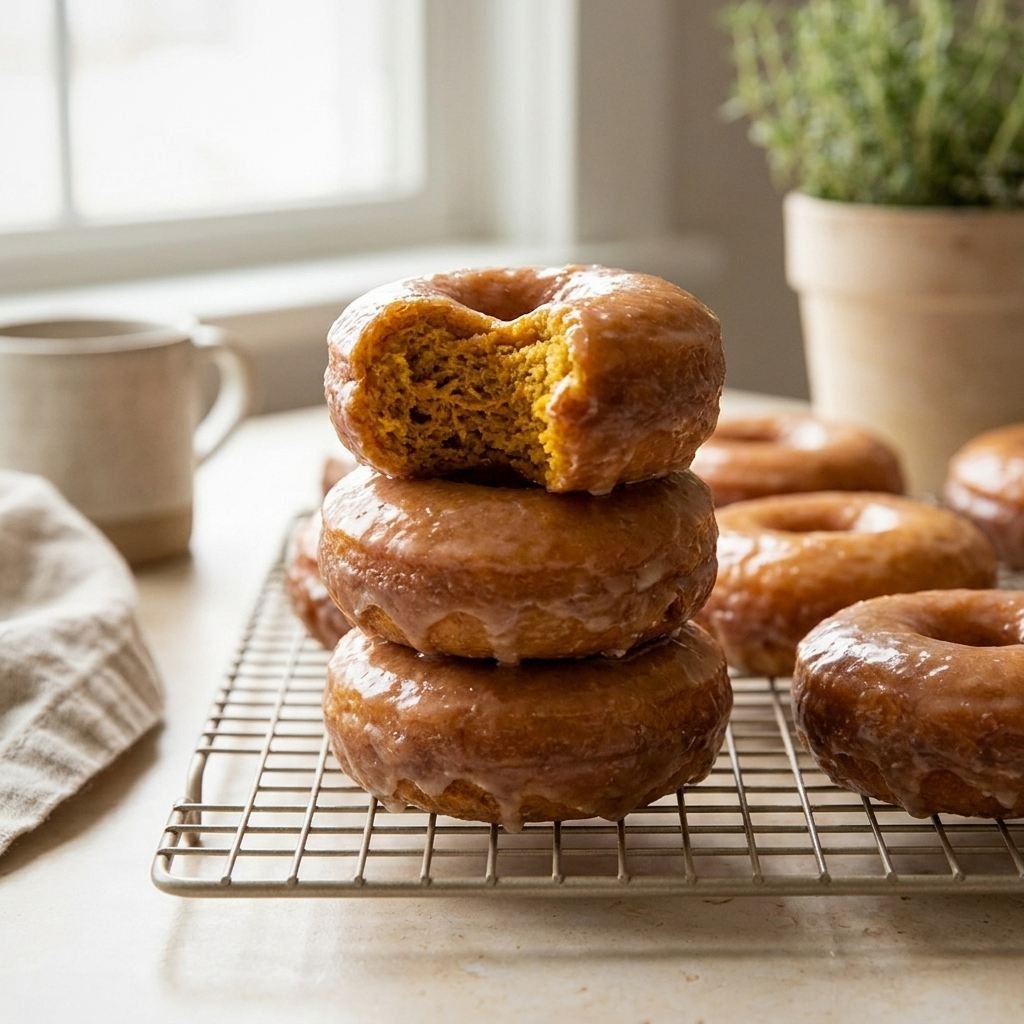
The source links out to a separate vanilla glaze recipe rather than including it. A basic version is 2 cups of powdered sugar whisked with 3 to 4 tablespoons of milk and a teaspoon of vanilla, thinned until it coats the back of a spoon.
Fourteen donuts plus holes
The holes fry in about half the time and are worth watching separately. Many people consider them the better part.
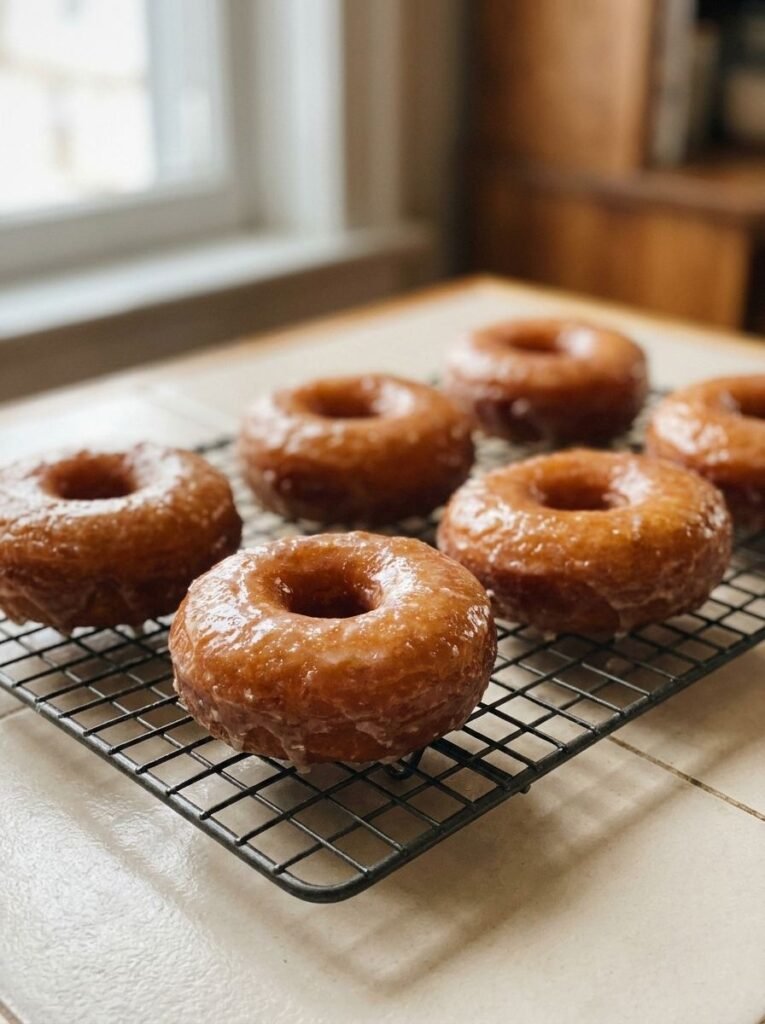

Glazed Pumpkin Donuts
Description
Fried pumpkin cake donuts with a vanilla glaze, made without yeast or proving time.
Ingredients
Instructions
-
In a large bowl combine the flour, sugar, baking powder, pumpkin pie spice and salt.
-
In another bowl whisk the pumpkin puree, sour cream, eggs, melted butter and vanilla.
-
Combine the wet and dry ingredients thoroughly to make a dough. Cover and chill 15 minutes in the refrigerator to firm up, since this dough is too soft to roll otherwise.
-
Set up your frying space before you start. Pour oil into a heavy bottomed pot to a 3 inch depth, filling the pot no more than a third full, and set over medium-high heat with a thermometer. Place a wire rack or paper towel lined baking sheet next to the stove and the glaze bowl next to the rack.
-
On a floured surface roll the dough to 1/2 inch thick and cut circles with a 3 inch cutter. Reroll the scraps. Cut holes in the centres with a 1 inch cutter.
-
When the oil reaches 350F, gently lower in 2 or 3 donuts at a time, or 5 to 6 holes, keeping your face back. Fry 2 to 3 minutes until lightly browned on one side, then flip and fry the other side. Let the oil return to temperature between batches.
-
Remove to the rack and immediately dip both sides of the hot donuts in the glaze while they are still hot, then set on the rack to dry. Repeat with the remaining dough.
-
Let the oil cool completely in the pot before moving or disposing of it..
Note
Deep frying safety: fill the pot no more than a third full, since the source calls for three inches of oil without specifying pot size and oil expands as it heats. Use a thermometer at 350F. Never move hot oil, and smother any fire with a lid rather than water. Let the oil cool completely in the pot before disposing of it. Fry only two or three donuts at a time so the oil temperature does not drop, since below 350F they absorb oil rather than frying. The 15 minute chill is needed because this is a wet dough carrying a cup of pumpkin and half a cup of sour cream. Roll to half an inch, as thinner fries into crisp discs and thicker browns before the centre cooks. Glaze while hot so it absorbs and sets. Set up the rack and glaze before frying starts. The source links out for the glaze rather than including it.