


Bacon crisped, chicken cooked in the fat, then fettuccine simmered directly in broth with cream and parmesan stirred through at the end.
The cornstarch needs a minute of heat
This is the one place the source method goes wrong and it is worth fixing before you cook.
As written, the cornstarch slurry goes into the skillet and the very next instruction is to remove from the heat and stir in the cream. Cornstarch does not thicken at anything below a near boil. Taken off the heat immediately it stays suspended, the sauce runs thin and you get a faint raw starch taste.
Add the slurry to the simmering liquid and stir for a full minute until you see it thicken. Then take the pan off the heat for the cream and cheese.
That order matters in both directions: the cornstarch needs heat, and the cream and parmesan need the absence of it.

Off the heat for the dairy
Cream and a cup and a half of parmesan stirred in once the pan is off the burner.
Parmesan added to a boiling liquid seizes and goes stringy, separating into oil and rubbery strands. Off the heat, the residual warmth melts it smoothly.
Cream can split under a hard boil too, though it is more forgiving than cheese.
Grate the parmesan finely and add it gradually rather than in one handful.
Beef broth in a chicken dish
Two cups, and it is not a typo.
Beef broth is deeper and more savoury than chicken broth, and in a dish already carrying bacon, butter, cream and parmesan it holds its own where chicken broth would disappear.
Chicken broth works and gives a lighter result. If you use it, the sauce will taste less rich.
Cook the pasta in the broth
Eight ounces of fettuccine added dry, then simmered covered thirteen to fifteen minutes.
The pasta absorbs most of the two cups and releases starch into what remains, which thickens the sauce before the cornstarch even goes in.
Stir every four to five minutes. Fettuccine is long and it clumps in a shallow pan without agitation, and the strands at the bottom catch.
Reserve some bacon fat
Bacon crisped and drained, with a little of the grease left in the pan.
The chicken then cooks in it and picks up the smokiness. Draining the pan completely throws away the best flavour the recipe generates.
A little rather than all of it. Ten slices of thick cut bacon renders a considerable amount, and leaving it all makes the finished dish greasy on top of half a stick of butter.
Check the chicken temperature
The recipe says to cook until no longer pink in the centre, which is a reasonable visual cue and not a precise one.
Chicken should reach an internal temperature of 165F, which the source does not state. Small strips of breast get there in a few minutes, and breast dries out quickly past that point.
It is removed and set aside, going back on top at the end rather than simmering with the pasta, which is what keeps it from overcooking.
What the source leaves out
There are no servings, no prep or cook times and no nutrition given anywhere.
Eight ounces of pasta with a pound of chicken serves four generously. Adding up the method gives roughly fifteen minutes of preparation and twenty five of cooking.
Those figures are estimates from the method rather than the source’s own.
Serving
Chicken over the top, bacon and parsley scattered on.
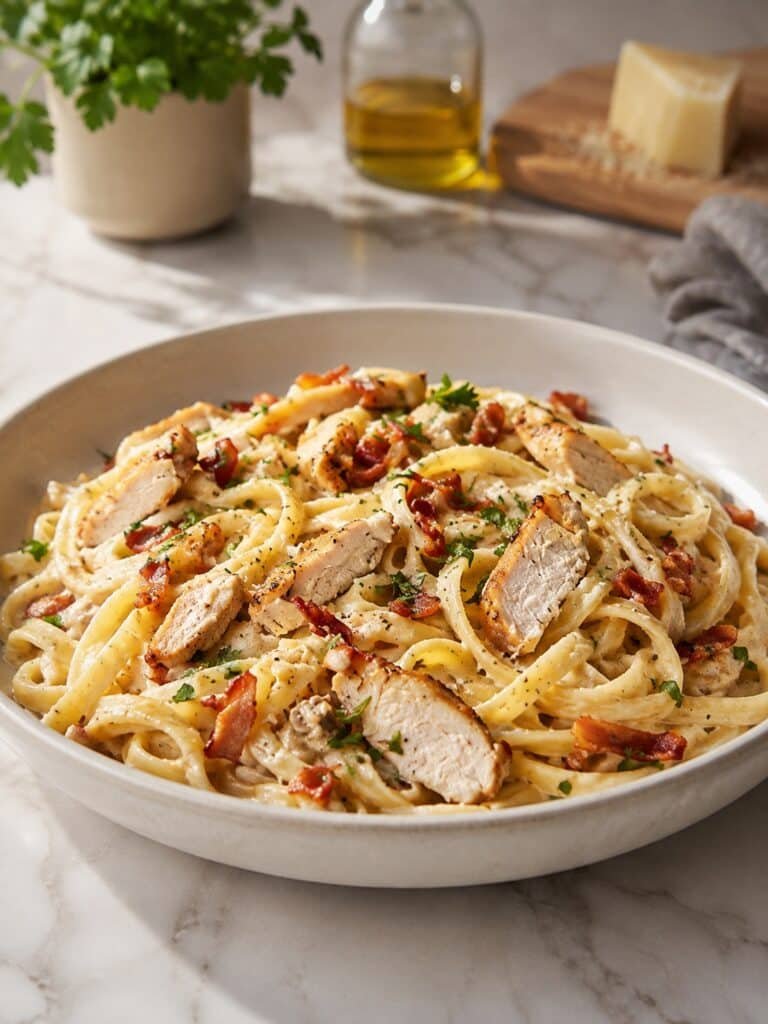
Assembling this way rather than stirring everything together keeps the bacon crisp. Stirred in, it softens within a minute.
Keeping it
Three days refrigerated. The sauce tightens considerably as it cools, so reheat gently with a splash of broth or milk and stir often.
It does not freeze well, since cream and parmesan sauces separate on thawing.
Half a stick of butter
Four tablespoons, cooked with the onion. Between that, the bacon fat, the cream and the cheese this is a rich dish, and there is no way to trim it substantially without changing what it is.
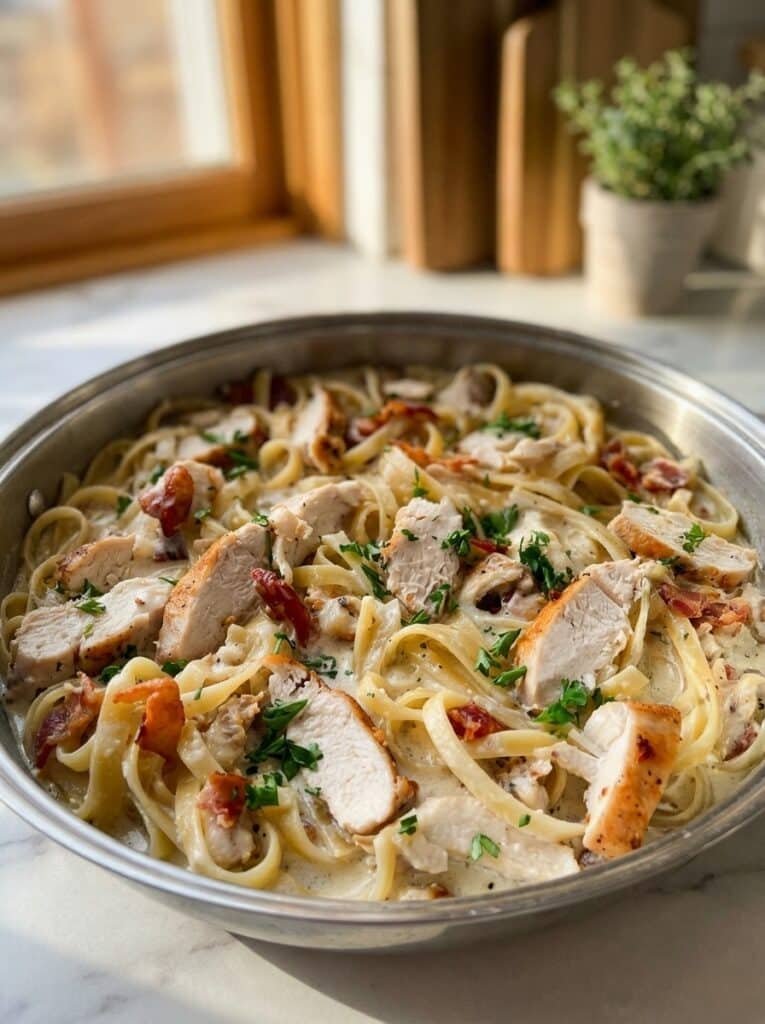

Creamy Chicken and Bacon Pasta
Description
A one skillet creamy pasta with crisp bacon, chicken strips and a parmesan cream sauce.
Ingredients:
Instructions
-
In a large skillet cook the bacon until crisp. Transfer to paper towel to drain, reserving a little bacon grease in the pan.
-
In the same skillet add the chicken and olive oil and season with salt and pepper. Cook until the chicken reaches an internal temperature of 165F, then remove and set aside.
-
Cook the onion with the butter over medium heat until soft, then stir in the garlic and cook 30 seconds more.
-
Add the pasta, broth and additional salt and pepper and stir well. Bring to a boil, cover and reduce to a simmer.
-
Cook 13 to 15 minutes until the pasta is tender, stirring every 4 to 5 minutes.
-
Combine the cornstarch with the water in a small bowl and stir into the skillet. Keep it at a simmer and stir for a full minute until the sauce thickens.
-
Remove from the heat, then stir in the cream and the parmesan gradually until the cheese has melted smoothly.
-
Top with the chicken and garnish with the chopped bacon and parsley..
Note
The source method adds the cornstarch slurry then immediately removes the pan from the heat, which does not work: cornstarch only thickens at close to boiling. Stir the slurry into the simmering liquid for a full minute until it thickens, then take the pan off the heat for the cream and parmesan. Cheese added to boiling liquid seizes and goes stringy. Chicken should reach an internal temperature of 165F, which the source does not state. The source gives no servings, times or nutrition; four servings and the times here are estimated from the method. Beef broth rather than chicken is deliberate and gives a deeper sauce. Stir the pasta every 4 to 5 minutes so the fettuccine does not clump or catch. Leave only a little bacon fat in the pan. Keeps 3 days refrigerated and does not freeze well.