


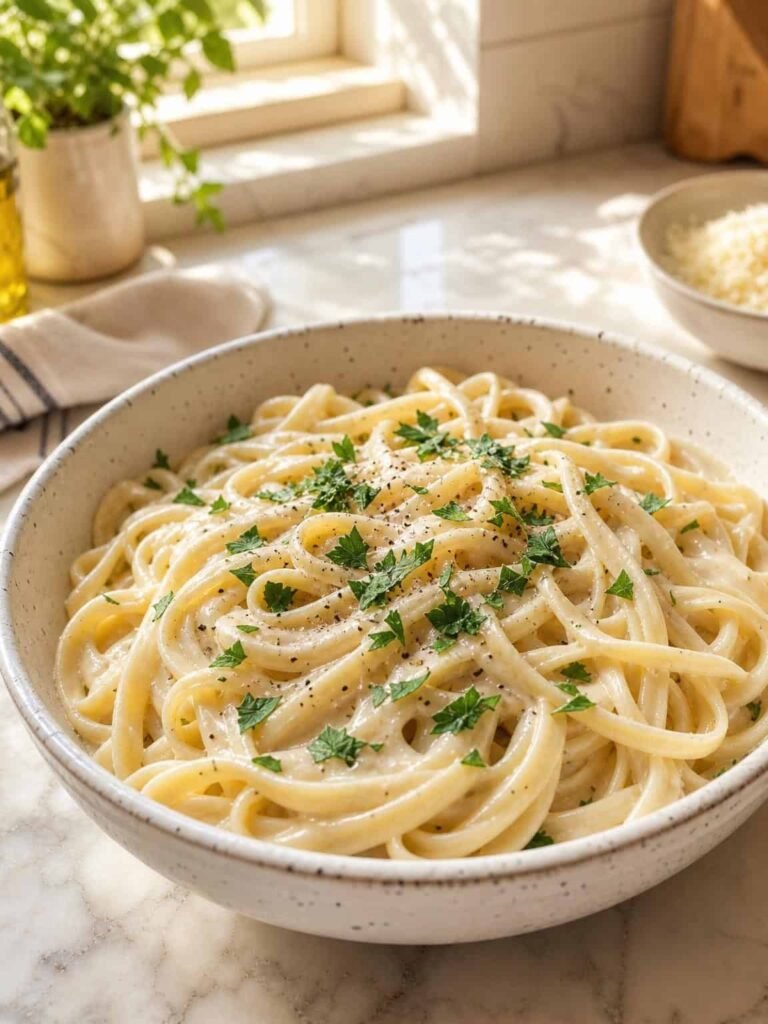

Low sodium alfredo sauce swaps out the high-sodium elements of a traditional sauce without compromising the creaminess or flavor. This version uses no-salt-added chicken stock, unsalted butter, and a carefully portioned amount of parmesan, which is the main source of sodium in most alfredo sauces, and builds the sauce on a roux rather than straight heavy cream, which gives it body without needing salt to make it taste substantial. Ready in twenty-five minutes, 178mg of sodium per serving compared to 700 to 1,000mg in most restaurant versions.
The parmesan is the ingredient to pay attention to. It contributes most of the sodium in this recipe, and the amount can be adjusted up or down depending on your dietary needs. The recipe uses a third of a cup, or six tablespoons, at about 55mg per tablespoon, which totals roughly 330mg of sodium from the cheese across all four servings. Check the label on your specific parmesan because sodium content varies significantly between brands.
The roux-based structure

Traditional alfredo is heavy cream reduced with butter and parmesan, which is rich and delicious but doesn’t give you many levers to pull on sodium. This version uses unsalted butter, garlic, and flour to build a roux first, then extends it with no-salt-added chicken stock and whole milk. The flour thickens the sauce with structure rather than relying on reduction alone, which means you get a creamy, coating sauce without needing the quantities of dairy fat that traditional alfredo requires.
Melt the unsalted butter in a large saucepan over medium-low heat. Add the minced garlic and sauté for three to four minutes until lightly browned. The garlic goes in before the flour rather than after so it has time to cook and soften; raw garlic added later would have a sharp, pungent edge in the finished sauce. Add the flour and stir well with a wooden spoon until the mixture is smooth and combined. This is the roux: flour cooked in fat.
Pour in the no-salt-added chicken stock and stir continuously over low heat for four to five minutes until the sauce starts to thicken. The roux absorbs the stock and gradually thickens it from a thin liquid into a more cohesive sauce. Add the whole milk, parmesan, and Italian seasoning (no-salt-added blend) and stir well to incorporate everything.
The pasta and the finish
Eight ounces of pasta cooked separately according to package directions, drained, then tossed with the sauce in the pan over heat until everything is warmed through and the sauce is bubbling. Squeeze the juice of one lemon over the whole pan just before the end. The lemon juice does two things in a low-sodium dish: it adds brightness that compensates for the reduced salt, and its acidity makes the existing flavors in the sauce taste more pronounced. This is a useful technique across low-sodium cooking: acid amplifies flavor in the same direction that salt does.
Toss with a quarter cup of fresh chopped parsley and serve immediately. The parsley adds color and a fresh, herby note that keeps the sauce from reading as heavy. Black pepper over the top if desired.
Managing sodium in the dish
The four sources of sodium in this recipe are the parmesan, the chicken stock, the milk, and the pasta itself (pasta has some sodium from the cooking water if you salt it, and some from the pasta depending on brand). Using no-salt-added chicken stock, unsalted butter, and a low-sodium parmesan brand handles the sauce. If you’re cooking the pasta in salted water, that water is not included in the 178mg per serving estimate. To keep the total as low as possible, cook pasta in unsalted water for this recipe.
The Italian seasoning blend needs to be a no-salt-added version; many spice blends include salt as an ingredient and it adds up quickly. Check the label before using.
Alfredo for a different context
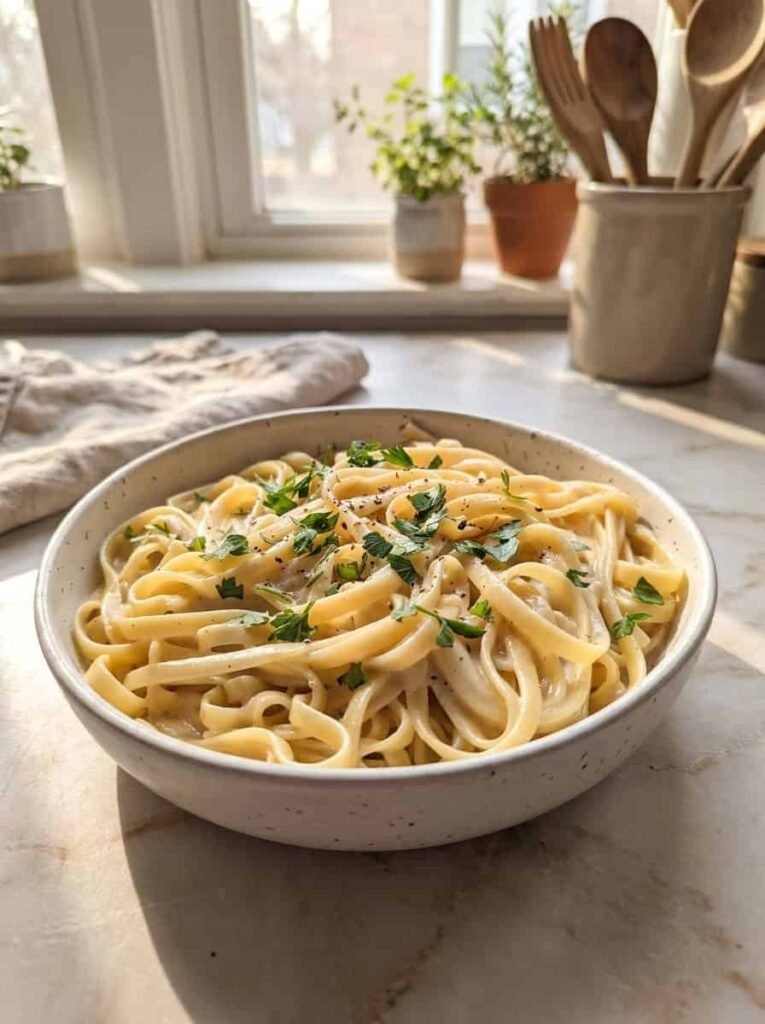
I’ve made alfredo in standard form many times, and the honest observation about this version is that it’s genuinely good rather than merely low-sodium by comparison. The lemon juice at the end brightens the sauce in a way that traditional alfredo doesn’t have, and the roux base is more stable than a pure cream sauce, which means leftovers reheat without breaking. It serves four from one pan of pasta. Nutrition per serving: 413 calories, 178mg sodium, 54g carbohydrates, 13g protein, 16g fat.
Adjusting the sodium further
If 178mg per serving is still too high, the parmesan quantity is the most effective lever: reducing to 3 tablespoons instead of 6 drops the total by about 165mg across the full recipe, or about 40mg per serving. Nutritional yeast as a partial substitute adds a similar savory depth at lower sodium than parmesan, though the flavor isn’t identical. Calcium-reduced parmesan or a low-sodium hard cheese blend from specialty health food stores are also options worth exploring for strict dietary requirements.
Low Sodium Alfredo Sauce
Description
A creamy alfredo sauce built on a roux with no-salt-added chicken stock, unsalted butter, and Parmesan, finished with lemon juice. 178mg sodium per serving. Serves 4 in 25 minutes.
Ingredients
Instructions
-
Cook the pasta according to package directions in unsalted water. Drain and set aside.
-
Melt the butter in a large saucepan over medium-low heat. Add the garlic and saute for 3 to 4 minutes until lightly browned.
-
Add the flour and stir well until the mixture is smooth and combined.
-
Pour in the chicken stock and stir continuously over low heat for 4 to 5 minutes until the sauce begins to thicken.
-
Add the milk, Parmesan, and Italian seasoning. Stir well to combine.
-
Add the cooked pasta to the sauce and toss to coat. Heat until warmed through and the sauce is bubbling. Squeeze in the lemon juice and toss.
-
Serve immediately, topped with fresh parsley and black pepper..
Note
Use no-salt-added chicken stock and unsalted butter. Check the Parmesan label for sodium content; it varies significantly between brands. The Italian seasoning must be a no-salt-added blend. Cook pasta in unsalted water to keep sodium as low as possible. Nutrition per serving (serves 4): 413 calories, 178mg sodium, 54g carbohydrates, 13g protein, 16g fat, 10g saturated fat, 1g polyunsaturated fat, 4g monounsaturated fat, 0.5g trans fat, 42mg cholesterol, 283mg potassium, 3g fiber, 5g sugar, 816IU vitamin A, 20mg vitamin C, 192mg calcium, 2mg iron.