


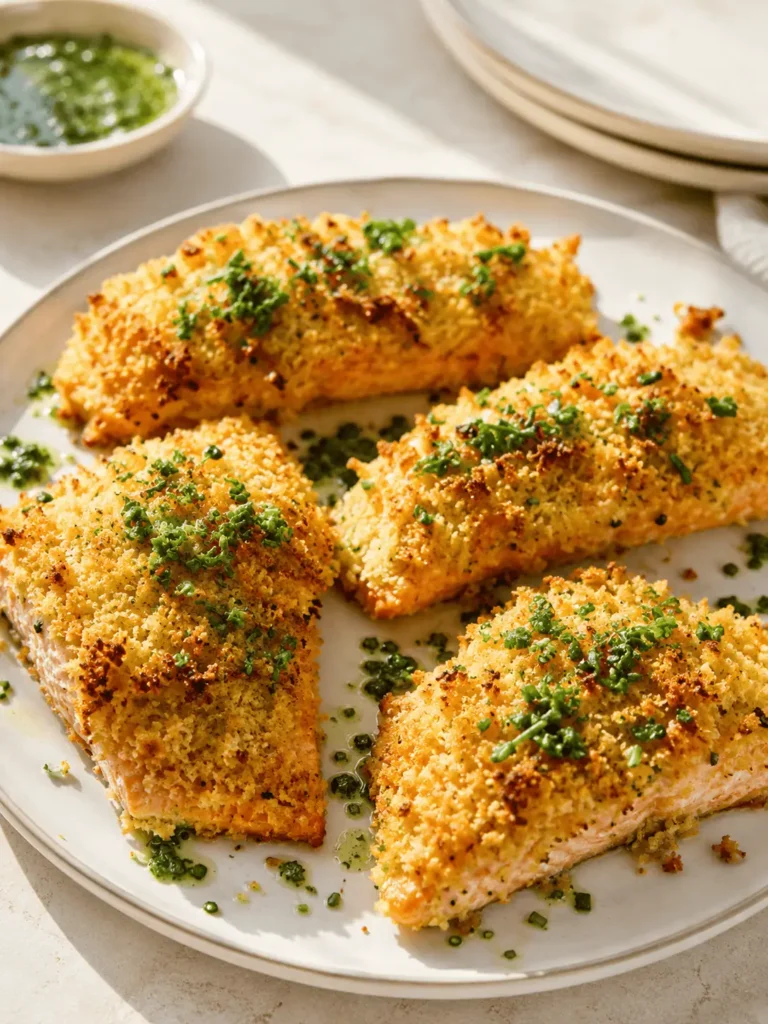

Crispy coconut salmon is a thirty-minute dinner that looks and tastes more deliberate than its method suggests. Shredded coconut and panko toasted together in olive oil, bound with honey, egg white, and lime zest, then pressed into a thick crust on top of roasted salmon fillets. Alongside: a quick chive-chile-lime sauce that’s bright and slightly spicy against the sweet, crunchy crust. The whole thing takes about thirty minutes and produces something that holds its own as a weeknight dinner or a plate you’d serve to guests.
The idea comes from coconut shrimp, which appears all over coastal Florida and tropical climates: battered, fried, sweet, rich. This version translates those flavors to salmon with a baked crust instead of frying, and a fresh herb sauce instead of sweet chili dipping sauce. The result is lighter and more complex, without losing the coconut-and-honey appeal that makes the original worth ordering.
Toasting the crust first

Half a cup each of finely shredded unsweetened coconut and panko bread crumbs, mixed with two tablespoons of olive oil and seasoned with half a teaspoon of salt and black pepper. Spread it on a foil-lined baking sheet and bake at 375 degrees for three to five minutes, watching closely because shredded coconut goes from golden to burnt faster than you’d expect. Pull it when it smells toasty and looks golden with maybe a few paler patches still visible.
Let the mixture cool slightly, then whisk together two tablespoons of honey, one egg white, and half a teaspoon of lime zest in a bowl. Add the toasted coconut-panko and mix until everything is coated and clumping together. The egg white is the binder that makes the crust hold as a solid layer rather than falling off the salmon in the oven. The honey sweetens and encourages browning. The lime zest adds a brightness that cuts through the fat of both the coconut and the salmon.
The salmon
Increase the oven temperature to 425 degrees. Four six-ounce salmon fillets, skin-on or skinless depending on preference. Pat them completely dry with paper towels, which matters for the crust adhesion and for getting color on the fish. Wet salmon steams; dry salmon roasts. Rub with the remaining tablespoon of olive oil and season with salt and pepper on all sides, then place skin-side down on the foil-lined sheet.
Press the coconut-panko mixture firmly onto the top of each fillet in a thick, even layer. Don’t be shy about how much you press on; the crust should look generous, not sparse. Any loose bits that fall to the side can be pushed back up against the fillet.
Roast for seven to ten minutes depending on how thick the fillets are. The salmon is done when it’s just cooked through and pulls apart in large, moist flakes. The crust should be deep golden brown. If the crust is pale at the end of the cook time, switch the oven to broil for one minute. Watch it; under the broiler the difference between golden and burnt is about thirty seconds. Broil only for the color and crust, not for cooking the salmon further.
The chive-chile sauce
While the salmon roasts, whisk together a quarter cup of minced chives or scallions, one thinly sliced bird’s-eye chile, three tablespoons of fresh lime juice, a tablespoon of minced garlic, a tablespoon of honey, and a tablespoon of olive oil. Season with salt and pepper to taste.
Bird’s-eye chiles are small and genuinely hot. If you want the flavor without the full heat, use half a chile or remove the seeds before slicing. If you can’t find bird’s-eye chiles, a jalapeño or a pinch of red chile flakes gives heat in the same direction. The sauce is not spicy-sweet in the way chili dipping sauce is: it’s bright and herby first, with the heat underneath and the lime doing most of the work. It cuts through the richness of the salmon and the sweetness of the coconut crust exactly as it should.
Rest, then serve
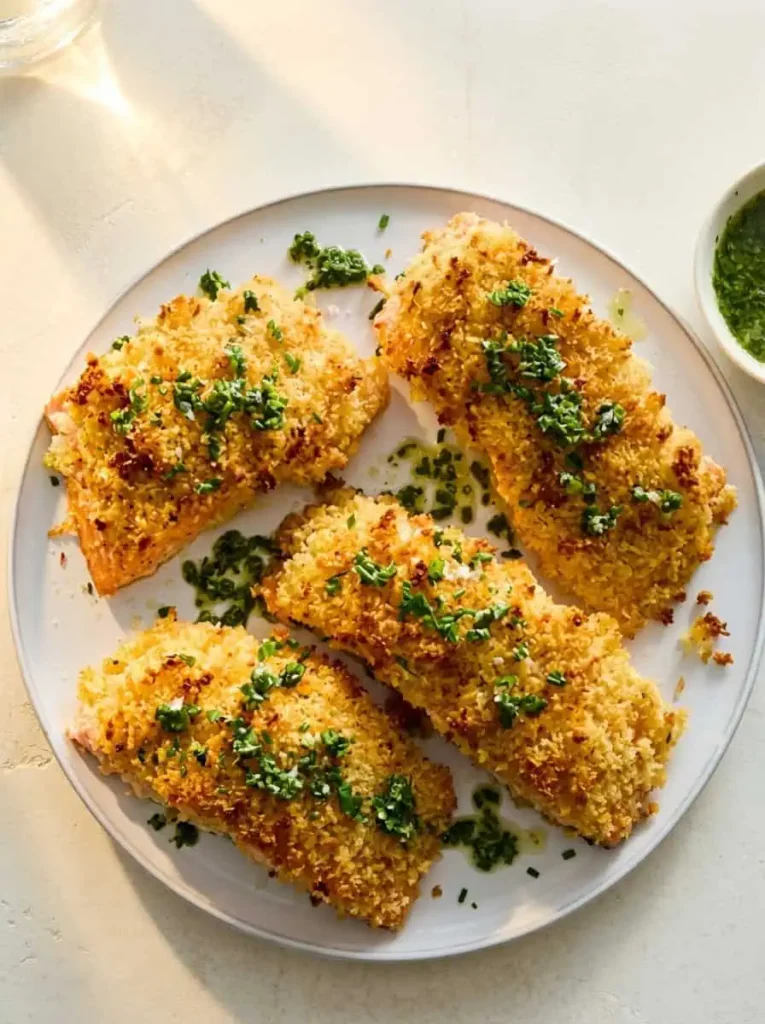
A few minutes of resting after the salmon comes out of the oven lets the juices redistribute and the crust firm up slightly. Then drizzle the chive-chile sauce over each fillet and serve hot. The crust begins to soften as it sits, so this is a dish to eat immediately after serving rather than one that holds on a platter for twenty minutes.
Rice pilaf and a simple cabbage salad are the natural sides. The rice soaks up any sauce that runs off the salmon and the cabbage adds crunch and freshness that the richness of the coconut and salmon want alongside.
Salmon as a canvas
I’ve cooked salmon in a lot of forms across a lot of kitchens, and the one consistent truth is that it’s one of the most forgiving fish for home cooking. It has enough fat to stay moist through most cooking errors, it takes seasoning well, and it pairs with a wide range of flavors. This version with coconut and lime and fresh chile leans toward a tropical register that I find genuinely interesting, partly because it’s the direction I’d naturally go with a rich fish given my background with North African spicing that also uses fresh citrus and hot pepper as finishing elements. The crust is Western, the sauce is Southeast Asian-adjacent, and the whole thing is good. Serves 4.
Cast-iron skillet version
Toast the shredded coconut and panko in a cast-iron skillet over medium heat with the olive oil until golden, then transfer and prepare the crust as directed. Wipe out the skillet, heat the remaining olive oil until shimmering, and place the fillets skin-side down. Transfer the skillet to the 425-degree oven and roast as directed. The cast-iron skillet gives you better bottom-of-fillet browning than a sheet pan and is worth using if you have one.
Crispy Coconut Salmon
Description
Salmon fillets with a crispy honey-sweetened coconut and panko crust, roasted at 425 degrees and served with a bright chive, chile, and lime sauce. Thirty minutes, serves 4.
Ingredients
Instructions
-
Heat the oven to 375 degrees Fahrenheit. Line a baking sheet with aluminum foil.
-
Mix the shredded coconut, panko, and 2 tablespoons of olive oil in a bowl. Season with 1/2 teaspoon salt and black pepper. Spread on the baking sheet and bake for 3 to 5 minutes, watching closely, until golden and fragrant.
-
Whisk together the honey, egg white, and lime zest in a bowl. Add the toasted coconut-panko and stir until fully combined and clumping together.
-
Increase the oven to 425 degrees Fahrenheit. Pat the salmon fillets dry. Rub with the remaining 1 tablespoon olive oil and season with salt and pepper on all sides. Place skin-side down on the foil-lined baking sheet.
-
Press the coconut-panko mixture firmly onto the top of each fillet in a thick, even layer.
-
Roast for 7 to 10 minutes until the salmon is just cooked through and the crust is deep golden brown. If the crust is pale, broil for 1 minute watching closely.
-
While the salmon roasts, whisk together the chives, chile, lime juice, garlic, honey, and olive oil for the sauce. Season with salt and pepper.
-
Rest the salmon for a few minutes, then serve hot with the chive-chile sauce drizzled over each fillet..
Note
Watch the coconut-panko closely during the initial toast; coconut burns quickly. If the crust is not golden at the end of roasting, broil for 1 minute maximum and watch the oven the entire time. Pat the salmon completely dry before applying the crust for best adhesion. No nutrition data was provided for this recipe.