

Yellow sweat stains ruined more of my white shirts than I care to admit before I figured out what was actually causing them. Here’s the surprise: sweat isn’t yellow. Those marks show up when the proteins in your sweat react with the aluminum in most antiperspirants, and the mix bonds right into the fabric. Then one trip through a hot dryer bakes it in for good. The fix isn’t a fancy product. Almost everything you need is already sitting in your kitchen, from baking soda and white vinegar to a lemon and some table salt. Below are twelve fixes I’ve sorted into pantry pastes, soaks and sprays, laundry-day boosters, and the prevention habits that keep the stains from coming back. One of these is going to save your favorite shirt.
Why Yellow Stains Are So Stubborn (and What Never to Do)
The stain is a chemical bond, not surface dirt, which is why a normal wash cycle barely touches it. The proteins and body oils in sweat grab onto aluminum salts from antiperspirant, cling to cotton fibers, and darken every time heat hits them. That’s also why the single worst thing you can do is reach for chlorine bleach. Bleach reacts with the proteins and minerals in the stain and turns it darker, sometimes permanently. Hot water is nearly as bad because it sets protein stains the same way it cooks an egg.
The good rules are simple: treat the stain before it goes near the dryer, work in cold or cool water, and check the care label before trying anything on silk, wool, or anything delicate. Test any mix on a hidden seam first. With those guardrails in place, the kitchen fixes below handle everything from a fresh mark to a shirt that’s been yellowing in the closet for a year.
Fix Group 1: Pantry Pastes for Set-In Stains
1. Baking Soda + Hydrogen Peroxide + Dish Soap Paste

This is the heavy hitter, and it’s the one I hand to anyone with an old, baked-in stain. Mix equal parts baking soda, 3% hydrogen peroxide, and clear dish soap into a thick paste. Work it into the stain with an old toothbrush using small circles, let it sit 30 minutes, then rinse in cold water and wash. The peroxide releases oxygen that breaks the yellow pigment apart while the baking soda scrubs and the dish soap cuts the body oils. Stubborn stains sometimes need a second round, or an overnight sit.
2. Simple Baking Soda and Water Paste
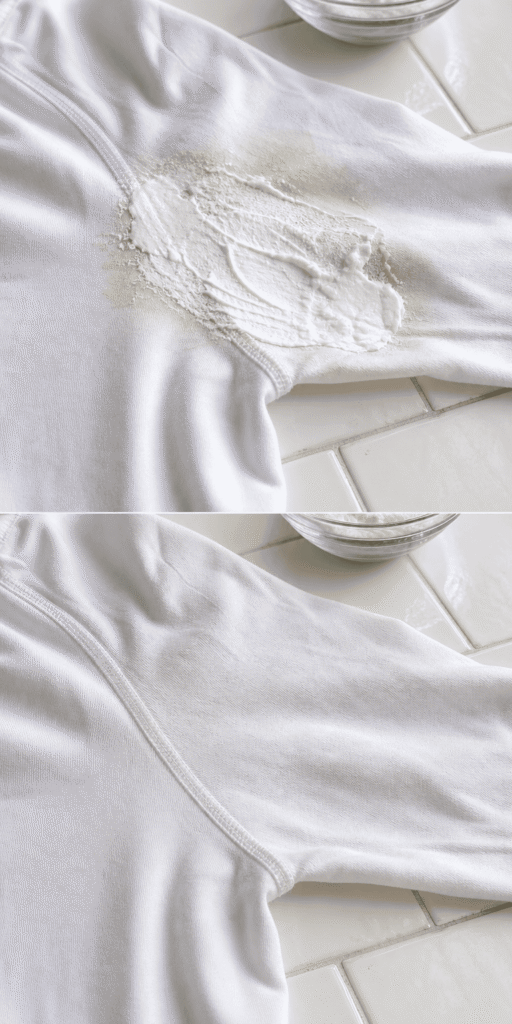
For fresher marks or delicate fabric, plain baking soda mixed with just enough water to make a spreadable paste is gentler and still effective. Coat the stain, let it dry for about an hour, then brush off the powder and wash cold. As the paste dries it pulls the stain and the odor out of the fibers and locks them into the powder. This one is safe enough to use every laundry day on collars and underarms.
3. Lemon Juice + Table Salt Scrub
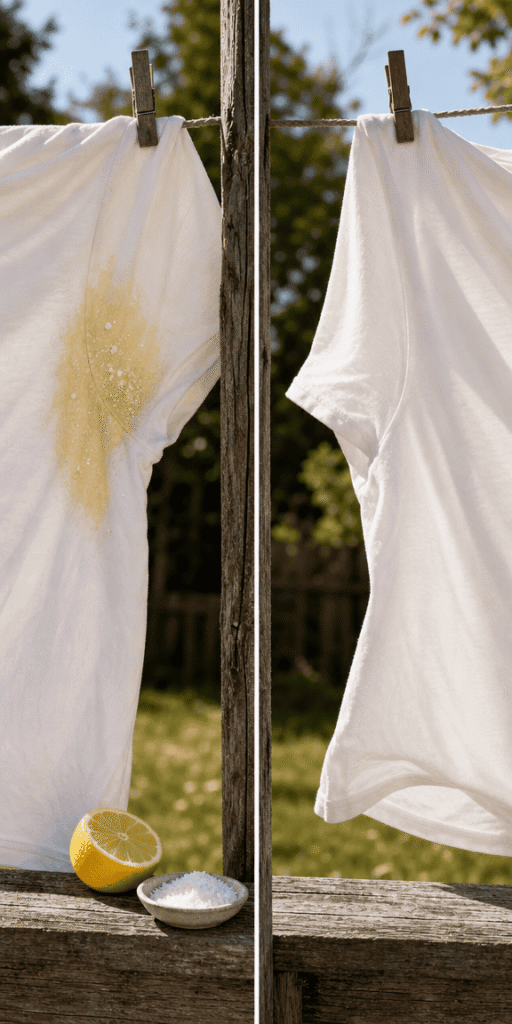
Squeeze half a lemon straight onto the stain, sprinkle a generous layer of salt over it, and rub gently with a soft toothbrush. The lemon’s acid dissolves the yellowing while the salt acts as a mild abrasive. Then comes the trick that makes it work: hang the garment in direct sunlight for a few hours before rinsing. UV light supercharges the lemon’s bleaching action. My grandmother in Morocco did a version of this on rooftop clotheslines long before anyone wrote a blog post about it.
Fix Group 2: Soaks and Sprays
4. White Vinegar Soak
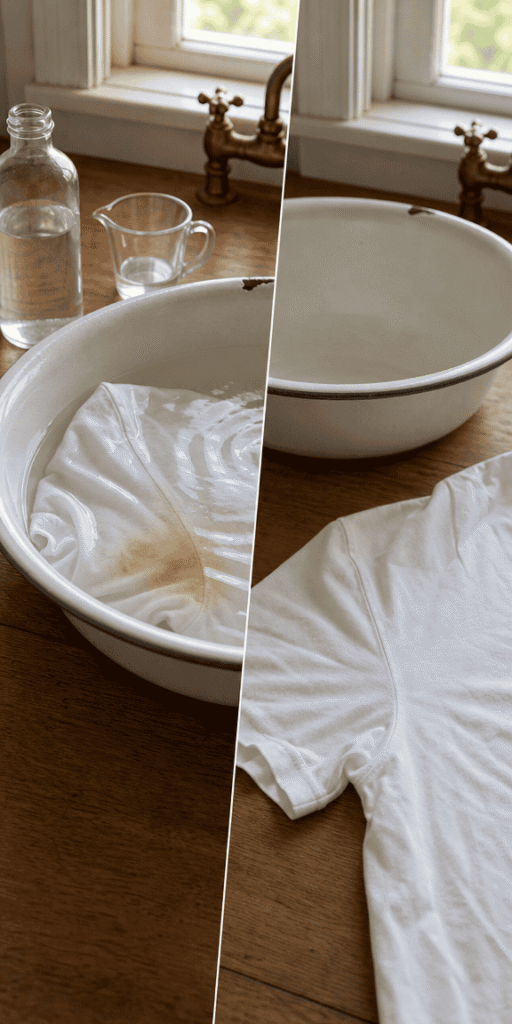
Mix one cup of white vinegar into two cups of cool water and submerge the stained area for 30 minutes. Vinegar’s acid is stronger than the acids in sweat, so it dissolves the deposit and the antiperspirant residue at the same time. Use only distilled white vinegar, since darker vinegars can leave their own tint. After soaking, wring out the shirt and either wash it or follow up with a paste for old stains.
5. Vinegar + Lemon Juice Spray
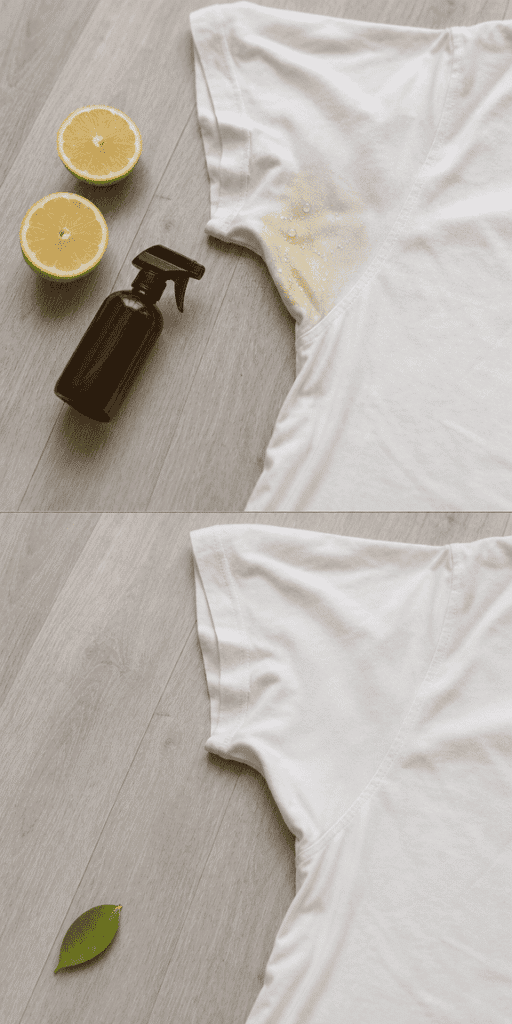
Fill a spray bottle with a 1:1 mix of white vinegar and lemon juice, spray the stain until saturated, and let it sit about 15 minutes. If you can hang it outside in the sun while it works, even better. This is my keep-it-by-the-washer bottle because it takes ten seconds to apply while sorting laundry, and it handles light, recent yellowing without any scrubbing.
6. Hydrogen Peroxide Soak
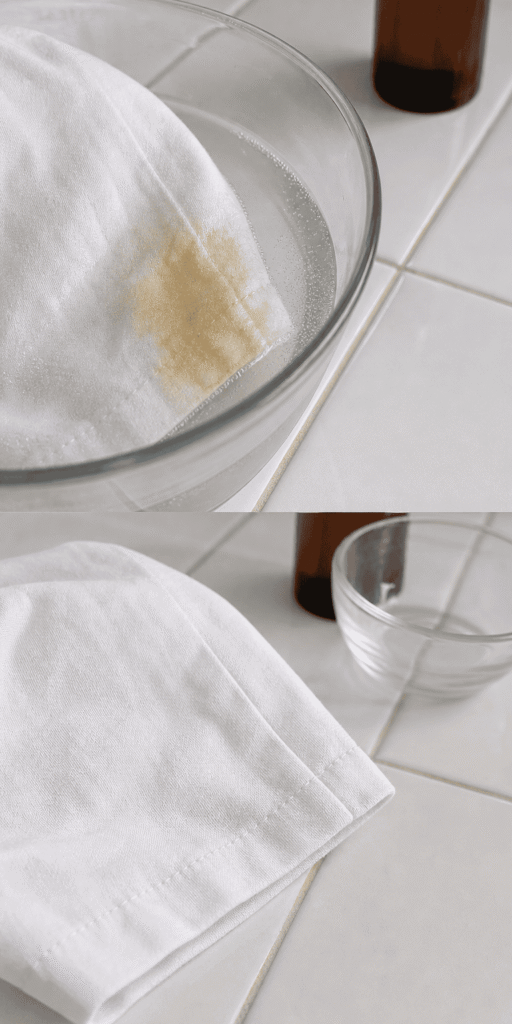
For whites only, mix equal parts hydrogen peroxide and water and soak the stained section for 30 to 45 minutes, then wash cold. Peroxide is a mild oxygen bleach, so it whitens without the chemical backfire that chlorine bleach causes on protein stains. Skip this on colored fabric, or at minimum test a hidden spot first, because peroxide can lift dye.
Fix Group 3: Laundry-Day Boosters
7. Oxygen Bleach (Sodium Percarbonate)
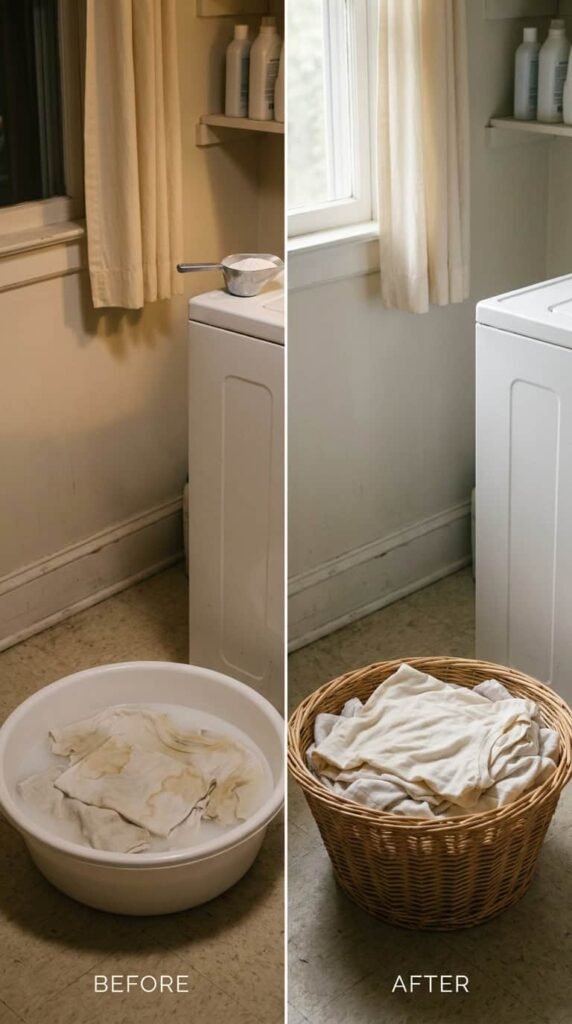
When a whole load of whites has gone dingy, an oxygen bleach powder dissolved in a basin of cool water makes a great long soak, from a few hours to overnight. It has a completely different chemistry from chlorine bleach and actually excels at protein stains instead of setting them. Follow the package ratio, then run a normal cold wash.
8. Enzyme Detergent Pre-Treat
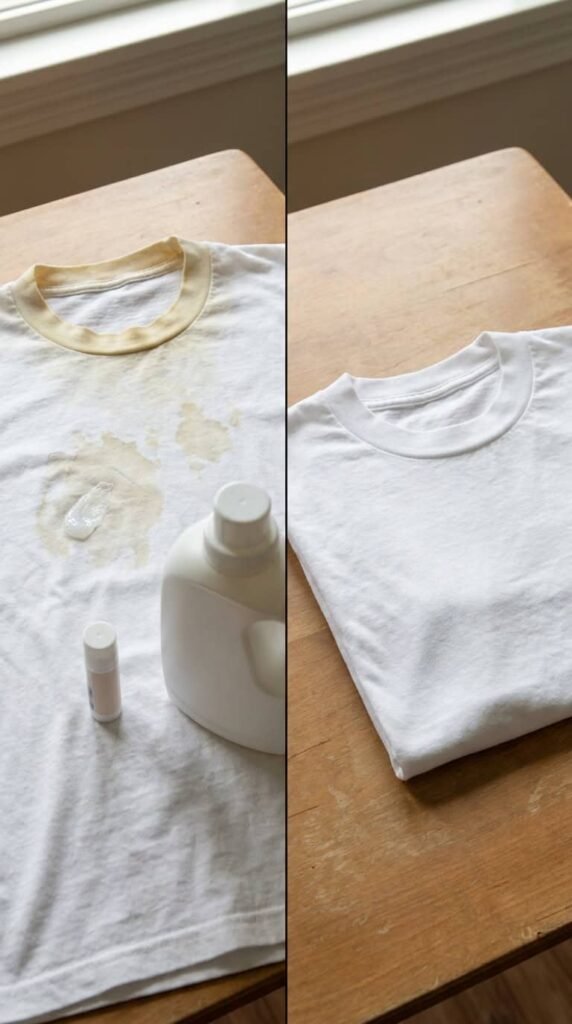
Sweat stains are protein stains, and enzyme-based detergents and stain sticks are built to digest protein. Rub a little directly into the stain, wait the time listed on the label, and wash as usual. For anyone who doesn’t want to mix anything, this is the lowest-effort option that still works, and it’s what I use on gym clothes that come out of the hamper already yellowing.
9. Dish Soap Pre-Treatment
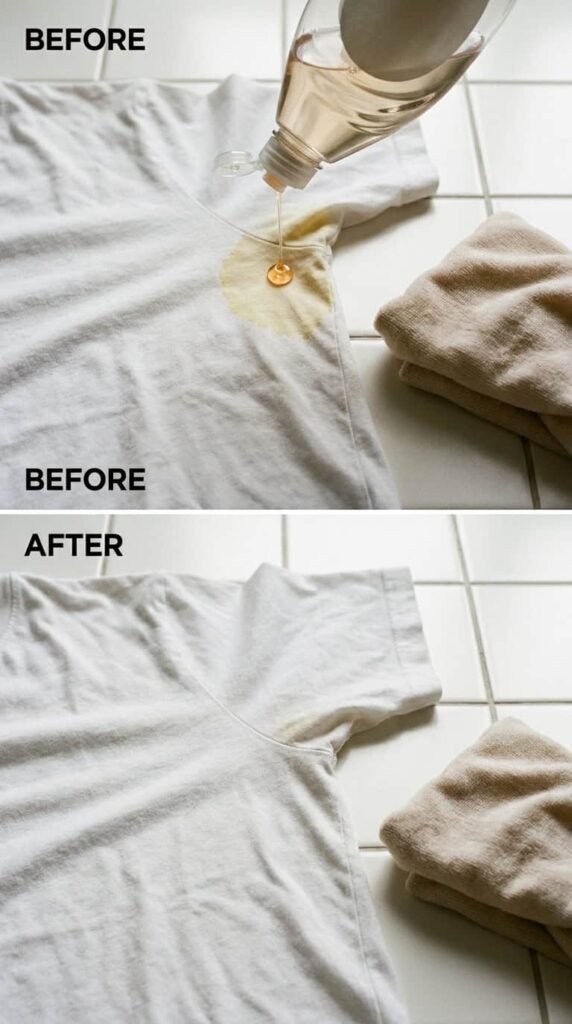
Plain clear dish soap on its own breaks down the oily half of the stain. Work a few drops into the mark with your fingers, let it sit 15 minutes, and rinse cold before washing. It won’t bleach out an old yellow patch by itself, but on a shirt worn once and treated the same day, it often does the whole job.
Fix Group 4: Prevention Habits That Stop the Stains
10. Switch to Aluminum-Free Deodorant
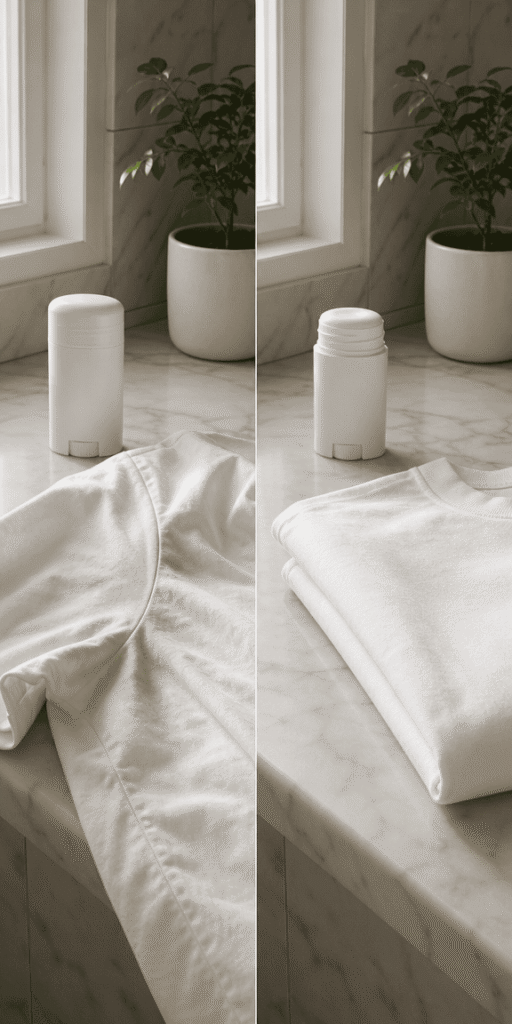
Since aluminum is half of the chemical reaction, removing it stops the yellow at the source. Aluminum-free deodorants don’t block sweat the way antiperspirants do, but they don’t stain either. Whatever you use, let it dry completely before you pull a shirt over it. Dressing while it’s still damp presses the residue straight into the underarm fabric.
11. Wash Cold, Skip the Dryer Until the Stain Is Gone
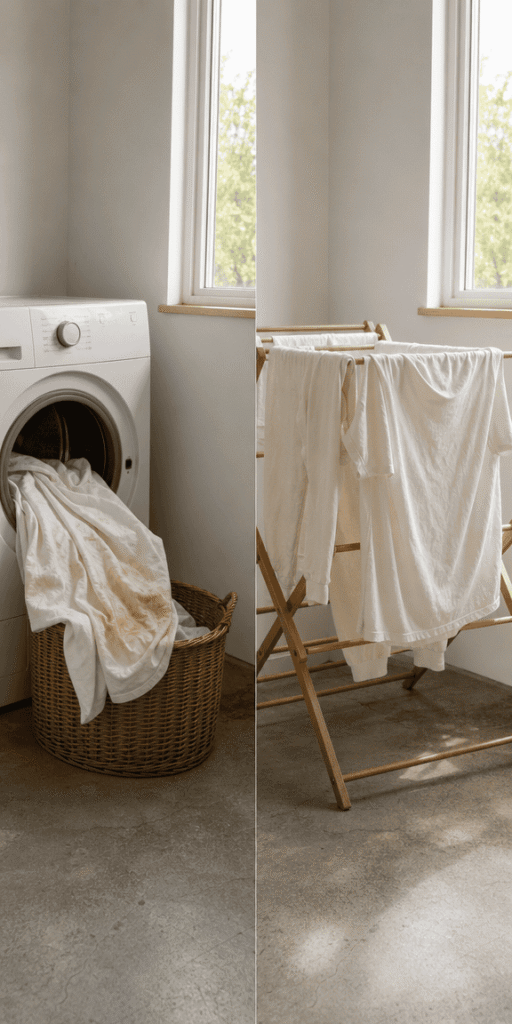
Cold water keeps protein stains loose instead of cooking them into the weave, and it’s cheaper on the energy bill anyway. The dryer is the point of no return: heat bakes any remaining yellow in permanently. Air-dry anything you’ve treated, check it in daylight, and only tumble dry once the fabric looks clean. Also resist overstuffing the machine, since crowded loads keep detergent from reaching the underarm area at all.
12. Wear a Breathable Base Layer
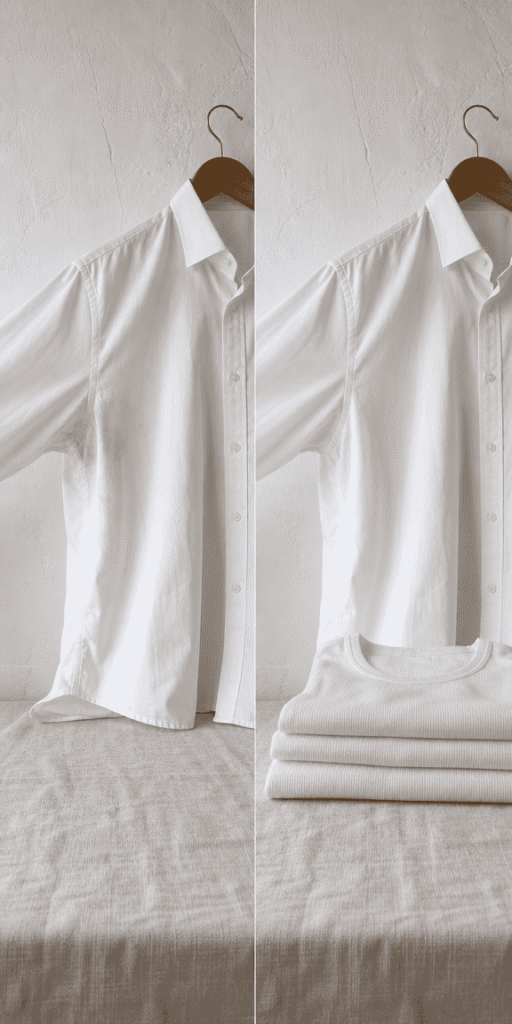
A light undershirt absorbs sweat before it ever reaches your outer shirt, which matters most for fabrics you can’t scrub, like silk, satin, and chiffon. Looser fits and breathable cotton help too, since airflow means less trapped moisture against the fabric. Between this and the deodorant switch, I went from treating stains monthly to almost never.
Tips From My Own Laundry Room
Act fast. A stain treated the same week comes out with one round of almost any method above; a stain that’s been through five hot dryer cycles might need the peroxide paste twice plus an overnight oxygen soak. Don’t let sweaty clothes sit sealed in a hamper or gym bag in warm weather, because the reaction keeps working while they wait.
Match the method to the fabric. Sturdy cotton and poly blends can take scrubbing and peroxide. Delicates get the plain baking soda paste or a diluted vinegar soak at most, and anything labeled dry-clean-only goes to the professionals, who have solvents made for exactly this.
Sunlight is free bleach. Whenever weather allows, dry treated whites outside. The UV keeps working on whatever trace of yellow the treatment left behind, and nothing in a bottle smells as good as sun-dried cotton.
Where to Start
If I’m picking three to start with: the baking soda, peroxide, and dish soap paste for anything old and set-in, the white vinegar soak as the everyday first step, and the aluminum-free deodorant switch so you stop making new stains entirely. Save this guide to your Pinterest laundry board so it’s there the next time a favorite shirt comes out of the closet with that dreaded yellow patch, and share it with whoever does the laundry in your house.
Where I Researched the Methods
Methods and ratios cross-checked against laundry-care guidance from Maytag’s stain-removal guides, Thompson Tee, Laundry Sauce, Numi, and professional dry-cleaning resources, all researched July 2026. Always confirm against your garment’s care label.