


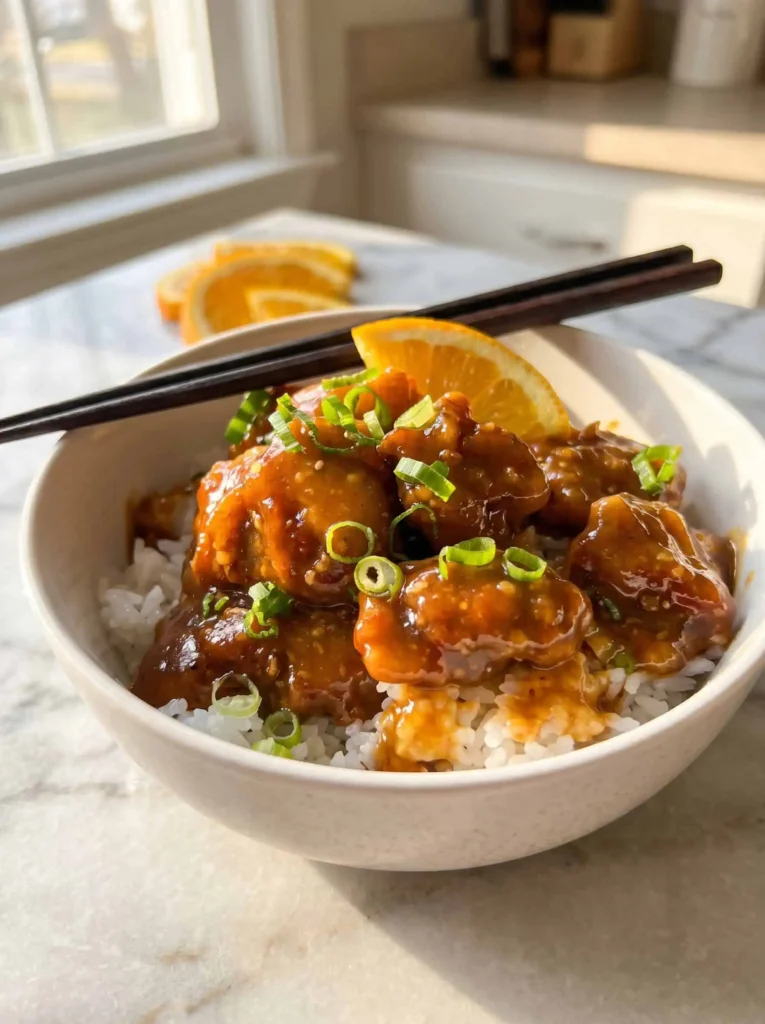

Orange chicken is the dish that convinced me you don’t need a deep fryer to get genuinely crispy chicken at home. The technique here uses shallow frying with a cornstarch coating that’s pressed on firmly before the chicken goes in the oil, and the result is deep golden, with a crackling surface that holds up reasonably well even after the sauce goes on. Not identical to a deep-fried version, but close enough that nobody complains.
The orange sauce has real orange flavor from both juice and zest, a background of ginger and garlic, and a sharpness from rice vinegar that keeps it from being cloying. It thickens to a glossy, honey-like consistency that clings to every piece. Thirty-five minutes from cold ingredients to plated dish, and it tastes better than most takeout versions.
The press-and-shake coating method
This is the technique that makes the recipe work. The chicken pieces get an initial coating of two tablespoons of cornstarch mixed with soy sauce, ginger, and white pepper, which turns slightly sticky and acts as a base layer for the outer coating. Then three-quarters of a cup of cornstarch goes over everything and the pieces are tossed to coat.
Next: pick up a few pieces and close your fist around them, pressing the cornstarch firmly onto the surface. Place them in a colander. Repeat with all the chicken. Then shake the colander over the sink so excess cornstarch falls through the holes. This sounds fussy and it’s actually the most important step in the recipe. Pressing makes the coating adhere properly. Shaking off the excess prevents a powdery, burning residue in the pan. No egg in this coating — egg makes the crust less crispy, not more, which is a useful thing to know.
Shallow frying for crispiness
About half a centimeter of vegetable oil in a large, deep nonstick pan over high heat. The oil needs to be properly hot before the chicken goes in; if a piece of chicken doesn’t sizzle immediately when you dip it, the oil isn’t ready. Too-cool oil means the coating absorbs oil instead of crisping, and you end up with a greasy rather than crispy result.
Spread the chicken in a single layer without crowding. Cook in batches if needed. A minute and a half on each side, turning once with tongs, until deep golden and crisp. Drain on paper towels and repeat with the second batch. Resist the urge to move the pieces constantly; let the crust develop undisturbed against the hot pan.
The orange sauce
Before any frying starts, whisk the sauce together in a jug or bowl: cornstarch and soy sauce first until smooth and lump-free, then the orange juice, Shaoxing wine, rice vinegar, sugar, salt, and ginger. Keep the garlic and orange zest separate — those go in during cooking, not ahead of time. Set the sauce aside; the cornstarch will settle to the bottom while the chicken fries, so a quick whisk just before using is important.
Once all the chicken is fried, pour off all but two tablespoons of the oil and scrape out any loose burnt bits. The pan goes back on medium-high heat and the minced garlic goes in for about twenty to thirty seconds until light golden. Then the sauce, whisked first to redistribute the settled cornstarch, poured in and simmered for one to two minutes until it thickens to a glossy, honey-like consistency. The orange zest goes in at this point, stirred through the thickened sauce.
Toss the fried chicken back into the pan and turn quickly to coat every piece. The sauce clings well because of the cornstarch coating on the chicken — the two surfaces meet and bond. Serve immediately over rice.
A few ingredient notes

Light soy sauce or all-purpose soy, not dark soy and not sweet soy. Dark soy is too intense and will make the sauce muddy and bitter. Shaoxing wine adds saltiness and depth; cooking sake works as a substitute in the same amount. For a non-alcoholic version, use a quarter cup of low-sodium chicken stock and expect the sauce to need an extra minute of simmering to reduce.
The orange juice can come from actual oranges or good-quality bottled orange juice. Fresh-squeezed is slightly better. If you’re juicing an orange anyway, use the zest from that orange and top up with bottled juice if you need more volume. The zest is not optional — it’s where the most concentrated orange flavor lives, and adding it at the end of cooking rather than into the sauce mixture preserves that fresh citrus character instead of cooking it away.
What orange chicken taught me about Chinese-American cooking
Orange chicken is a Chinese-American dish rather than a Chinese one. It was developed in the United States, adapted from a loose Hunanese inspiration, and now exists as its own genre — sweet, sticky, citrus-forward, designed for the American palate. I find it interesting as a category because it’s genuinely its own thing, not a degraded version of an authentic original but a different dish that evolved from different context and tastes good on its own terms.
I make this version because it’s faster than ordering delivery, tastes better than most delivery, and uses ingredients I usually have. The press-and-shake cornstarch method has improved how I think about coating chicken generally, not just for orange chicken. Serves 4 over rice. Nutrition excludes the rice and assumes about three tablespoons of oil absorbed during frying. Leftovers keep three to four days in the fridge; the chicken loses its crispiness but the sauce is still excellent.
Adjusting the sauce
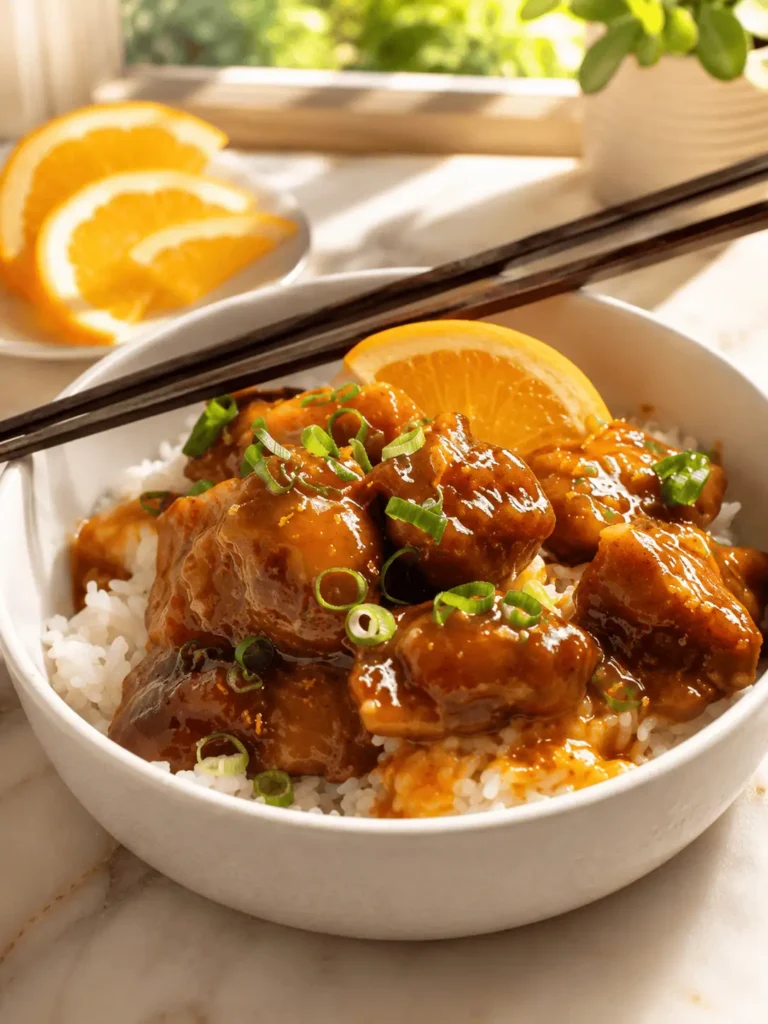
The sauce as written is pleasantly tart from the rice vinegar with a clean orange character. If you prefer it sweeter, add another tablespoon of sugar. If you want more heat, a teaspoon of chili flakes or a tablespoon of sriracha stirred in with the garlic tilts it toward a spicy orange chicken that’s equally good. The cornstarch amount is calibrated for a sauce that coats; if you want it thinner, reduce the cornstarch by half a tablespoon.
Chinese Orange Chicken
Description
Crispy shallow-fried chicken in a glossy orange sauce with ginger, garlic, rice vinegar, and orange zest. A no-deep-fry technique that delivers real crunch. Serves 4 over rice.
Ingredients
Instructions
-
Make the sauce: whisk the 1 1/2 tablespoons cornstarch with the soy sauce until lump-free, then whisk in the orange juice, Shaoxing wine, rice vinegar, sugar, salt, and grated ginger. Set aside with the garlic and zest kept separate
-
Coat the chicken: toss the chicken pieces with the 2 tablespoons soy sauce, grated ginger, white pepper, and 2 tablespoons cornstarch until sticky. Add the 3/4 cup cornstarch and toss to coat each piece
-
Press and shake: working in batches, close your fist around a few pieces to press the cornstarch firmly onto the surface. Place in a colander and repeat. Shake the colander to knock off excess cornstarch
-
Shallow-fry: heat the oil in a large deep nonstick pan over high heat until a piece of chicken sizzles immediately when dipped in. Fry the chicken in batches without crowding, 1 1/2 minutes per side, until deep golden. Drain on paper towels
-
Make the sauce: pour off all but 2 tablespoons of oil from the pan. Return to medium-high heat and saute the garlic for 20 to 30 seconds until light golden. Whisk the sauce, pour into the pan, and simmer for 1 to 2 minutes until it thickens to a glossy, honey-like consistency. Stir in the orange zest
-
Toss the fried chicken in the sauce to coat. Serve immediately over white rice, garnished with sliced green onion and sesame seeds.
Nutrition Facts
Servings 4
- Amount Per Serving
- Calories 534kcal
- % Daily Value *
- Total Fat 20g31%
- Saturated Fat 3g15%
- Trans Fat 0.1g
- Cholesterol 143mg48%
- Sodium 1289mg54%
- Potassium 547mg16%
- Total Carbohydrate 53g18%
- Dietary Fiber 1g4%
- Sugars 22g
- Protein 31g62%
- Vitamin A 164 IU
- Vitamin C 33 mg
- Calcium 31 mg
- Iron 2 mg
* Percent Daily Values are based on a 2,000 calorie diet. Your daily value may be higher or lower depending on your calorie needs.
Note
Use light soy sauce only; dark soy will ruin the sauce flavor. Always whisk the sauce just before adding it to the pan since the cornstarch settles. Add the orange zest after the sauce thickens, not before, to preserve the fresh citrus flavor.