


Apple strudel is one of those pastries I was intimidated by before I actually made it. The phyllo dough looked fragile and the rolling looked complicated, and I assumed it was the kind of thing you ordered in a Viennese café rather than made at home on a Sunday morning. It isn’t. Once you understand that phyllo wants to be kept covered and handled quickly, the rest of the recipe is straightforward: apple filling with raisins and cinnamon, eight sheets of buttered phyllo layered and rolled, forty minutes in the oven.
The result is a flaky, golden pastry with a soft, juicy apple center and raisins that have plumped up in water before they go in. The kitchen smells like autumn for most of the morning. It serves six and disappears faster than that.
Start the raisins first
A third of a cup of raisins, two tablespoons of water, and optionally a quarter teaspoon of almond extract in a microwave-safe bowl. Ninety seconds on high, then five minutes of sitting to let the raisins fully absorb the hot liquid. Drain and set aside. This step takes ten minutes and it matters: dry raisins baked inside pastry stay chewy and slightly shriveled. Soaked raisins are plump, soft, and almost jammy by the time the strudel comes out.

The almond extract is listed as optional and it genuinely is, but a quarter teaspoon adds a background warmth that plays well against the apple and cinnamon without being identifiable as almond. I usually add it.
The apple filling
Three cups of peeled, coarsely chopped apple. About four medium apples. Use a variety that holds some shape during baking: Granny Smith for tartness, Honeycrisp for sweetness and texture, Braeburn if you want a balance of both. Avoid apples like McIntosh that turn to sauce in the oven; you want pieces that stay distinct rather than collapsing into jam.
Toss the drained raisins with the apples, a third of a cup of sugar, three tablespoons of flour, and a quarter teaspoon of cinnamon. The flour absorbs the juice the apples release during baking, keeping the filling from making the pastry soggy. The sugar draws moisture out of the apples before they even hit the oven, which is why the filling should go together a few minutes before you’re ready to use it rather than sitting for too long.
Working with phyllo
Phyllo is the part that stops most people. The sheets are paper-thin, they tear easily, and they dry out fast. The solution is simple: keep everything covered that isn’t being worked on immediately. Unroll the full stack onto a lightly floured surface and lay a damp kitchen towel over the whole batch. Take one sheet, work with it, set it down, brush it, take the next sheet. Any sheet not being actively handled stays under the towel.
Whisk together two tablespoons of melted butter and two tablespoons of canola oil. The oil keeps the fat from solidifying as it cools and makes it easier to brush a thin, even coat. Lay the first sheet on your work surface, brush it lightly with the butter-oil mixture, lay the second sheet directly on top, brush again. Repeat with all eight sheets. The stacking and brushing takes about five minutes if you work at a steady pace.
A torn sheet is not a disaster. Phyllo strudel is forgiving about small tears because the layers underneath support the structure. If a sheet tears, just lay it down as best you can, brush it, and keep going. The outside of the finished strudel won’t show the damage.
Rolling without panic
Using a slotted spoon, spread the apple filling over the stacked phyllo, leaving a one to two-inch border on all four sides. The slotted spoon is there to let excess juice drain back into the bowl, which helps prevent a soggy bottom.
Brush the four borders with beaten egg, which acts as the glue that seals the strudel. Fold the longer sides in over the filling, then position the whole thing so a short edge is closest to you. Fold that short edge over the apples and roll the strudel away from you, keeping the roll tight and even. When you reach the far short edge, the egg-washed border seals it shut. Press gently to secure.
Transfer to the greased baking sheet seam-side down. Brush the top with the reserved two teaspoons of butter mixture, sprinkle the remaining two teaspoons of sugar over the top, and cut diagonal slits through the top layers of phyllo with a sharp knife. The slits let steam escape during baking and prevent the top from lifting away from the filling.
The bake and the serve
350 degrees for thirty-five to forty minutes until deep golden brown. The sugar on top caramelizes slightly and the slits open up as the strudel bakes. Let it cool on a rack for ten minutes before cutting; hot filling will spill everywhere if you cut it immediately. Dust with powdered sugar before serving.
Strudel is best slightly warm, when the pastry is still crisp and the filling is soft and fragrant. It keeps at room temperature for a day, loosely covered. Refrigerating it softens the phyllo, so if you make it ahead, reheat briefly in the oven to restore some of the crispness. Serves 6. No water bath, no special equipment, no reason to be intimidated.
Serve it well
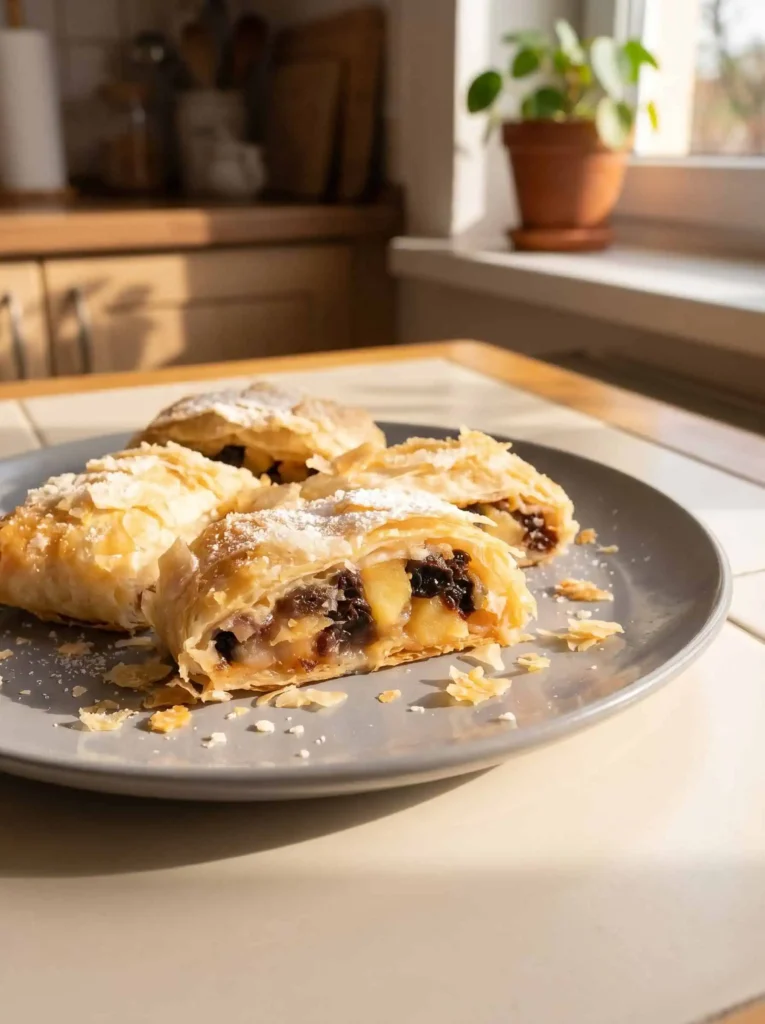
A scoop of vanilla ice cream alongside a warm slice is the classic pairing, and it’s classic for good reason: the cold creaminess against the hot, spiced apple and crisp pastry is one of the better dessert combinations in European baking. Whipped cream works too. A small pitcher of warm custard sauce, if you want to go fully Viennese, is the version that would be served in the café where this pastry comes from.
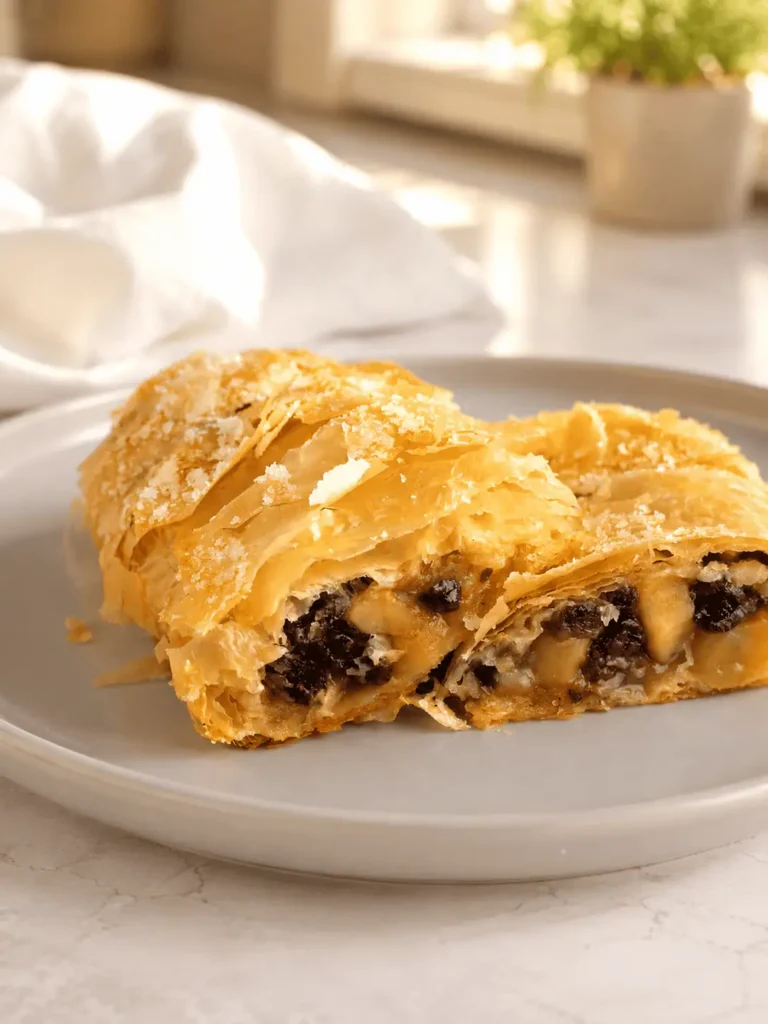

Apple Strudel
Description
A classic apple strudel with eight layers of buttered phyllo wrapped around a juicy apple, raisin, and cinnamon filling. Bakes in 40 minutes and serves 6.
Ingredients
Instructions
-
Thaw the phyllo dough in the fridge overnight. Preheat the oven to 350 degrees Fahrenheit and grease a baking sheet.
-
Place the raisins, water, and almond extract (if using) in a microwave-safe bowl. Microwave on high for 90 seconds, let sit for 5 minutes, then drain.
-
Toss the drained raisins with the chopped apples, 1/3 cup sugar, flour, and cinnamon in a large bowl.
-
Whisk together the melted butter and canola oil in a small bowl. Reserve 2 teaspoons for brushing the top.
-
Unroll the phyllo onto a lightly floured surface and cover the stack with a damp kitchen towel. Working one sheet at a time, lay a sheet on the work surface, brush with the butter mixture, and top with the next sheet. Repeat until all 8 sheets are stacked and brushed.
-
Using a slotted spoon, spread the apple filling over the phyllo, leaving a 1 to 2-inch border on all sides. Brush the borders with beaten egg. Fold the longer sides in, then roll the strudel from the short end closest to you. Seal the edge.
-
Transfer seam-side down to the baking sheet. Brush the top with the reserved butter mixture and sprinkle with the remaining 2 teaspoons of sugar. Cut diagonal slits through the top layers.
-
Bake for 35 to 40 minutes until deep golden brown. Cool on a rack for 10 minutes before slicing. Dust with powdered sugar if desired and serve warm..
Nutrition Facts
Servings 6
- Amount Per Serving
- Calories 229kcal
Note
Thaw phyllo overnight in the fridge, not at room temperature. Keep the stack covered with a damp towel at all times while working. The slotted spoon when spreading the filling lets excess juice drain back, preventing a soggy bottom.