


Qumështor is an Albanian baked milk custard that has been made the same way for generations: eggs, sugar, whole milk, flour, butter, and vanilla, whisked together into a thin batter and baked until the top is golden and the center just barely set. No cream, no water bath, no special technique. It’s one of the most honest desserts I’ve come across, and one of the most quietly satisfying.
I first encountered qumështor through a conversation about Balkan baking, where someone described it as the dessert their grandmother made when nothing else was needed, just a pan, a few eggs, and milk. That description is accurate. It’s a dessert that doesn’t announce itself, but once you’ve had it, you understand why it’s stayed in people’s homes for so long.
What it is and how it sets
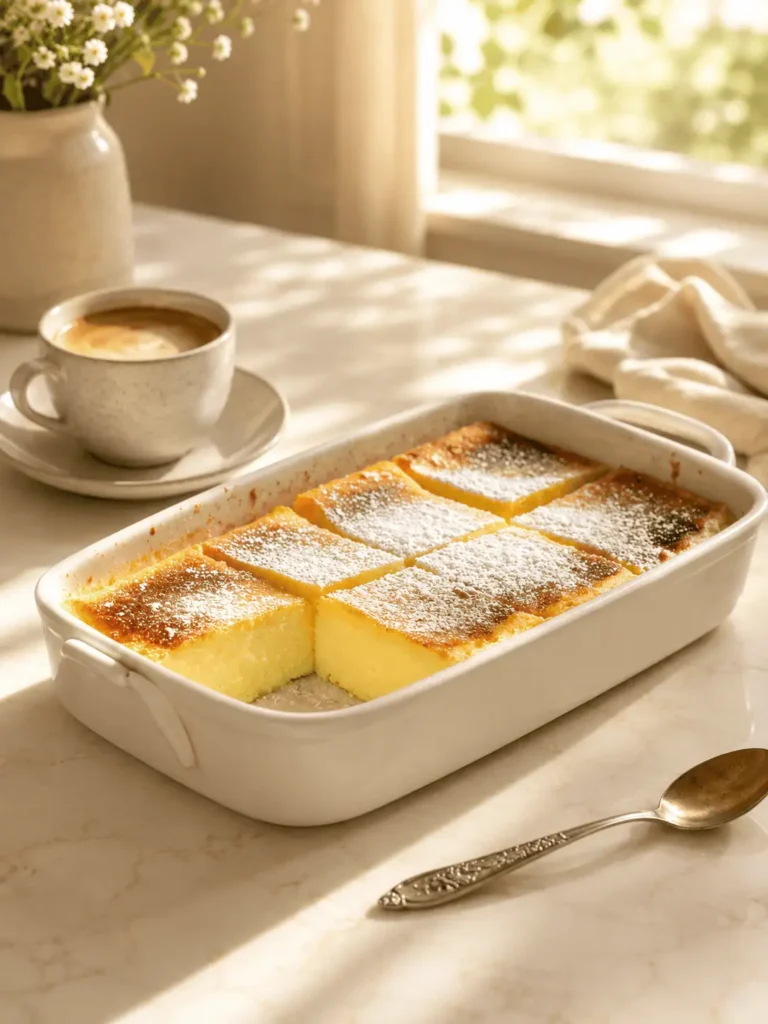
Qumështor sits somewhere between a custard and a clafoutis. The batter is thin, almost like a crepe batter with more milk, and it bakes into a layer that’s firm enough to slice into squares but soft and creamy at the center. The top turns light golden as the sugar and egg proteins caramelize slightly. The bottom and edges set a little more than the middle, which is exactly right.

The flour is what separates this from a pure egg custard. A cup of all-purpose flour gives the custard enough structure to hold a clean square when you cut it, without making it dense or cakey. It bakes more like a set pudding than a cake. The texture is somewhere between flan and bread pudding, with a cleaner flavor than either.
The batter
Whisk four eggs with a cup of sugar until the mixture turns pale and slightly creamy. Do not overbeat. You want the eggs and sugar combined and lightened but not whipped into foam. Foam in the batter produces bubbles in the finished custard, which is not what you want here; the surface should be smooth and the texture dense and creamy rather than airy.
Pour in four cups of whole milk slowly while whisking, then add the melted butter, vanilla, and a pinch of salt. The milk goes in slowly so it tempers the egg mixture gently rather than curdling the eggs with a sudden temperature change. Even if your milk is at room temperature the slow pour is a good habit. Stir until smooth.
Sift the flour in gradually, whisking as you go to avoid lumps. This is the step most people rush and regret. Flour added all at once to a liquid batter almost always clumps. Sift and whisk in three additions and you’ll have a smooth, thin batter with no dry pockets. The batter will look very liquid, closer to milk than to a cake batter. That is correct and the way it should be.
The bake
Preheat to 350 degrees and lightly butter a nine by thirteen baking dish. Pour the batter in and bake for forty-five to fifty-five minutes. The top should be light golden and the center should have a slight jiggle when you gently shake the pan, like a set gelatin. If it sloshes like liquid, it needs more time. If it doesn’t move at all, it may be overbaked, though overbaked qumështor is still edible, just firmer and drier than the ideal version.
The wide time window exists because ovens vary and the depth of batter in the pan affects how it sets. Check at forty-five minutes, then every five minutes after that. The golden top is a reliable visual cue; the jiggle test confirms the center.
Pull it from the oven and let it cool completely at room temperature before cutting. A hot custard hasn’t fully set yet and will fall apart if you try to slice it. Cooling takes about an hour, and the custard continues setting as it cools. Once fully cooled, cut into squares with a clean knife. Dust with powdered sugar if you like, though the custard needs nothing.
Better the next day
The source recipe notes this and it’s true: qumështor improves overnight. The texture firms slightly and the flavors settle into something more cohesive than a freshly baked custard. Refrigerated, it becomes almost like a firm panna cotta, sliceable and clean-edged, with a richer taste than on the day it was baked.
Serve at room temperature or lightly chilled. I prefer it slightly cold from the fridge, where the custard is at its firmest and the flavor is at its most concentrated. A light dusting of powdered sugar just before serving is the only garnish it needs.
Simplicity as a standard
Baked milk custards are a category that shows up across many cultures, from the Portuguese leite creme to Moroccan m’hanncha to French tian, all variations on the same idea: milk, egg, sugar, something to hold it together, heat. What strikes me about qumështor is how unapologetically simple it is even within that tradition. No infused flavors, no elaborate technique, no layers. Just the basic ingredients in their correct proportions, baked the right way.
There’s a version of good baking that’s about complexity and sophistication, and there’s another version that’s about getting a simple thing exactly right. Qumështor belongs firmly to the second category, and in that category it’s excellent. Makes 12 squares. Keeps refrigerated for up to four days.
Variations that work
The basic recipe is the best version, but a tablespoon of orange blossom water or rose water stirred into the batter adds a floral note that sits naturally with the milk and egg flavors. A pinch of cinnamon over the top before baking gives the golden surface a warm spice note. Both variations are traditional in different Balkan households, and neither changes the texture or the method. The custard is a reliable base that takes flavoring well without needing it.

Albanian Qumeshtor Baked Custard
Description
Albanian qumeshtor is a baked milk custard with eggs, sugar, flour, and butter. Thin batter, golden top, creamy center. Makes 12 squares and improves overnight.
Ingredients
Instructions
-
Preheat the oven to 350 degrees Fahrenheit. Lightly butter a 9x13-inch baking dish.
-
Crack the eggs into a large bowl, add the sugar, and whisk until pale and slightly creamy. Do not overbeat.
-
Pour in the milk slowly while whisking gently. Add the melted butter, vanilla, and salt, and mix until smooth.
-
Sift the flour into the mixture in two or three additions, whisking well after each to avoid lumps. The batter will be thin.
-
Pour the batter into the prepared baking dish. Bake for 45 to 55 minutes until the top is light golden and the center has a slight jiggle but is set.
-
Remove from the oven and cool completely at room temperature before cutting, about 1 hour.
-
Cut into squares and dust lightly with powdered sugar if desired. Serve at room temperature or slightly chilled..
Nutrition Facts
Servings 12
- Amount Per Serving
- Calories 210kcal
Note
Use whole milk; lower fat milk produces a thinner, less creamy result. Sift the flour in additions to avoid lumps. Do not cut while warm. The custard improves overnight and keeps refrigerated for up to 4 days.